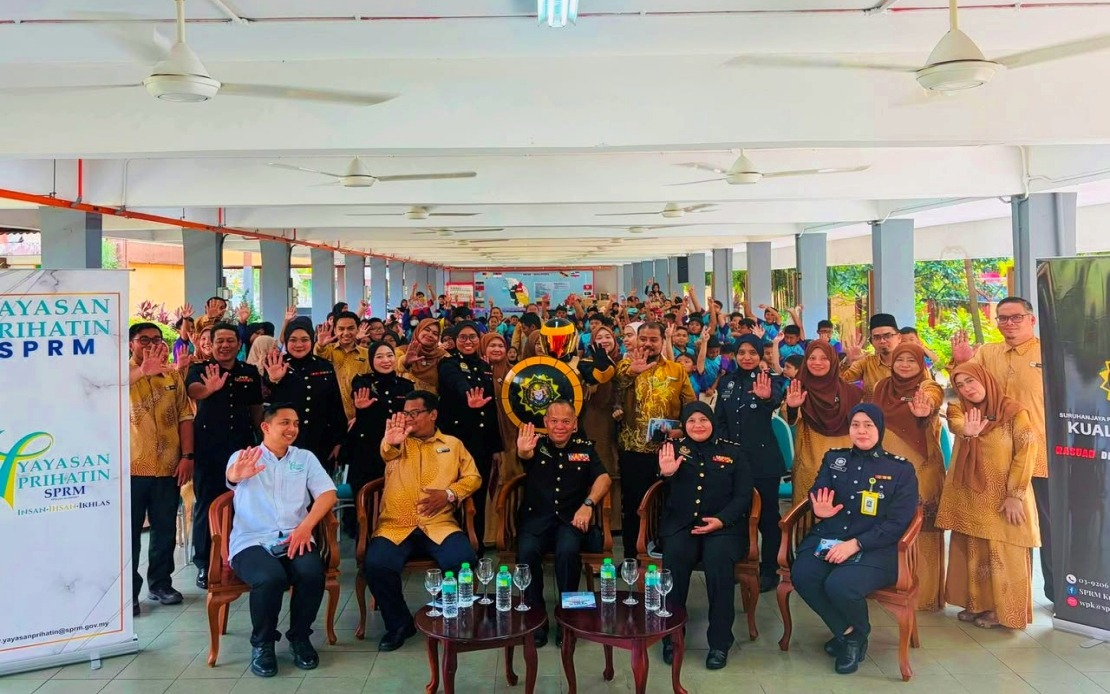
The Malaysian Anti-Corruption Commission's Kuala Lumpur office has intensified its anti-corruption outreach by launching the Wira Antirasuah (WAR) programme at Sekolah Kebangsaan Jalan Pasar 1, marking a deliberate shift towards embedding integrity values in Malaysia's younger generation at the foundational education level. The initiative reflects a strategic recognition that cultivating ethical behaviour during formative school years offers the most sustainable pathway to reducing corrupt practices across society over time.
Modelled around the concept that heroism emerges not from exceptional circumstances but from everyday moral choices, the programme positions Mohamad Zakkuan Talib, the MACC Kuala Lumpur director, as advancing a philosophy that integrity develops through accumulated small decisions rather than singular dramatic acts. His framing challenges the common perception that corruption prevention requires only attention to high-level institutional failures, instead arguing that foundations of a principled society are built through seemingly mundane daily choices—refusing to cheat, respecting others' property, honouring commitments, and maintaining trust relationships.
The WAR initiative represents an expansion of MACC's educational reach beyond conventional awareness campaigns directed at government agencies and corporate entities. By situating anti-corruption messaging within the primary school environment, the commission acknowledges that values formation during childhood creates psychological and behavioural scaffolding that individuals carry into adulthood. This approach aligns with international evidence suggesting that ethics education delivered during early development stages produces more durable attitudinal shifts than remedial efforts targeting already-established patterns of institutional conduct.
For Malaysian policymakers, the programme offers a model for addressing what remains a persistent governance challenge. Malaysia's Corruption Perceptions Index rankings, while showing marginal improvement, still reflect entrenched patterns across both public and private sectors. A grassroots strategy targeting primary schoolchildren potentially addresses corruption at its source—before career trajectories, vested interests, and institutional pressures calcify questionable ethical frameworks. The timing is particularly relevant as Malaysia navigates post-pandemic institutional reforms and economic restructuring that create opportunities for embedding stronger integrity safeguards.
The programme's interactive structure moves beyond traditional lecture-based compliance training, incorporating experiential activities that researchers have shown enhance retention and internalization of ethical principles. The involvement of Kapten MACC, the commission's mascot character, leverages child psychology principles around engagement and memorability, while the establishment of an Anti-Corruption Corner within the school creates an ongoing touchpoint rather than a one-off awareness event. This design suggests MACC recognizes that sustained behavioural change requires repeated reinforcement across multiple pedagogical modalities.
The integration of welfare support—including the donation of educational technology and financial assistance for 29 pupils from underprivileged families—extends the programme beyond abstract ethics instruction. This approach acknowledges that integrity education operates within socioeconomic contexts where poverty or material insecurity can create pressures toward corrupt practices. By addressing immediate welfare needs alongside values messaging, MACC implicitly recognizes that comprehensive anti-corruption strategy must attend to material conditions that generate motivation for misconduct.
The programme's connection to Malaysia's Keep Malaysia Clean campaign and National Month celebrations positions integrity as a patriotic value rather than solely a compliance requirement. This framing may prove psychologically significant, as research on moral motivation demonstrates that individuals more readily internalize ethical principles when they perceive alignment with national identity and collective pride rather than external enforcement. By situating anti-corruption as integral to Malaysian national aspiration, the MACC potentially catalyzes stronger emotional investment in principled conduct among participating students.
The involvement of special education pupils in symbolic hibiscus planting underscores inclusive design principles, signalling that anti-corruption values apply universally across student demographics. This inclusive messaging prevents the segmentation of integrity as an elite concern, instead positioning it as foundational to all citizens' participation in national life. For Southeast Asia more broadly, such inclusive approaches to ethics education offer a template for countries grappling with how to build anti-corruption consciousness across diverse populations.
Scaling this initiative across Malaysia's broader school system presents both opportunities and implementation challenges. Resource constraints, teacher training requirements, and curriculum integration difficulties could limit expansion. However, the Kuala Lumpur pilot demonstrates feasibility and MACC's commitment to institutional culture change. If successfully expanded, the WAR programme could influence cohorts reaching adulthood over the next decade, potentially creating generational shifts in attitudes toward corruption that surface in career decision-making across both public and private sectors.
The programme's ultimate success will depend on institutional follow-through and longitudinal measurement of outcomes. Whether participating students subsequently demonstrate measurably higher integrity standards in secondary and tertiary education, and whether this translates into reduced corruption prevalence when these cohorts enter professional life, will determine the initiative's genuine impact. MACC's willingness to invest in such long-horizon interventions, whose results will only become evident years later, reflects sophisticated understanding that systemic corruption requires patience and strategic focus on underlying cultural drivers rather than solely reactive institutional oversight mechanisms.

