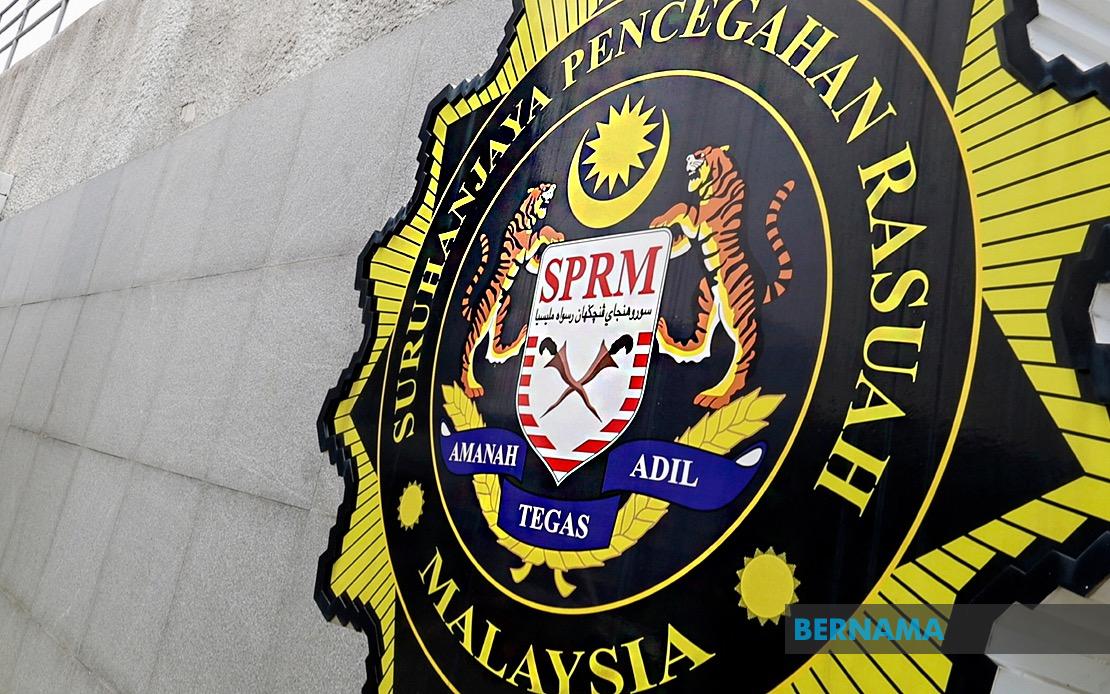
The Malaysian Anti-Corruption Commission has embarked on a significant capacity-building initiative to strengthen its ability to identify and analyse digital evidence that may have been altered or artificially generated, reflecting growing concerns about the misuse of technology in criminal investigations. Senior MACC officials and forensic specialists recently completed intensive training at an internationally accredited programme in Trieste, Italy, marking a deliberate step to modernise the agency's investigative toolkit as it confronts emerging threats in the digital age.
The four-day Amped Authenticate course, held from July 28 to 31, represents a critical investment in the MACC's Technology Forensic Division, which now possesses formal qualifications in visual forensics and digital authentication methods. The cohort included BFT director Wan Zulkifli Wan Jusoh, MACC Putrajaya director Mohd Shahril Che Saad, and forensic officers Dr Syah Reezal Md Bashah and Muhamad Khairi Mohamad Dain. This focused deployment of senior personnel underscores the institutional priority assigned to combating evidence tampering in an era when image, audio, and video manipulation has become technically accessible to organised criminals and corrupt individuals.
The training curriculum encompasses a comprehensive range of scientific methodologies designed to authenticate visual materials and expose falsification. Participants gained proficiency in metadata analysis, which reveals hidden information embedded in digital files; camera fingerprinting, which identifies the unique characteristics of devices that captured images; image editing detection, which reveals traces of post-production alteration; physical consistency assessment, which evaluates whether shadows, reflections, and geometric elements align realistically; and deepfake detection, which identifies synthetic or manipulated faces and audio. These techniques form a defensive perimeter against the technological sophistication that criminal actors and those seeking to obstruct justice increasingly employ.
Central to the MACC's upgraded capability is the adoption of Photo Response Non-Uniformity (PRNU) analysis, a technique that exploits microscopic imperfections unique to each camera's image sensor to verify whether a photograph originated from a claimed source. Complementing this approach is JPEG Dimples analysis, which detects compression artefacts indicating whether an image has been edited post-capture. Shadow and reflection analysis provides geometric verification that lighting and spatial relationships conform to physical laws, a powerful tool for identifying composite or artificially generated imagery. The integration of these methods creates overlapping layers of verification, significantly raising the evidentiary bar that manipulated content must clear.
A cornerstone of the MACC's new approach is the Amped Authenticate software platform, which generates analysis reports recognised internationally and certified under the ISO/IEC 17025 standard governing forensic laboratories worldwide. This accreditation carries profound significance within Malaysian courts and jurisdictions across Southeast Asia, as it signals that findings conform to globally benchmarked scientific standards. The software's reliance on established statistical methods, particularly Peak-to-Correlation Energy calculations for PRNU analysis and JPEG quantisation evaluation, ensures that conclusions rest on reproducible mathematical foundations rather than subjective assessment.
The implications of this capability extend into the courtroom, where MACC forensic officers trained through this programme can now testify as expert witnesses using methodologies that satisfy the stringent requirements of the Evidence Act 1950. The transparent, scientifically defensible nature of the techniques employed provides defence counsel limited grounds to challenge the fundamental reliability of authentication analysis, provided proper methodology has been applied. This shifts the evidentiary landscape substantially, as courts in Malaysia and the region gain access to internationally validated tools for separating genuine documentation from fabrication.
The timing of this initiative reflects the MACC's acute awareness that technological criminal capacity is advancing faster than traditional forensic expertise. Deepfake technology, which uses artificial intelligence to synthesise realistic video or audio of individuals saying or doing things they never actually said or did, represents a particular vulnerability. A compelling deepfake video of a public figure or government official could influence investigations or obstruct justice if circulated without proper authentication. The MACC's enhancement of deepfake detection capabilities therefore addresses not only organised corruption but also emerging threats to institutional integrity across government and business sectors.
The agency's investment in this training also reflects deeper institutional learning within Malaysian law enforcement. Recognising that evidence admissibility increasingly hinges on scientific validation, the MACC has positioned the Technology Forensic Division to become the authoritative centre of digital evidence assessment within the Malaysian investigative ecosystem. This centralisation of expertise enhances consistency across investigations, reduces the risk of inadmissible findings due to methodological deficiencies, and elevates the overall standard of digital evidence handling across the commission.
For Malaysia's criminal justice system and regional partners, the MACC's upgraded digital forensics capability carries implications beyond anti-corruption enforcement. As cyber-enabled crime expands throughout Southeast Asia—including transnational fraud, identity theft, and organised criminal networks relying on digital communication—the ability to authenticate or debunk digital evidence becomes essential to effective prosecution. The MACC's expertise can be leveraged to support investigations by other agencies, whether Malaysian or within regional law enforcement partnerships, amplifying the impact of this institutional investment.
The training underscores a broader strategic challenge facing Malaysian authorities: maintaining investigative credibility and legitimacy by demonstrating meticulous adherence to international scientific standards. Public confidence in law enforcement rests partly on the perception that evidence presented in court has been rigorously and impartially authenticated. By adopting internationally recognised certification standards and methodologies, the MACC signals to the judiciary, defence bar, and public that digital evidence handling reflects global best practice rather than parochial practice.
Looking ahead, the MACC's enhanced capability will likely drive demand for similar training and certification among investigators in other agencies, from the Royal Malaysian Police to state-level enforcement bodies. This could catalyse broader professionalisation of digital forensics across Malaysian law enforcement, with the MACC serving as a reference point for methodological standards and training curricula. Such standardisation reduces vulnerability to legal challenges based on inconsistent forensic protocols and builds a more robust architecture for the prosecution of digitally mediated crimes.
The initiative also acknowledges that the battle against evidence manipulation cannot be won through reactive detection alone. As deepfake and image manipulation tools become increasingly sophisticated and user-friendly, the capacity to generate convincing false evidence will multiply. The MACC's proactive engagement with cutting-edge forensic science positions the agency to stay ahead of emerging technological threats, ensuring that investigators and prosecutors retain evidentiary advantage as criminal actors upgrade their tools.

