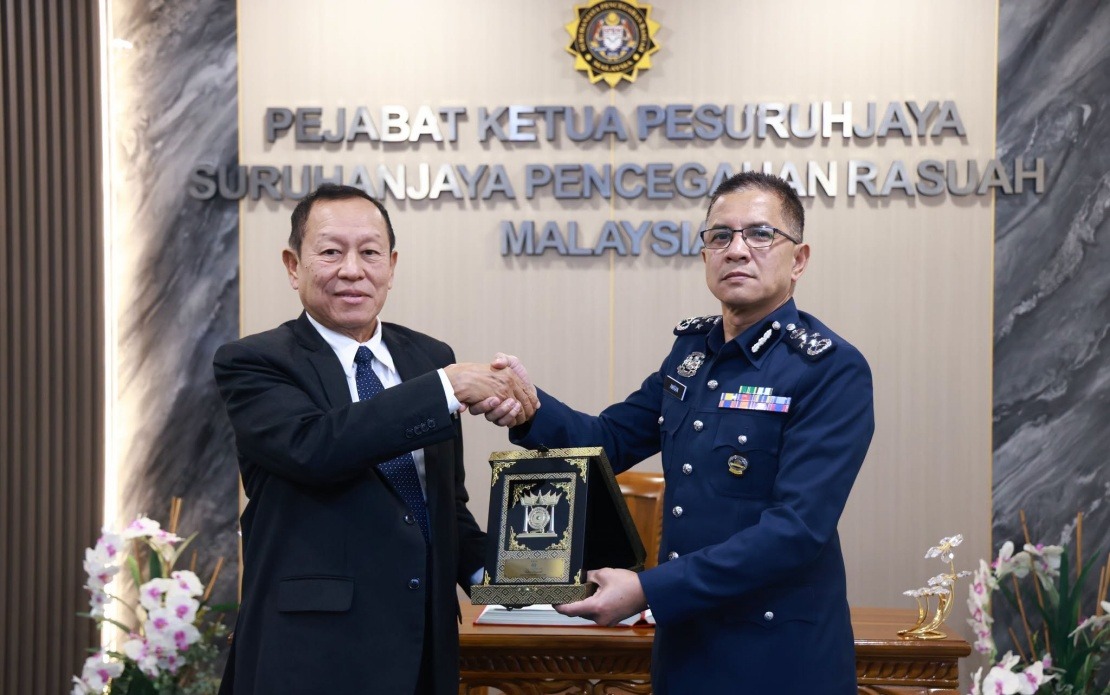
The Malaysian Anti-Corruption Commission (MACC) and the Royal Malaysian Customs Department (JKDM) are advancing plans to create a specialised task force to enhance oversight of enforcement activities and revenue collection at Malaysia's strategically important ports. The initiative emerged during a formal meeting at MACC headquarters in Putrajaya on July 15, when JKDM director-general Datuk Amran Ahmad visited the anti-corruption agency to discuss operational synergies and shared institutional challenges.
MACC chief commissioner Datuk Seri Abd Halim Aman outlined the rationale for the proposed task force, explaining that both organisations identified several pressing concerns requiring coordinated attention. The one-hour strategic session provided space for substantive discussions on how customs inspection procedures could be refined and streamlined, as well as consideration of bureaucratic impediments that currently obstruct efficient service delivery across the port system. Such coordination reflects growing recognition that corruption and revenue leakage at customs checkpoints require multi-agency responses rather than siloed institutional efforts.
Container management at ports represents a particularly vulnerable area where illegal activity flourishes. The JKDM outlined specific mechanisms through which leakage occurs within its jurisdiction across the country's port network, signalling that internal losses from contraband and under-declaration of goods constitute a material fiscal challenge. By partnering with MACC's investigative expertise and anti-corruption mandate, customs officials aim to identify systemic vulnerabilities and strengthen internal controls to prevent both criminal activity and staff misconduct.
Datuk Amran disclosed that JKDM has documented sophisticated methods employed by smuggling syndicates to circumvent tax obligations. These operations encompass falsification of shipping documents and manifest records submitted across various regulatory approval frameworks, a practice that erodes both customs revenue and the integrity of Malaysia's import-export documentation systems. The disclosure suggests that organised criminal networks operating within or adjacent to port zones have developed considerable operational sophistication, warranting enhanced intelligence-gathering and enforcement coordination.
A particularly concerning modus operandi identified involves deliberate misstatement of currency amounts crossing Malaysia's borders. Individuals transporting substantial cash into the country have been detected declaring significantly lower values than amounts actually carried, a practice that undermines anti-money-laundering frameworks and deprives the state of accurate financial intelligence. This form of deception represents a gateway risk for broader financial crimes including terrorism financing and proceeds of corruption.
The partnership addresses a longstanding structural challenge in Malaysian governance: customs agencies have historically operated with limited anti-corruption institutional support, despite customs positions being recognised internationally as high-risk for bribery and extortion. By formalising MACC's involvement in personnel integrity training and anti-corruption culture-building, the JKDM signals willingness to strengthen internal compliance mechanisms. Datuk Amran confirmed that the customs department welcomes MACC's capacity to deliver anti-corruption education and integrity programming to personnel across the organisational hierarchy.
For Malaysian businesses and traders, the task force development carries complex implications. Enhanced enforcement may reduce opportunities for smuggling competitors and create more level competitive conditions, thereby benefiting compliant importers and exporters. However, heightened scrutiny could also introduce friction into legitimate customs clearance processes if implementation lacks nuance or training. The success of the task force will depend substantially on whether enforcement improvements are accompanied by procedural simplification that does not compromise integrity objectives.
Regionally, Malaysia's port enforcement challenges mirror problems documented in other Southeast Asian trading hubs where high cargo volumes intersect with organised crime networks. Singapore, Thailand, and Indonesia have similarly grappled with container tampering, document fraud, and corrupt official networks facilitating smuggling. Malaysia's multi-agency approach potentially positions the country to benchmark practices against regional counterparts and develop shared intelligence protocols that address transnational smuggling operations.
The timing of this initiative reflects broader Malaysian governance priorities under current federal administrations emphasising accountability and transparency. Port security and customs integrity have featured prominently in official statements on combating organised crime and improving revenue collection, particularly given Malaysia's fiscal consolidation objectives. A more effective customs operation directly supports government revenue targets while simultaneously reducing opportunities for criminal networks to exploit logistical infrastructure.
Implementation details remain to be finalised, though the presence of MACC's Investigation Division senior director Datuk Mohd Hafaz Nazar and JKDM's Integrity branch head Azian Umar at the July 15 meeting suggests that technical working-level engagement is advancing. The task force model will likely draw on existing inter-agency task forces established elsewhere in Malaysian law enforcement, adapting those frameworks to the specific operational environment of ports where customs and corruption issues intersect.
Longer-term success will require sustained political commitment and adequate resource allocation to the new structure. Task forces in Malaysian governance sometimes face institutional decay when political attention shifts or leadership changes occur. Building sustainable capacity within both MACC and JKDM, rather than creating entirely parallel structures, may prove more durable. Additionally, engagement with Malaysia's private sector port operators and shipping industry representatives will likely enhance intelligence-gathering on emerging smuggling tactics and document fraud schemes.

