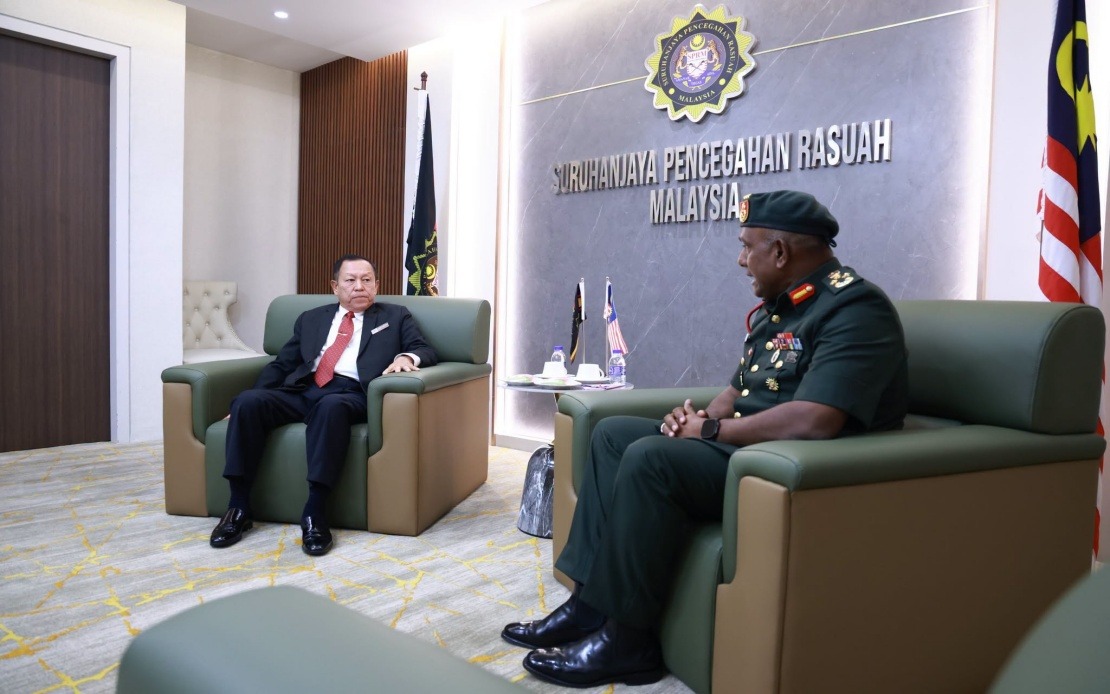
In a significant show of institutional alignment, the Malaysian Anti-Corruption Commission and the Malaysian Armed Forces have reaffirmed their resolve to intensify collaborative efforts in the fight against corruption. The commitment emerged during a meeting at MACC headquarters in Putrajaya on July 7, marking a formal acknowledgement of the complementary roles both organisations play in maintaining integrity across the defence establishment and wider public sector.
MACC Chief Commissioner Datuk Seri Abd Halim Aman expressed confidence that the synergy between the two agencies would continue deepening across multiple fronts. His remarks during the courtesy visit by the Malaysian Defence Intelligence Organisation director-general emphasised that existing cooperation, already substantial, represents a foundation for even more robust collaboration. The emphasis on joint action reflects an understanding that corruption risks within military structures demand coordinated oversight that brings together anti-corruption expertise with defence-specific intelligence capabilities.
The partnership framework centres on three pillars: intelligence sharing, information exchange, and governance enhancement. These mechanisms acknowledge that corruption in defence matters often involves complex schemes requiring specialist knowledge from both the investigative and operational sides. Intelligence sharing protocols allow MACC investigators to benefit from the military's internal surveillance capabilities and security assessments, while the armed forces gain access to anti-corruption analytical frameworks that have proven effective in the broader civil service.
Lt Gen Datuk Fazal Abdul Rahman, who assumed his position as MDIO director-general effective May 21, signalled the armed forces' unwavering commitment to upholding governance standards throughout the defence establishment. His statement that the military remains focused on maintaining high discipline and conducting operations professionally underscores the institutional values that should govern all defence activities. The appointment itself, occurring within months of the formal visit, suggests that anti-corruption coordination has become a priority consideration in senior defence postings.
The governance enhancement component of this partnership extends beyond reactive investigation into proactive systems strengthening. By working together to identify institutional vulnerabilities and implement preventive measures, MACC and the armed forces can address corruption at its roots rather than merely prosecuting individual wrongdoers. This approach aligns with international best practice in military oversight, where transparency mechanisms and regular audits form part of organisational culture rather than external impositions.
For Malaysia's defence sector specifically, this partnership carries considerable weight. Armed forces procurement, equipment maintenance, and personnel management involve substantial expenditures that have historically attracted corrupt practices. The integration of anti-corruption oversight into defence governance frameworks represents an attempt to ring-fence these vulnerable areas through coordinated monitoring and intelligence protocols that enable early detection of irregularities.
The involvement of senior officials from both organisations—including MACC Intelligence Division senior director Datuk Saiful Ezral Arifin and MAF Security and Counter Intelligence Directorate director Lt Col Muhamad Zainol Md Yusof—indicates that this partnership operates at working level with sufficient authority to implement practical measures. The presence of intelligence specialises from both sides suggests that concrete information-sharing mechanisms are already operational or imminently established, rather than this representing merely symbolic commitment.
From a regional perspective, Malaysia's intensification of anti-corruption coordination within its defence establishment mirrors similar trends across Southeast Asia, where military institutions increasingly recognise that integrity deficits undermine operational effectiveness and international standing. As defence establishments across the region modernise and acquire advanced capabilities, they simultaneously become targets for organised corruption schemes. Coordinated intelligence and enforcement capacity helps counteract these networks.
The timing of this reaffirmation also carries domestic political significance. Public confidence in defence institutions depends substantially on demonstrated commitment to internal accountability. By publicly endorsing stronger anti-corruption cooperation, both the MACC and armed forces leadership signal to the Malaysian public that governance standards apply equally to the defence sector and that no institution operates beyond scrutiny. This transparency builds institutional legitimacy essential for maintaining public support.
Looking forward, the effectiveness of this partnership will be measured not by statements of intent but by tangible outcomes. These might include prosecutions of corruption cases involving military personnel, implementation of new procurement safeguards, or successful prevention of corrupt practices within defence establishments. The framework created through this cooperative arrangement provides the structural foundation; execution will determine whether it becomes genuinely transformative or remains largely symbolic.

