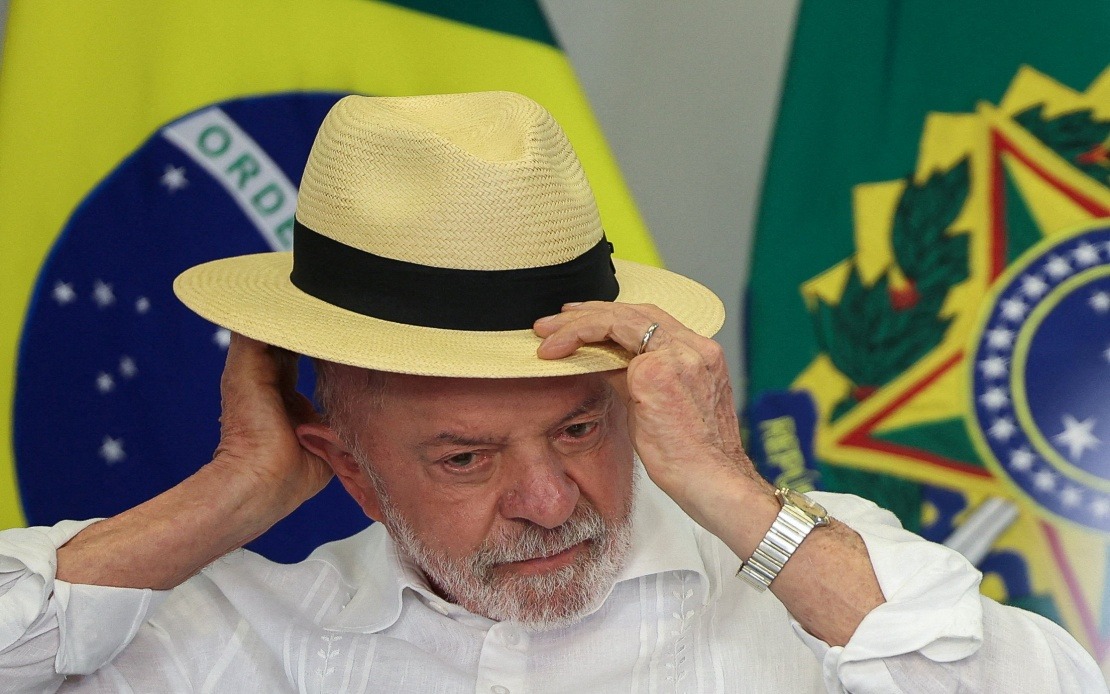
Brazilian President Luiz Inacio Lula da Silva finds himself in a precarious position as the South American nation approaches its October presidential election, clinging to a narrow advantage over challenger Flavio Bolsonaro in the latest polling data. A Quaest survey commissioned by media giant Globo and released in mid-August reveals the incumbent maintaining just a three-percentage-point lead in a runoff scenario—a margin that sits uncomfortably within the poll's two-point error range, rendering the contest virtually deadlocked.
The survey, which polled 2,004 voters between August 10 and 13, found Lula commanding 43 per cent support compared to Bolsonaro's 40 per cent in a head-to-head matchup. This represents a slight deterioration from an earlier Quaest poll conducted five days prior, which had shown Lula at 44 per cent versus Bolsonaro's 39 per cent. The tightening reflects the volatile nature of Brazilian electoral sentiment and the growing viability of the right-wing challenger as the campaign intensifies. Should no candidate secure an outright majority in the first round, Brazilian electoral law mandates a runoff between the top two finishers—a scenario that increasingly appears inevitable.
In the wider first-round contest featuring multiple candidates, Lula maintains stronger positioning with 38 per cent of intended votes, substantially ahead of Bolsonaro's 31 per cent. This significant gap narrows dramatically in runoff projections, highlighting how fragmented opposition support could consolidate behind Bolsonaro should he advance to a second ballot. Additional candidates including Renan Santos and Ronaldo Caiado each garnered four per cent support, while Romeu Zema managed just two per cent, representing marginal forces unlikely to shape the eventual outcome.
Flavio Bolsonaro's emergence as the dominant right-wing contender represents a crucial subplot in Brazilian politics, driven directly by his father's disqualification from the race. Former President Jair Bolsonaro, who held office from 2019 to 2022, was barred from competing after Brazil's superior electoral court determined he had abused political authority while in office. The elder Bolsonaro subsequently faced conviction on charges related to an alleged conspiracy to overturn his 2022 election defeat to Lula, effectively closing the door on his own political resurrection. As a senator, Flavio Bolsonaro has successfully positioned himself as the legitimate heir to his father's political movement, consolidating right-wing voters who might otherwise have remained scattered among competing conservative candidates.
Lula initiated his formal re-election campaign on August 2 during a Workers' Party convention in São Paulo, strategically framing the contest around themes of national sovereignty and protection of Brazil's natural wealth. His messaging directly targeted anxieties about external interference in Brazilian affairs, particularly from the United States under President Donald Trump's administration. During campaign statements, Lula articulated protective stances regarding Brazil's rare earth minerals and other critical resources, declaring that neither China, the United States, nor France would gain access to Brazilian wealth without respecting the nation's independence and decision-making authority.
The sovereignty angle holds particular resonance given historical patterns of external pressure on Brazilian policymaking and natural resource extraction. Lula's explicit warning that "in Brazil, we do not accept anyone sticking their nose where it does not belong" represents both a populist rallying cry and a subtle reference to international actors who might seek influence over Brazilian governance. This nationalist framing appears calculated to appeal beyond his traditional leftist base, potentially capturing voters concerned about foreign economic dominance regardless of party affiliation. For Malaysian and Southeast Asian observers, Lula's emphasis on resource sovereignty echoes regional debates about balancing Chinese investment with strategic autonomy and Western technological partnerships.
The international dimension of Brazilian politics intensifies through Trump's well-documented connections to the Bolsonaro family, creating perceptions of alignment between American conservative leadership and Brazil's right-wing movement. These ties have generated anxiety within Lula's camp regarding potential American interference in the electoral process or post-election relations should the incumbent lose. In June, Lula issued a direct warning to Trump, articulating Brazil's expectation of non-interference in its democratic processes and invoking reciprocal standards regarding American electoral sovereignty. The message conveyed both respect for American self-determination and firm insistence that Brazil merits equivalent treatment.
With approximately two months separating the August polling from the October election, Brazil faces a genuinely competitive campaign that offers no clear frontrunner despite Lula's measurable advantage. The narrowing margin suggests voter volatility and incomplete consolidation of support within both camps. Lula's coalition must contend with potential fragmentation among center-left voters, while Bolsonaro benefits from a more disciplined and ideologically cohesive voter base that has demonstrated strong electoral organization. Economic conditions, criminal violence levels, and corruption narratives will likely prove decisive in determining which candidate ultimately prevails.
For regional observers and policymakers, the Brazilian election carries significance extending beyond South America's largest economy. Lula's emphasis on sovereignty and resource protection resonates with Southeast Asian governments navigating comparable pressures from competing great powers. Should Lula prevail, his nationalist platform might influence how Brazil engages with multilateral economic arrangements and resource governance frameworks that affect developing nations throughout the Global South. Conversely, a Bolsonaro victory could shift Brazil toward closer alignment with American interests and potentially reduce emphasis on developing-nation solidarity on environmental and trade issues.

