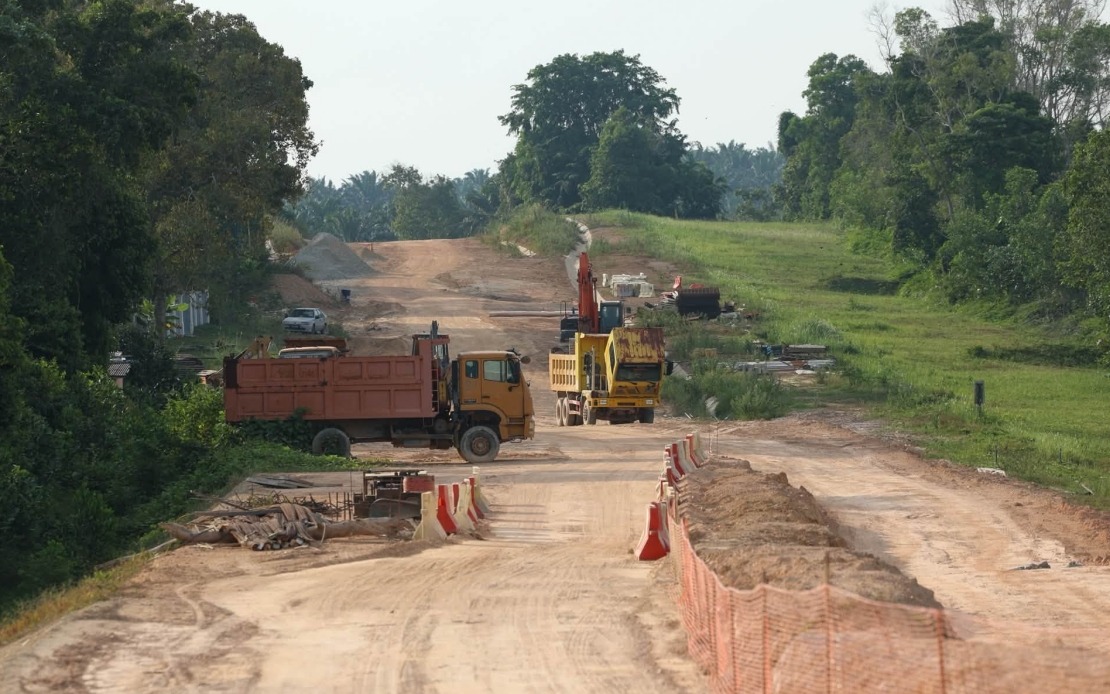
The construction of a new thoroughfare connecting Lukut to Kampung Sirusa through Port Dickson is progressing at a pace that exceeds expectations, having reached over 60 per cent completion despite an initially ambitious timeline. The Works Ministry confirmed on July 16 that the RM81.92 million infrastructure initiative is tracking 43 days ahead of schedule, with works now expected to conclude by August 10, 2027. This accelerated progress reflects improvements in project management and execution within Port Dickson, a district long identified as needing enhanced road infrastructure to support its growing population and economic activities.
The engineering undertaking spans approximately 10 kilometres of new roadway, traversing several established communities including Kampung Paya and Kampung Bagan Pinang before terminating in the village of Kampung Sirusa. Construction is being undertaken to the rigorous R2 specifications set by the Public Works Department, ensuring that the completed facility will meet national standards for safety, durability and traffic capacity. The scope encompasses considerably more than simple asphalt laying, incorporating comprehensive slope stabilisation, sophisticated drainage infrastructure, sewerage systems integration, and the relocation or installation of essential utilities serving the corridor.
Deputy Works Minister Datuk Seri Dr Ahmad Maslan visited the construction site to monitor compliance with contractual obligations and assess whether works remained aligned with agreed specifications and quality benchmarks. Such ministerial oversight reflects the strategic importance attached to the project within the broader federal development agenda. The inspection focused on ensuring that site management remained effective and that any emerging logistical challenges were being addressed promptly to prevent schedule slippage as the project advances toward its final phases.
The primary justification for the infrastructure investment centres on transforming connectivity within Port Dickson and its surrounding hinterland. Currently, residents of peripheral settlements must often undertake lengthy detours to access essential services, educational facilities, and healthcare amenities concentrated in more established areas. Once operational, the new road will substantially reduce travel times between these communities and regional economic centres, while simultaneously improving road safety through modern engineering standards and appropriate geometric design. The anticipated enhancement in traffic flow carries implications not merely for daily commuters but for emergency services response times and the efficiency of commercial transport operations.
Beyond immediate accessibility improvements, the Works Ministry projects that the infrastructure project will function as a catalyst for broader socio-economic development across Port Dickson. Enhanced road connectivity typically stimulates tourism activity, particularly in districts blessed with natural attractions or cultural assets, by reducing traveller inconvenience and enabling previously inaccessible locations to enter the regional tourism circuit. Local employment opportunities are expected to expand as improved accessibility attracts commercial operators and investors to the district, while the reduced transportation costs should benefit residents engaged in agricultural, fishing, or small-scale trading activities characteristic of many Port Dickson settlements.
The project emerged from the Ministry of Rural and Regional Development's mandate to address infrastructure deficiencies in underserved regions, aligning with the federal government's broader commitment to reducing urban-rural disparities. Financing derived from the Federal Government's development allocation rather than state budgets, reflecting the project's classification as a strategic national priority. Implementation responsibilities fell to the State Public Works Department as the executing agency, establishing a clear administrative hierarchy and accountability framework. This institutional arrangement has proven effective in maintaining schedule discipline while ensuring that technical standards remain uncompromised.
Port Dickson itself occupies a significant position within Negeri Sembilan's economic and demographic landscape, functioning as both an important port facility and a residential magnet for workers seeking proximity to Kuala Lumpur without urban congestion. The district's population has expanded considerably in recent decades, yet transportation infrastructure development has not consistently kept pace with demographic growth. Previous road networks connecting peripheral villages to established settlements often date from earlier decades and require either substantial rehabilitation or supplementation with modern alternatives. The new Lukut-Kampung Sirusa route directly addresses this historical infrastructure gap.
The acceleration of the project timeline carries significance beyond mere administrative accomplishment. Faster completion means that communities dependent on improved access to services and employment opportunities can realise these benefits sooner than originally anticipated. For businesses contemplating relocation or expansion into Port Dickson, accelerated infrastructure availability reduces uncertainty about market accessibility and operational logistics. Additionally, earlier project completion minimises prolonged disruption to existing movement patterns within the affected communities, allowing residents to transition to new routing arrangements within a shorter timeframe.
The broader implications for Malaysian regional development planning warrant examination. As development initiatives increasingly penetrate secondary and tertiary urban zones, project execution efficiency becomes increasingly critical to maintaining public confidence in infrastructure programmes and ensuring optimal returns on substantial public investments. The Lukut-Kampung Sirusa project demonstrates that, when appropriate management structures and technical capacity exist, infrastructure projects serving smaller communities can be delivered efficiently and ahead of schedule. This performance record may inform future procurement and implementation strategies for comparable initiatives elsewhere in Malaysia's regional development portfolio, particularly in states facing similar urban-peripheral connectivity challenges.

