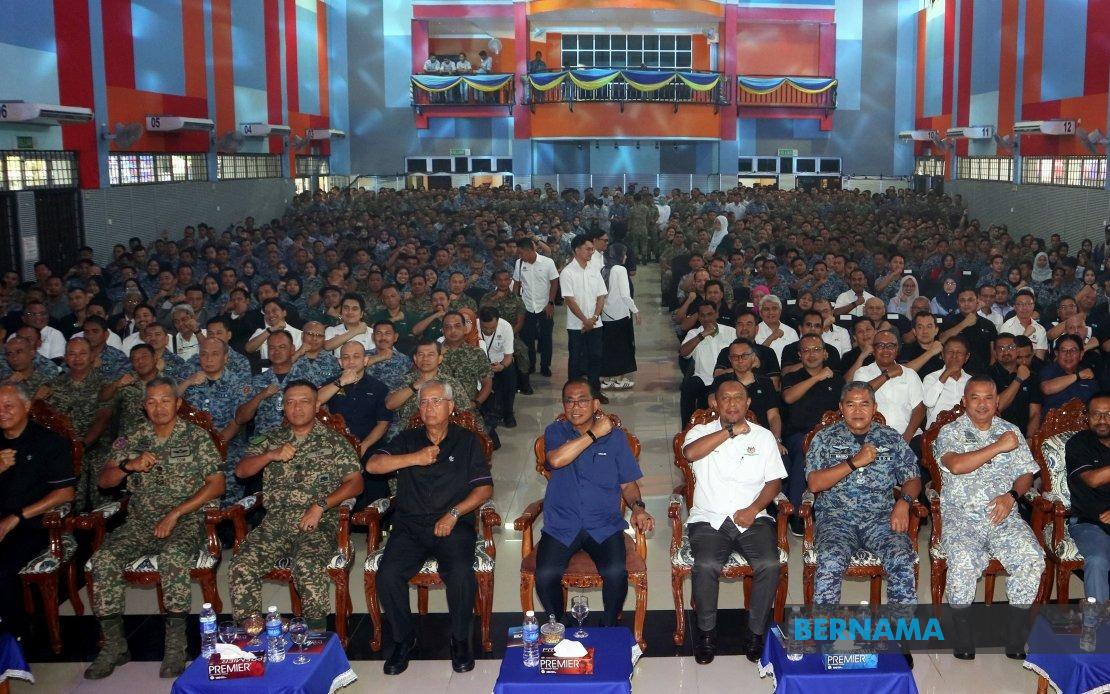
The Armed Forces Fund Board (LTAT) has successfully extended its engagement efforts to 28,500 Malaysian Armed Forces personnel during its Jelajah Wira tour across the East Coast, marking a significant milestone in the organisation's commitment to strengthening its relationship with military contributors. The nationwide initiative represents a strategic shift towards direct, ground-level interaction with service members who make regular contributions to the fund, creating opportunities for personnel across all ranks to better understand the fund's management structure and available benefits.
LTAT Chief Executive Mohammad Ashraf Md Radzi described the tour as a carefully planned, phased approach to cover the entire nation while building stronger ties between fund administrators and the military workforce. By visiting military installations directly, the organisation aims to demystify fund operations and demonstrate appreciation for personnel who allocate ten percent of their monthly income to this long-term savings mechanism. The tour's structure reflects recognition that meaningful engagement requires physical presence at bases and camps where personnel are stationed, rather than relying solely on centralised communications.
A cornerstone of the tour's launch was the introduction of the LTAT-Affin Debit Card, positioned as both a practical financial tool and a symbolic gesture honouring military personnel's dedication to national defence. This initiative carries deeper significance within Malaysia's military culture, where recognition of service extends beyond monetary compensation to encompass identity and belonging within the defence establishment. The card serves as a tangible representation of the fund's appreciation, distinguishing military savers from other demographic groups and reinforcing the special status of armed forces contributions to national security.
The tour programme encompasses military installations across multiple East Coast states, including Kem Desa Pahlawan in Kelantan, Kuantan Air Force Base, Kem Seri Pantai (home of the 16th Royal Malay Regiment) in Terengganu, alongside naval and army facilities in Melaka and Johor. This geographical distribution ensures that personnel stationed across different regions and service branches—air force, army, and navy—receive equivalent access to fund information and engagement opportunities. The comprehensive venue selection underscores LTAT's commitment to inclusivity and accessibility across Malaysia's diverse military infrastructure.
Mohammad Ashraf emphasised that LTAT's approach to welfare extends beyond individual service members to encompass their families and broader communities dependent on military incomes. This holistic perspective acknowledges that military personnel's financial security directly impacts household stability and, by extension, social cohesion within defence communities. By framing the fund as part of a comprehensive ecosystem supporting the military family structure, LTAT positions itself as a stakeholder in broader social welfare objectives rather than merely a financial institution.
Young airmen participating in the tour provided candid perspectives on the fund's value proposition, with Airman I Muhammad Syahmi Mohd Shobri, aged 23, highlighting competitive annual dividends that consistently outperform alternative savings vehicles available to military personnel. His assessment reflects a younger generation's understanding of long-term financial planning and the importance of yield-generating instruments for career-long savers. Similarly, Airman I Muhammad Izzuddin Mohd Hanapi, 25, articulated how accumulated contributions and annual dividends create meaningful financial security upon military retirement, a critical consideration for personnel transitioning to civilian life after years of service.
Royal Malaysian Air Force Air Sergeant Haidil Jafar's experience winning an electric motorcycle during the tour's lucky draw injection an element of immediate gratification into the engagement event, providing tangible rewards alongside information dissemination. Such incentive mechanisms serve multiple functions: they generate positive sentiment toward the fund, create memorable moments encouraging personnel to engage with fund materials, and generate word-of-mouth enthusiasm that extends beyond formal presentations.
The presence of senior defence and government officials—including Defence Ministry Secretary-General Datuk Lokman Hakim Ali, LTAT Chairman General Tan Sri Azizan Ariffin, and LTAT Investment Panel Chairman Datuk Khairol Anuar Mohamad Tawi—signalled high-level institutional commitment to the engagement initiative. This senior leadership presence validates the tour's importance within defence ministry priorities and demonstrates that fund management receives serious attention at policy-making levels. For military personnel, such visibility reassures them that their savings are managed by individuals with genuine stakeholder status within the broader defence establishment.
From a regional perspective, LTAT's Jelajah Wira initiative offers a model for Southeast Asian militaries grappling with personnel retention and morale challenges. By combining transparent financial communication, tangible recognition, and direct leadership engagement, the fund addresses retention concerns while building institutional loyalty among younger cohorts. Malaysia's approach demonstrates that military welfare extends beyond basic compensation to include sophisticated financial planning that recognises career-long service contributions.
The tour's timing and focus on East Coast military installations reflect deliberate strategic choices about engagement priorities. Concentrating on concentrated military populations allows for efficient resource allocation while ensuring maximum impact per engagement session. The phased national approach promises subsequent iterations covering Western Malaysia, Sabah, and Sarawak, suggesting a multi-year commitment to comprehensive coverage rather than a one-off public relations exercise.
For Malaysian service members, LTAT's initiatives address practical financial concerns that directly impact quality of life and post-service security. The combination of competitive dividends, family-focused welfare considerations, and institutional recognition creates a compelling value proposition for personnel considering long-term commitment to military service. As Malaysia's defence establishment seeks to attract and retain quality personnel in an increasingly competitive employment environment, programmes like Jelajah Wira demonstrate that comprehensive, respectful engagement with workforce needs remains central to institutional health and operational effectiveness.

