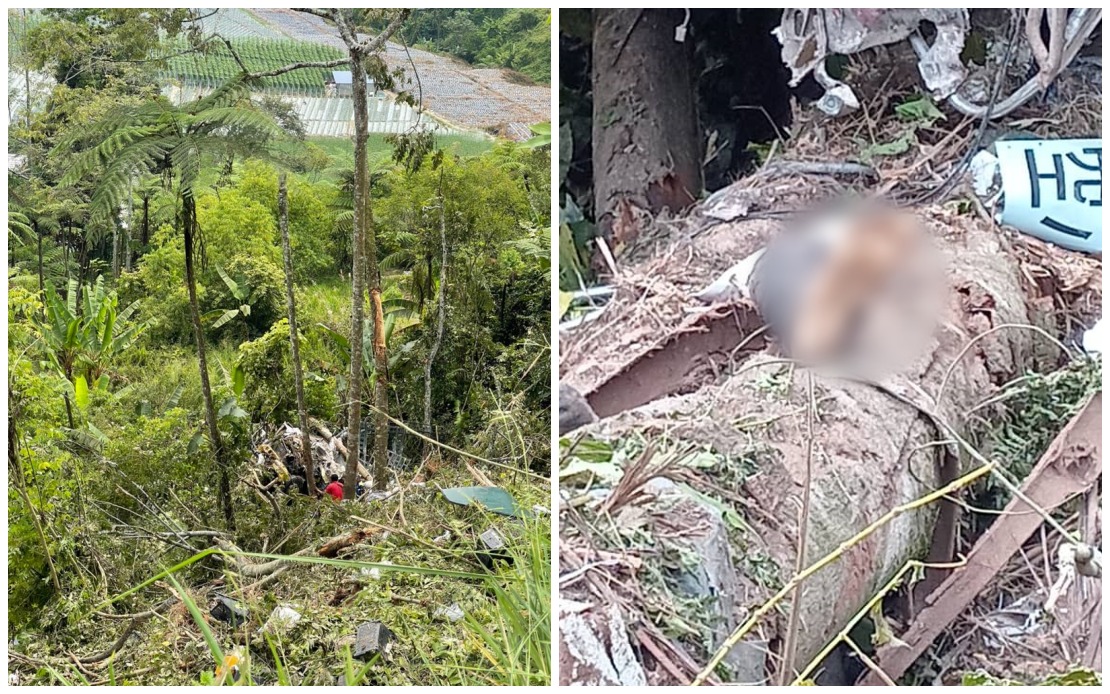
A tragic accident claimed the life of a lorry driver in his 40s when his 10-tonne vehicle careened off the road and plummeted into a deep ravine near the Pos Blau-Lojing Bridge in Gua Musang. The incident, which occurred on July 4, has renewed concerns about road safety in the district's more remote stretches, where mountainous terrain and winding routes present significant hazards for commercial vehicle operators.
Emergency responders received the initial distress call at 11.58 am, prompting firefighting teams from the Gua Musang Fire and Rescue Station to mobilise immediately. The station is situated approximately 98 kilometres from the accident site, making the journey to the location both time-consuming and challenging given the terrain. Despite the considerable distance, firefighters managed to reach the crash scene by 1.59 pm, demonstrating the logistical pressures faced by rescue services in more isolated parts of Kelantan.
Upon arrival, firefighters discovered the lorry submerged in the ravine, which plunged approximately 150 feet below the roadway. The vehicle had come to rest near an orchard adjacent to the main road, indicating the force with which it had left the carriageway. Initial information gathered by police suggested that the driver had become trapped beneath a heavy tree trunk that had fallen across the vehicle during or after the crash, compounding the emergency situation and complicating rescue efforts.
According to Asst Senior Fire Supt Muhammad Azrul Izzham Zulkifli, chief of the Gua Musang Fire and Rescue Station, the rescue operation required firefighters to conduct careful extraction work. The tree trunk that had pinned the driver beneath its weight necessitated deliberate removal before the victim could be retrieved from the wreckage. This aspect of the rescue operation underscores the complications that can arise when vehicles crash in forested or agricultural areas, where natural obstacles add layers of difficulty to already challenging recovery operations.
Unfortunately, by the time firefighters were able to extricate the driver from beneath the tree trunk, he had already succumbed to his injuries. Medical personnel at the scene pronounced him dead, marking a devastating end to the rescue effort. The exact nature of the injuries that proved fatal, whether resulting from blunt force trauma sustained during the fall, crushing injuries from the tree, or a combination of factors, has not yet been detailed in official reports.
Following standard procedure, the deceased's body was handed over to police custody for further investigation and processing. The transfer of the victim to law enforcement marked the transition from an active rescue operation to a criminal and administrative investigation, with forensic teams and accident reconstructionists likely to examine the vehicle and surrounding area to determine the sequence of events that led to the tragedy.
Gua Musang district police chief Supt Sik Choon Foo acknowledged the incident and confirmed that investigations were underway to establish the underlying cause of the crash. The circumstances surrounding why the lorry left the roadway remain under examination, with investigators likely considering factors such as vehicle mechanical failure, driver error, adverse weather conditions, visibility problems, or road conditions that may have contributed to the accident. The remote location and the involvement of a commercial vehicle suggest that comprehensive accident reconstruction may be necessary.
The fatality raises important questions about heavy vehicle operations in Kelantan's more mountainous districts, where roads like those near Pos Blau-Lojing present natural hazards exacerbated by the volume of lorries transporting goods through the region. Commercial drivers operating in such areas face unique risks, particularly during certain weather seasons when visibility deteriorates and road surfaces become compromised. The incident underscores the broader challenge of balancing economic transportation needs with road safety in states with challenging topography.
For the transport industry operating within the East Coast region, such incidents serve as sobering reminders of the importance of vehicle maintenance, driver rest requirements, and adherence to speed restrictions on mountainous routes. Kelantan's road network, while essential for commerce and connectivity, has been the site of numerous fatal accidents involving heavy vehicles, many linked to the combination of steep grades, sharp curves, and fatigue-related driver performance degradation.
The investigation into this specific crash will likely contribute to understanding accident causation patterns on Kelantan roads. Whether mechanical factors, human factors, or environmental conditions ultimately prove responsible, the incident highlights the ongoing necessity for multi-faceted approaches to reducing commercial vehicle accidents in the state. These approaches might include enhanced enforcement of speed limits, improved road infrastructure markings, mandatory rest stop facilities, and stricter vehicle inspection protocols.
The loss of life in this accident represents not only a personal tragedy for the driver's family and employer but also a reminder to all road users of the inherent dangers present on challenging stretches of Malaysia's highway network. As investigations continue, the findings may yield insights that could help prevent similar incidents in the future, potentially influencing policy decisions around heavy vehicle operations and road safety improvements in Kelantan and neighbouring states with similar geographical challenges.
Meanwhile, emergency services in the district continue to grapple with response time challenges posed by the geographic spread of Gua Musang, where remote areas can be many kilometres from fire stations and medical facilities. The July 4 incident exemplifies the difficulties faced by rescue personnel who must traverse considerable distances to reach accident sites, a factor that often influences survival outcomes in road accidents occurring far from urban centres.

