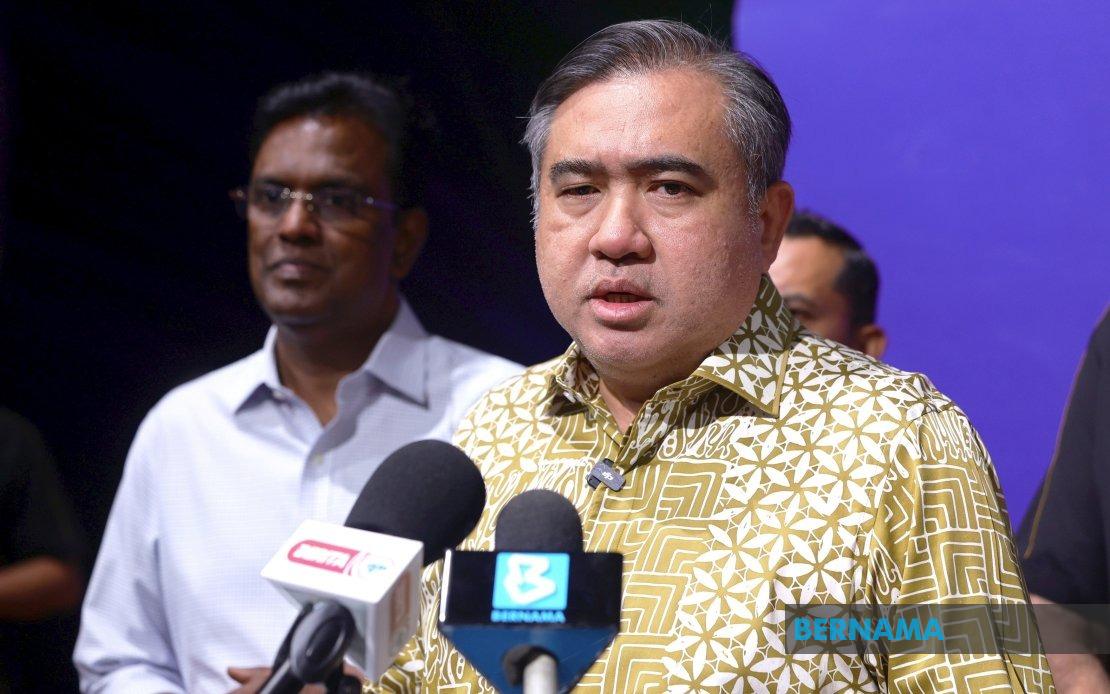
Anthony Loke, the sitting assemblyman for Chennah and secretary-general of the Democratic Action Party, has declared his willingness to contest against any rival in the forthcoming 16th Negeri Sembilan state election. Speaking in Seremban following his attendance at the state-level MyLesen B2 programme launch, Loke adopted a relaxed stance towards potential opposition, framing electoral competition as an inherent element of democratic governance rather than a threat to his political standing.
The remarks came after media reports suggested that businessman Albert Tei had been approached by a political party and was considering whether to mount a challenge for the Chennah seat. Rather than displaying defensiveness, Loke characterised such moves as entirely consistent with Malaysia's democratic framework and the constitutional rights afforded to all eligible citizens. His willingness to embrace competition reflects the DAP's broader positioning as a party confident in its grassroots support and electoral performance across peninsular Malaysia.
Loke stressed that the democratic system fundamentally guarantees individuals the freedom to seek electoral office, provided they fulfil the necessary statutory conditions. He specifically cautioned prospective candidates that eligibility requirements exist and must be scrupulously observed, noting that aspirants must ensure their registered residential address aligns with the constituency in which they intend to stand. This technical clarification carries particular significance in Malaysia's electoral framework, where constituency boundaries and voter registration rolls form the bedrock of electoral legitimacy and dispute resolution.
Despite appearing unbothered by the prospect of facing Tei or other potential opponents, Loke made clear that his immediate energies remain devoted to administrative and representative duties within Chennah. He suggested that anticipating or obsessing over electoral challengers would constitute an unnecessary distraction from the substantive work of serving constituents and delivering on policy commitments. This rhetorical positioning—wherein the incumbent presents himself as focused on governance rather than political sparring—forms a classic component of Malaysian campaign strategy during the lead-up to state elections.
The DAP politician emphasised that the trust and mandate conferred upon him by Chennah voters across three consecutive electoral cycles remained the lodestone guiding his present conduct. By invoking his track record of electoral success and the relationship built with the electorate over multiple terms, Loke implicitly advanced a case for continuity and experience. The implicit message—that voters have repeatedly chosen him and should therefore prefer his proven service record to an untested challenger—resonates particularly in constituencies where incumbents have cultivated long-standing community networks and constituent service infrastructure.
Negeri Sembilan's political landscape has evolved considerably over the past decade, with the state experiencing shifts in coalition fortunes and intra-party dynamics. The Chennah seat, historically a DAP stronghold in the state, remains strategically important to the party's overall performance in Negeri Sembilan. Loke's personal authority as both a state assemblyman and national party figure adds layered significance to his electoral prospects. His dual roles mean that polling day results in Chennah will carry implications not merely for state government formation in Seremban but also for the DAP's standing within the broader Malaysian political ecosystem.
The Election Commission has established a clear electoral calendar, designating July 18 as nomination day for the Negeri Sembilan contest, with voting scheduled for August 1 and early polling permitted on July 28. This compressed timeframe means that political parties and individual candidates have already begun mobilising supporters and finalising candidacy decisions. For Loke, the calendar leaves limited time for any campaign adjustments, placing emphasis on consolidating existing support networks and ensuring maximum voter turnout among his base.
Loke's confident demeanour reflects broader DAP calculations regarding its electoral prospects in Negeri Sembilan, where the party has established meaningful presence in certain constituencies despite never achieving state-government dominance. The party's performance in the state tends to be influenced by broader peninsular voting patterns and federal political developments, meaning that the Negeri Sembilan election will inevitably be read as a referendum on DAP fortunes nationally. Any significant shift in electoral performance, whether positive or negative, will likely be interpreted as indicative of the party's momentum heading into future federal electoral contests.
The prospect of Tei or other business figures entering the electoral fray reflects a wider phenomenon in Malaysian politics, wherein individuals with commercial success and financial resources periodically seek electoral office. Some such candidacies are organisationally sponsored, whilst others emerge from personal political ambitions or newly activated party approaches to candidate recruitment. Regardless of origin, the appearance of such alternative candidates typically prompts incumbent assessments of their vulnerability—assessments that Loke's public comments seek to minimise through displays of democratic confidence and constituent focus.
For Malaysian voters and political observers, the unfolding Negeri Sembilan election offers a window into state-level political dynamics and the durability of existing electoral coalitions. Malaysians have demonstrated in recent elections an increasing willingness to vote across party lines and to deliver rebuke to incumbent parties perceived as underperforming. Whether Chennah voters will reward Loke's incumbency and his presentation of himself as a dedicated representative, or whether they will embrace alternatives, remains to be determined as nomination day approaches.

