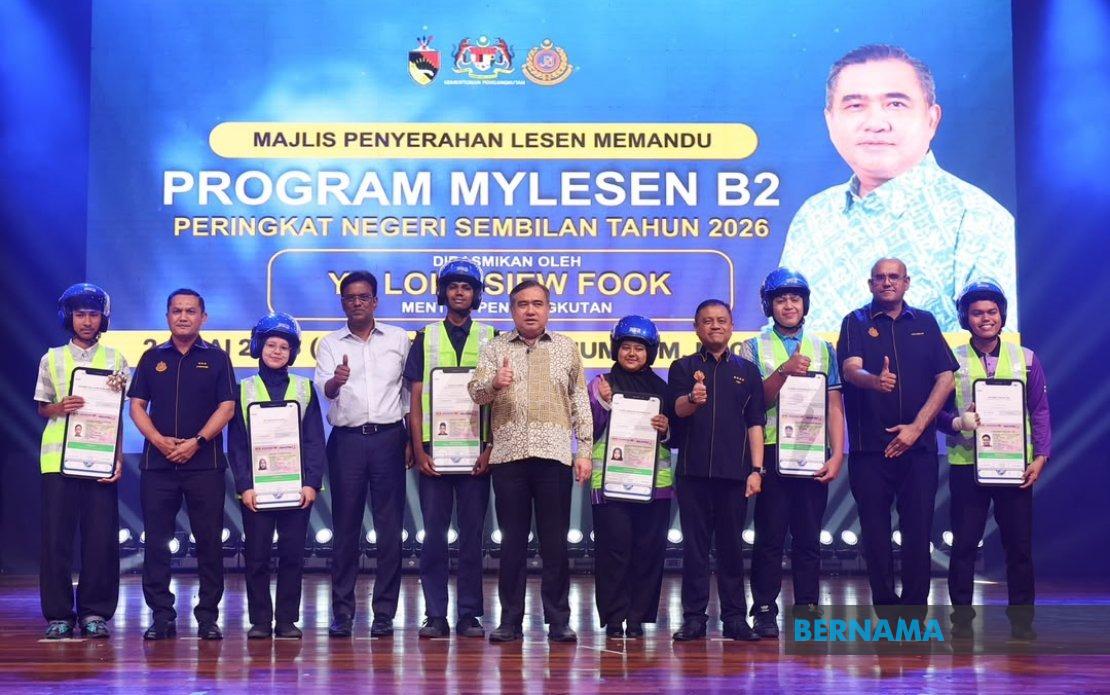
Transport Minister Anthony Loke has issued a stark reminder to youths receiving motorcycle licences through the government's MyLesen B2 Programme, emphasising that the credentials represent neither permission nor licence to engage in dangerous or illegal riding behaviour. Speaking during a ceremony in Seremban where licences were presented to programme participants, Loke made clear that the free licensing scheme carries with it weighty social and legal obligations, particularly the duty to prioritise personal safety and compliance with existing road traffic regulations.
The minister's intervention comes against a sobering backdrop of road fatalities involving two-wheeler users. Approximately 60 per cent of annual road accident deaths recorded across Malaysia involve motorcyclists and pillion riders, with the vast majority of victims falling below the age of 30. This demographic pattern underscores why the government has invested resources in the MyLesen B2 Programme—a targeted initiative designed to channel young riders toward responsible cycling habits from the outset, rather than confronting dangerous practices after they have become entrenched.
Loke's remarks about weekend behaviour and illegal street racing directly address cultural patterns that have emerged among some younger motorcyclists in urban and semi-urban areas. His statement that weekends are not occasions for racing reflects acknowledgment that recreational riding has occasionally morphed into organised or informal competitive activities that endanger both participants and the public. The warning against involvement in illegal activities, particularly unauthorised road racing on public thoroughfares, signals government determination to curb phenomena that have caused injury and fatality across Southeast Asian cities in recent years.
The programme itself has demonstrated substantial uptake and expansion. Since its inception in 2023, the MyLesen B2 initiative has furnished more than 100,000 licence recipients nationwide with legal authorisation to operate motorcycles. Within Negeri Sembilan alone, the allocation has nearly tripled, moving from 1,000 participants last year to 2,300 in the current cycle. Progress metrics reveal momentum: 1,979 participants have already obtained their Learner's Driving Licence, while 1,879 have progressed through formal training and competency examinations to secure their Probationary Driving Licence.
Beyond immediate road safety concerns, the programme addresses broader socio-economic aspirations across the Malaysian population. Access to affordable, legal motorcycle licensing has become a tangible pathway toward employment opportunities, educational mobility, and economic advancement for younger demographics. The free-of-charge structure removes financial barriers that might otherwise deter individuals from lower-income backgrounds from obtaining credentials, thereby democratising access to motorised personal mobility—a particularly significant advantage in regions where public transportation remains limited or expensive.
Compounding the minister's safety messaging, parliament recently passed the Road Transport (Amendment) Bill 2026, legislation explicitly designed to combat illegal racing and speed testing across all vehicle categories. The enhanced legal framework imposes penalties extending beyond monetary fines to include potential imprisonment for individuals apprehended engaging in such activities. This statutory escalation reflects parliamentary consensus that current enforcement mechanisms have proven insufficient to deter high-risk riding behaviour among some younger cohorts.
Loke's emphasis on practical safety measures further demonstrates integrated policy thinking. The specific recommendation that all licence holders wear SIRIM-certified helmets represents focus on readily achievable protective behaviours. While helmet compliance may appear elementary, compliance rates among younger riders in Malaysia remain inconsistent, particularly during short urban journeys where riders may feel minimal risk. The ministerial attention to this detail signals that comprehensive road safety depends upon enforcement of what are often perceived as minor protocols.
The presence of senior transport and road authority officials at the Seremban event—including Transport Ministry Secretary-General Datuk Seri Jana Santhiran Muniyan, JPJ Director-General Datuk Aedy Fadly Ramli, and regional JPJ officials—underscores institutional commitment to the programme's implementation and oversight. This administrative alignment suggests that the initiative enjoys cross-departmental support and is prioritised within transport policy hierarchies. The administrative visibility also serves to communicate that government takes young rider safety sufficiently seriously to warrant senior attention.
For Malaysian readers and policymakers, the MyLesen B2 Programme represents intersection between accessibility and responsibility—an attempt to extend licensing privileges while simultaneously reinforcing legal and safety obligations. The expansion trajectory, particularly the doubling of Negeri Sembilan's quota, suggests that government views the scheme as sufficiently effective to warrant resource increases. However, Loke's repeated safety messaging indicates that administrators recognise uptake expansion alone insufficient without complementary cultural messaging about appropriate riding conduct.
The programme's positioning within broader transport ecosystem development reveals strategic thinking that extends beyond licensing administration. Officials frame the initiative as integral to facilitating mobility and accessibility while simultaneously constructing sustainable transport infrastructure capable of accommodating expanded two-wheeler usage safely. This framing acknowledges that Malaysia's transport landscape has evolved substantially, with motorcycles and scooters serving as primary personal mobility tools for considerable population segments, particularly in smaller towns and rural areas where public transportation alternatives remain sparse.
Regionally, Malaysia's approach to young rider licensing and safety may provide instructive lessons for other Southeast Asian nations grappling with comparable challenges. Road fatality statistics involving motorcyclists remain elevated across the region, and the demographic profile of victims—predominantly younger individuals—mirrors patterns observed in Malaysia. The combination of subsidised licensing, formal training protocols, and enhanced legal penalties for dangerous riding represents comprehensive approach that other jurisdictions might adapt to their own contexts and capacities.
Moving forward, the effectiveness of both the MyLesen B2 Programme and the amended Road Transport legislation will depend significantly upon sustained enforcement efforts and cultural messaging. Loke's repeated emphasis on responsible riding, legal compliance, and protective equipment suggests that government recognises education and persuasion as necessary complements to statutory penalties. The challenge remaining involves translating legislative authority and licensing expansion into behavioural changes among younger riders—a task that extends beyond ministerial statements into sustained community engagement, peer influence dynamics, and family reinforcement of safety values.

