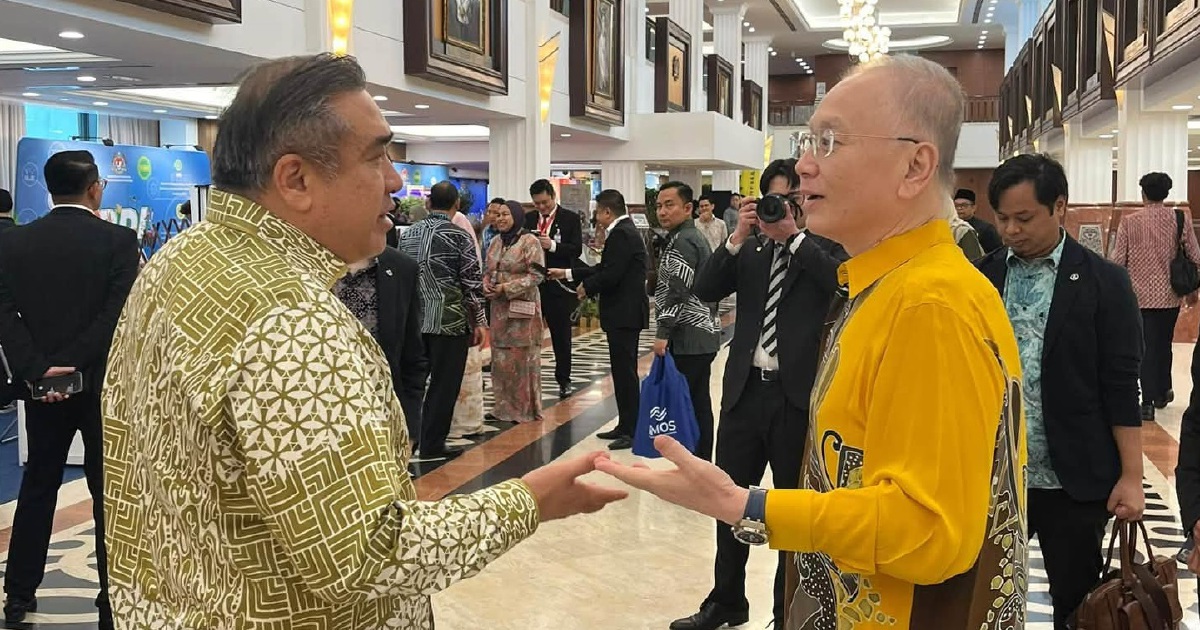
The mounting tension surrounding Johor's state election is not preventing parliamentary leaders from maintaining decorum on the floor of the Dewan Rakyat. DAP secretary-general Anthony Loke has indicated that despite the increasingly combative nature of campaigning for the Johor contest, both opposition and government figures remain committed to upholding the standards of professional conduct expected in parliament.
The commitment to civility in parliament stands in marked contrast to the escalating rhetoric emerging from campaign trails across Johor. State elections in Malaysia have historically become flashpoints for intensified political messaging, with parties leveraging regional contests to consolidate support and test electoral strategies. The Johor campaign has proven no exception, with both ruling coalition parties and opposition groups mobilizing grassroots support through aggressive campaigning that has occasionally spilled over into personal attacks and inflammatory language.
For opposition parties in particular, maintaining parliamentary decorum becomes a delicate balancing act during state campaigns. The DAP, which has substantial representation in the Dewan Rakyat, must navigate between the necessity of robust political competition in Johor and the institutional expectations that govern the national legislature. Loke's statement reflects a broader understanding among legislative leaders that parliament functions most effectively when personal political rivalries do not undermine the chamber's ability to conduct business efficiently.
The involvement of government figures, including those identified as key players during state campaigns, underscores the premium placed on parliamentary civility. Federal politics and state-level contests often involve overlapping personnel and constituencies, creating potential for tensions to migrate from campaign events to the national parliament. By establishing shared expectations about parliamentary conduct, leaders across the political spectrum can insulate legislative proceedings from the volatility of electoral competition.
Malaysian parliament's standing as an institution depends partly on the voluntary restraint exercised by its members. Unlike more formal mechanisms that might enforce decorum through stringent penalties, much of parliamentary procedure relies on members' commitment to maintaining the body's dignity. During periods of heightened political tension—such as state election campaigns—this voluntary compliance becomes increasingly important. The willingness of senior figures like Loke to articulate this principle publicly reinforces expectations among backbench members from both sides of the aisle.
The Johor election campaign's intensity reflects the state's political significance within Malaysia's broader electoral calculus. Johor remains one of the country's most crucial battlegrounds, with substantial parliamentary representation and considerable influence over federal coalition dynamics. Campaigns in the state therefore attract disproportionate attention from national-level politicians, media coverage, and grassroots mobilization efforts. This amplification of electoral competition can create spill-over effects that complicate relationships between political rivals who must nevertheless work together in parliament.
Experienced parliamentarians recognize that heated campaign periods eventually conclude, after which members must return to their ordinary legislative relationships. Maintaining cordial institutional relationships during electoral contests preserves the capacity for productive collaboration once campaigns end. This pragmatic perspective has guided parliamentary conduct through numerous previous state and federal elections. The ability of senior figures to compartmentalize campaign rivalry from parliamentary engagement has historically proven essential for Malaysia's legislative system to function effectively across electoral cycles.
The specific mention of parliamentary professionalism and respect carries weight precisely because it emanates from the opposition. Government-aligned figures calling for decorum might be perceived as attempts to mute criticism; when opposition leaders make equivalent calls, they signal genuine commitment to institutional norms rather than partisan advantage. Loke's position thus carries particular significance in setting expectations for opposition members who might otherwise feel emboldened to escalate rhetoric within parliament during periods of intense electoral competition.
For Malaysian voters observing from outside parliament, these commitments to institutional restraint may appear secondary to the substantive political contest unfolding in Johor. However, the health of Malaysia's democratic institutions depends on accumulating instances of leaders choosing principle over immediate political advantage. Each state election campaign that concludes without serious parliamentary disruption reinforces expectations that future campaigns will likewise maintain this separation between electoral competition and legislative conduct.
The Johor election therefore becomes a test case for whether Malaysia's political culture can sustain robust electoral competition without allowing institutional degradation. The commitment articulated by Loke and others suggests that senior political figures understand this distinction. Whether their commitment translates into consistent member conduct throughout the campaign period will indicate the depth of this institutional commitment across the broader political spectrum. The coming weeks will reveal whether this stated principle survives contact with the pressures of active state-level campaigning.

