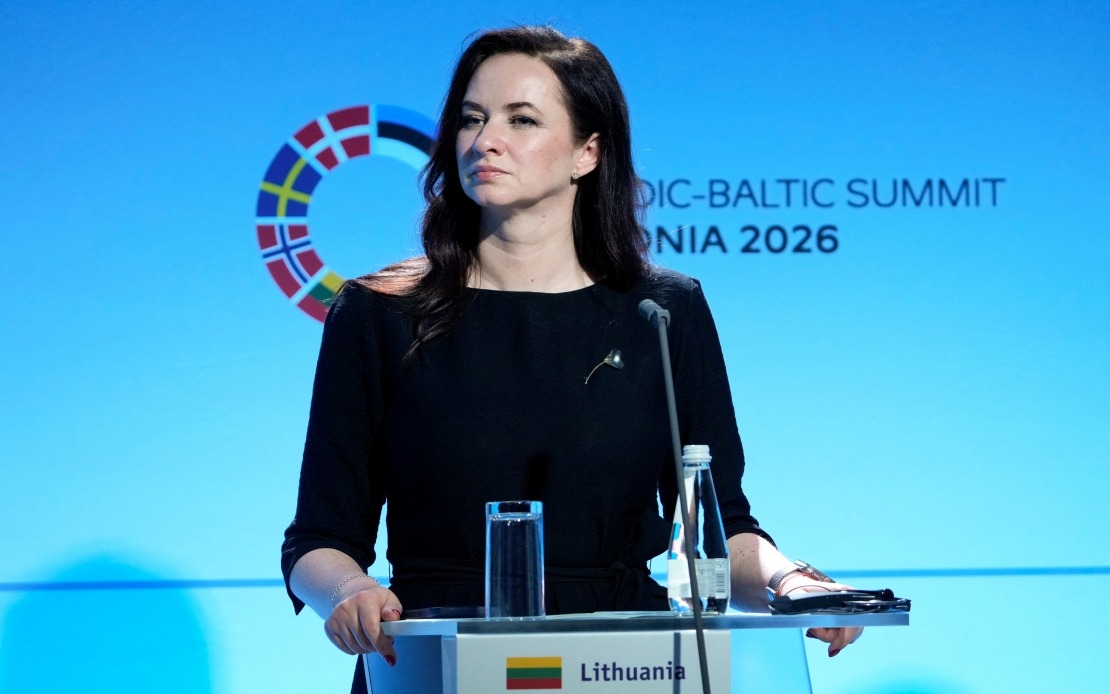
Lithuania's government structure faces significant reorganisation following Prime Minister Inga Ruginiene's resignation announcement on Tuesday, marking another shift in the Baltic nation's political leadership within less than a year. The departure of the outgoing Cabinet has set in motion a constitutionally defined succession process that will reshape the country's governing coalition and policy direction during a period of regional geopolitical sensitivity.
President Gitanas Nauseda now faces a 15-day window to formally nominate a successor for the prime minister position. The constitutional framework requires that whoever receives this presidential nomination must subsequently win the confidence of the Seimas, Lithuania's 141-member parliamentary chamber, before assuming office. This two-stage approval process ensures both executive and legislative branches play roles in determining the nation's top executive.
Mindaugas Sinkevicius, who leads the Lithuanian Social Democratic Party that anchors the ruling coalition, stands as the overwhelming favourite to secure the presidential nomination and parliamentary confirmation. Political observers in Vilnius regard his elevation as virtually assured barring unforeseen developments. Once formally appointed by parliament, Sinkevicius will receive an initial 15-day period to assemble his Cabinet team, during which he must also articulate the incoming government's governing agenda and policy priorities to legislators. He will then have a further 15 days to submit the complete ministerial lineup for parliamentary approval, a critical juncture determining whether his coalition commands sufficient support to govern effectively.
The incoming administration will represent the third governing coalition assembled by the Social Democrats since parliamentary elections concluded in late 2024, indicating considerable instability within Lithuania's coalition arithmetic. The frequency of government changes reflects both the fragmented nature of Lithuania's party system and tensions within the ruling alliance, with different coalition partners holding divergent views on key policy questions. This pattern of repeated coalition reshuffles creates uncertainty around long-term policy implementation and Lithuania's ability to maintain consistent strategic direction during a period when regional stability concerns demand steady governance.
The current Cabinet, which took office last August, succeeded an earlier Social Democratic administration led by Gintautas Paluckas. That previous government's relatively brief tenure already signalled difficulties in maintaining coalition cohesion. Ruginiene's departure merely continues a trend of frequent government turnovers that has characterised Lithuanian politics since the 2024 elections, with each transition creating transitions in ministerial personnel and occasionally policy recalibration.
During Tuesday's final Cabinet meeting, ministers unanimously voted to approve the resignation resolution, suggesting the decision reflected either internal consensus or managed agreement among coalition partners regarding the necessity for change. Ruginiene used the occasion to publicly acknowledge her government's accomplishments, characterising its tenure as having achieved substantive results despite confronting considerable operational challenges. Her remarks reflected an effort to frame the transition positively rather than as a failure, though the rapid succession of government changes points to underlying difficulties in coalition management.
President Nauseda has accepted the formal resignation and instructed the outgoing Cabinet to remain in place as a caretaker administration handling routine governmental functions until a new government successfully completes its formation and parliamentary confirmation. This caretaker arrangement prevents governmental paralysis during the transition period and ensures continuity of essential services, though it also means the current ministers operate under constraints regarding major policy initiatives pending the new government's establishment.
For Malaysian and broader Southeast Asian observers, Lithuania's governmental instability offers comparative lessons regarding coalition politics in smaller democracies. While Malaysia and other Southeast Asian nations operate within different constitutional frameworks and party systems, the Lithuanian experience illustrates how even stable European democracies can experience frequent government changes when parliament becomes highly fragmented. The structural vulnerabilities apparent in Lithuania's current political system—where multiple government formations within a single year appear commonplace—reflect broader challenges facing proportional representation systems that produce numerous coalition partners with divergent agendas.
Lithuania's ongoing political realignment occurs amid heightened regional tensions following Russia's invasion of Ukraine, making governmental stability particularly consequential. The Baltic state serves as NATO's eastern frontier and maintains substantial defence commitments, requiring sustained policy consistency and coherent strategic messaging. Frequent government transitions risk creating policy discontinuities on security matters and potentially confusing NATO allies regarding Lithuania's strategic priorities and reliability as a partner in collective defence arrangements.
The transition also matters for Lithuania's European Union leadership and fiscal management responsibilities. As an EU member state and eurozone participant, Lithuania participates in collective decision-making on monetary and fiscal policy affecting the broader bloc. Governmental instability at the executive level can impair a nation's ability to effectively represent its interests within EU institutions and maintain the policy continuity expected of eurozone members managing shared currency responsibilities.
Sinkevicius will assume leadership of a government facing substantial domestic and international pressures. Beyond managing coalition relationships, the incoming administration must navigate fiscal constraints, security concerns related to its geographic proximity to Russia, and EU obligations. His success in assembling a cohesive Cabinet and articulating a coherent governing programme will significantly influence whether Lithuania achieves greater governmental stability or whether further coalition reshuffles emerge within coming months.