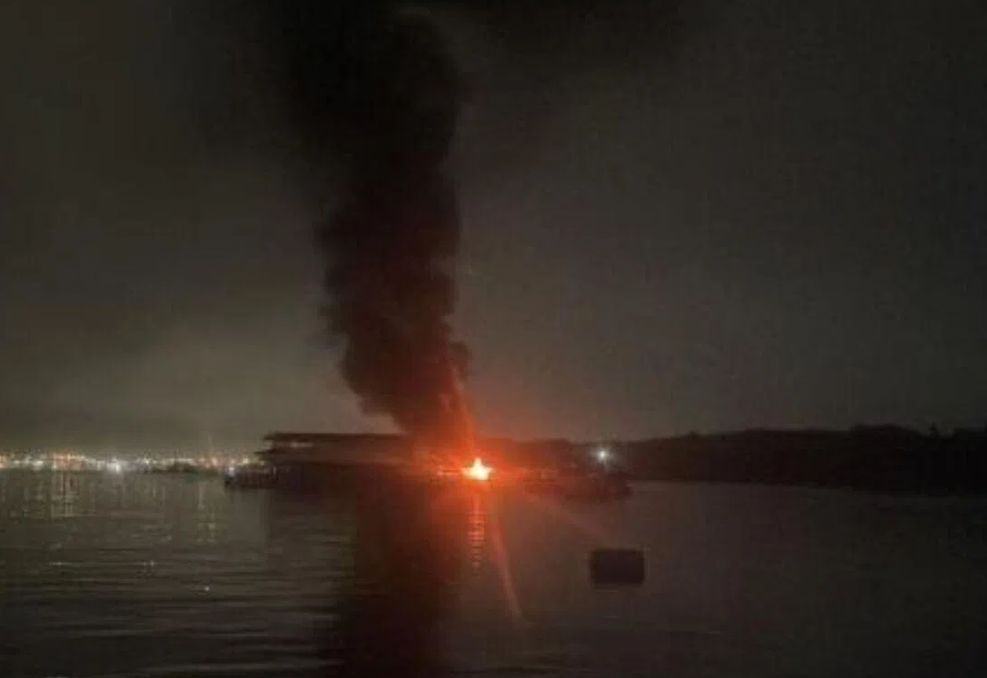
A dramatic firefighting operation unfolded off Singapore's coast on the evening of June 24 as emergency crews battled a blaze that swept through at least two floating aquaculture facilities positioned near Pulau Ubin. The Singapore Civil Defence Force (SCDF) received the alert shortly after 8.10pm and mobilised marine-based firefighting units to combat what would become a multi-hour operation threatening the livelihoods of local fish farmers operating in these waters.
The fire originated at one installation before propagating to neighbouring farms in what investigators believe was a chain reaction triggered by an initial lightning strike. According to reporting from Chinese daily Lianhe Zaobao, the electrical discharge connected with solar panel installations that dot these farms, igniting equipment and structural components that rapidly spread flame across the water-based operations. The incident underscores the particular vulnerability of floating agricultural operations to weather-related hazards, particularly during monsoon seasons when lightning becomes more frequent and intense across Southeast Asia.
The affected farms operate in waters adjacent to the Lorong Halus jetty near Pasir Ris, strategically positioned between two small islands—Pulau Ubin and Pulau Ketam—that form part of Singapore's aquaculture zone. This location, while providing access to deeper waters suitable for fish cultivation, also exposes operations to atmospheric conditions that produce powerful electrical storms. Maritime authorities, recognising the emergency's scope, deployed vessels from both the Maritime and Port Authority of Singapore and the Airport Emergency Service, supplemented by coordinated efforts from nearby farm operators who mobilised their own resources to contain the spreading flames.
One affected farm owner quantified the devastation at approximately S$120,000 in direct losses, a figure representing not merely damaged equipment but the destruction of critical operational infrastructure accumulated over years of investment. The inventory of destroyed assets tells a comprehensive story of aquaculture operations: solar panels providing renewable power to pumping systems and monitoring equipment, generators serving as backup electrical supply, fish feed stocks stored for feeding cycles, a commercial fishing vessel essential for harvesting and maintenance, and multiple fish traps representing specialised harvesting technology. The economic blow extends beyond monetary assessment to encompass the operational paralysis that ensues when such comprehensive infrastructure damage occurs simultaneously.
Particularly concerning for farm productivity was the damage sustained by fishing nets and containment systems, which directly resulted in approximately half of the farm's fish stock escaping into surrounding waters. This loss represents both an immediate financial write-off and potential ecological implications for the broader marine environment, as displaced farmed fish may interact with wild populations in ways that scientists continue studying. The escaped fish, depending on species type and environmental conditions, may either perish from unsuitable conditions or establish temporary populations in local waters.
A striking aspect of this incident involves the owner's revelation that solar panel damage from lightning strikes represents a recurring problem for these operations, yet had previously been manageable. The critical difference in this case was the absence of workers on-site when the lightning struck. During previous incidents, the owner explained, personnel present could immediately address electrical damage and prevent escalation into full-scale fires. This highlights a fundamental vulnerability in floating farm operations where staffing levels, shift patterns, and luck determine whether infrastructure damage remains contained or cascades into disaster. The farms' isolated water-based location means they cannot easily be staffed continuously like land-based operations.
The owner further noted his inability to pursue insurance compensation for the fire damage, raising questions about coverage gaps in Singapore's aquaculture insurance framework. This detail suggests that farmers operating floating installations may face unprotected risks that land-based agricultural operations do not encounter with such severity. Insurance companies, it appears, may exclude or heavily restrict coverage for weather-related electrical damage on water-based farming equipment, leaving operators to absorb losses entirely when lightning strikes occur. Such gaps in coverage create disproportionate vulnerability for aquaculture sector participants compared to other agricultural segments.
Singapore's aquaculture sector represents a strategically important component of the nation's food security framework, producing locally-grown protein that reduces import dependency. Incidents like this fire, while isolated in immediate impact, collectively represent systemic risks threatening the viability of marine farming operations across the region. As climate change intensifies extreme weather events including more powerful lightning storms, the pressure mounts on Singapore's Fish Farmers Association and agricultural authorities to develop enhanced safety protocols and infrastructure resilience standards specifically designed for floating farm environments. These considerations become increasingly relevant as Southeast Asian nations pursue aquaculture expansion to support growing protein demands.
The aftermath of this incident demands comprehensive assessment by Singapore's relevant agencies. The Maritime and Port Authority's involvement alongside the SCDF suggests multi-jurisdictional coordination in emergency response, but whether regulatory frameworks adequately address prevention measures remains unclear. The Singapore Food Agency, responsible for agricultural oversight, may need to revisit safety requirements for renewable energy installations on floating farms, establishing clearer lightning protection standards and potentially mandating on-site response teams or automated fire suppression systems. Neighbouring Malaysia and other Southeast Asian aquaculture-dependent economies can observe Singapore's response as a template for strengthening their own marine farming safety infrastructure before similar incidents occur domestically.

