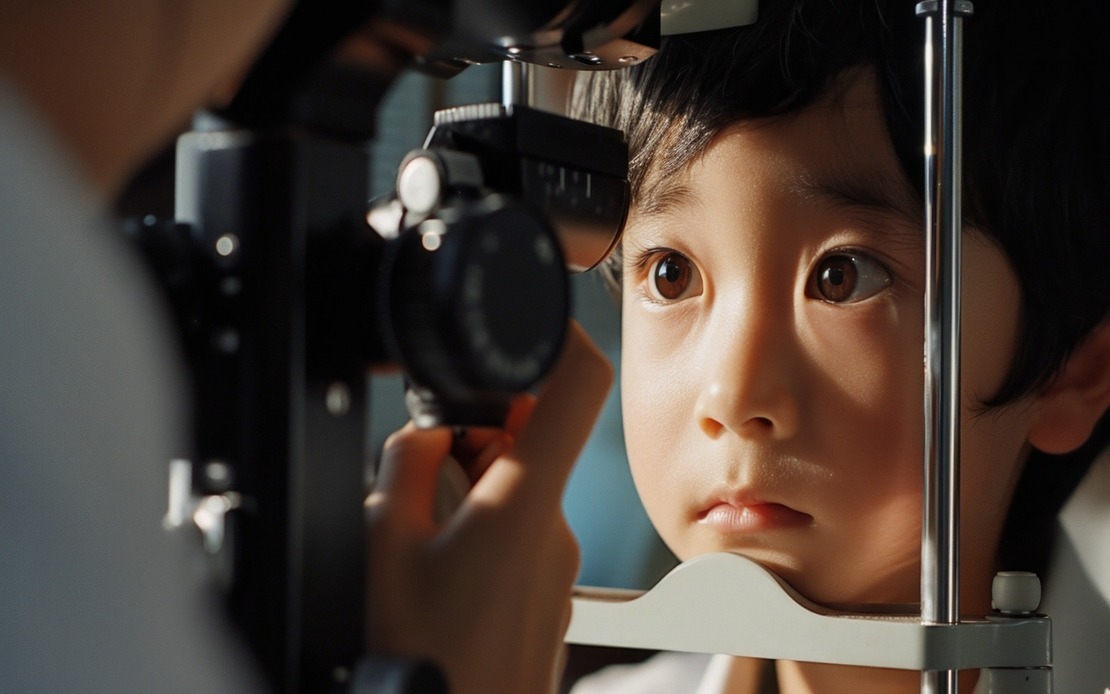
Vision problems that go undetected in childhood or overlooked in older age can result in permanent visual impairment, yet many Malaysians remain unaware of the importance of timely eye screening across the lifespan. Speaking recently, Dr Fazilawati A Qamarruddin, a consultant ophthalmologist specialising in paediatric eye care at Sunway Medical Centre, Sunway City, emphasised that conditions such as strabismus and cataracts—though commonplace—often escape notice until significant damage has already occurred, affecting educational performance, social development, and quality of life.
Squinting, medically termed strabismus, represents one of the most frequent yet underdiagnosed eye conditions among Malaysian children. The disorder manifests when the eyes fail to align properly, with one eye deviating from its proper position while the other maintains normal alignment. Beyond the obvious cosmetic concern, this misalignment disrupts critical visual functions including depth perception and binocular vision, with cascading effects on learning capacity and self-confidence during formative years. While uncorrected refractive errors—such as myopia or hyperopia—frequently underlie strabismus, the condition can also stem from more serious causes including nerve damage, neurological deficits, head trauma, or space-occupying lesions within the brain or eye orbits.
The prevalence of strabismus in Malaysia may surprise many parents and educators. Globally, medical research indicates that between two and four per cent of children present with this condition, a figure that translates to thousands of affected Malaysian children when applied to the local population. Despite such numbers, the majority of cases remain unidentified during routine childhood years, only becoming apparent when parents or teachers notice declining school performance or the child exhibits social withdrawal related to appearance or visual frustration. This delay in diagnosis carries significant consequences, as untreated strabismus frequently progresses to amblyopia, colloquially known as lazy eye, a condition in which the brain progressively suppresses the image from the weaker eye and relies increasingly on the stronger one, eventually resulting in permanently reduced vision in the affected eye.
Preventing such irreversible outcomes requires a proactive approach to childhood eye screening. Dr Fazilawati advocates for comprehensive vision assessments by age three, with follow-up examinations just before a child enters primary school, periods during which refractive errors—the most prevalent eye problems in Malaysia—can be identified and corrected through prescription eyewear. Parents should remain vigilant for warning signs including head tilting, frequent squinting, positioning themselves unusually close to television or screens, and complaints of headaches, symptoms that warrant immediate professional evaluation rather than waiting for schools to flag concerns. The window for intervention is narrow; early detection and correction through simple interventions such as glasses can effectively prevent lifelong visual impairment and its associated educational and social complications.
Cataracts, predominantly a condition of ageing, present a different but equally important consideration for older Malaysians. Typically emerging in individuals over sixty years old, cataracts involve progressive clouding of the natural lens, though certain risk factors can accelerate their development. Those with diabetes, smokers, and individuals with substantial cumulative sun exposure face elevated risk of earlier cataract formation. The condition manifests through increasingly cloudy or blurred vision, heightened sensitivity to glare particularly at night, diminished colour perception, and progressive difficulty with nocturnal driving—complications that substantially compromise independence and quality of life in older age.
Modern medical advances have transformed cataract management, yet many older Malaysians remain unaware of how significantly surgical techniques have improved. Contemporary phacoemulsification, the gold standard surgical approach, employs ultrasound energy to fragment and emulsify the opaque lens through a remarkably small incision, typically measuring just three millimetres. This minimally invasive approach contrasts sharply with older surgical methods requiring substantially larger incisions and prolonged recovery. The smaller surgical wound permits faster healing, often enabling same-day discharge, with patients typically resuming light activities within one week and achieving complete visual rehabilitation within two weeks—a recovery trajectory that permits older adults to maintain their independence and engagement with family and community.
Beyond these age-specific conditions, emerging concerns surrounding digital device usage warrant attention across all age groups, particularly younger generations. Dr Fazilawati highlighted the mounting evidence that excessive screen exposure contributes to myopia progression in children and adolescents, a trend mirrored internationally as digital learning and recreational screen time have intensified. Addressing this requires practical interventions: the 20-20-20 rule represents an evidence-based approach wherein individuals pause their screen activity every twenty minutes to view an object approximately twenty feet distant for a twenty-second duration, a simple practice that meaningfully reduces eye strain and potentially slows refractive error progression.
Establishing lifelong eye care practices requires clear screening guidelines applicable across different life stages. Dr Fazilawati recommends that all adults commence regular eye examinations from age forty, even in the absence of perceived visual problems, as many serious conditions develop asymptomatically. Children should ideally undergo screening before commencing formal education, whilst individuals living with diabetes merit annual ophthalmological assessments given the rapid progression potential of diabetic retinopathy and the availability of effective treatments when detected at earlier stages. The fundamental principle underlying these recommendations centres on the reality that early detection consistently supports superior outcomes, preserving learning capacity in children, maintaining independence in older adults, and safeguarding overall quality of life.
The implications of delayed or missed eye examinations extend beyond individual health consequences to broader societal concerns. Preventable visual impairment imposes substantial burdens on family caregivers, healthcare systems, and social services, yet such burdens prove largely avoidable through relatively simple preventive measures. Many individuals postpone eye examinations owing to inconvenience, cost considerations, or underestimation of risk, decisions that ultimately result in missed opportunities for straightforward interventions. By contrast, embracing regular eye screening as a fundamental healthcare priority—comparable to dental checks or blood pressure monitoring—positions individuals and families to detect conditions early, when treatment options prove most effective and visual prognosis remains favourable, ultimately supporting better learning outcomes in children and sustained independence and wellbeing across older age.

