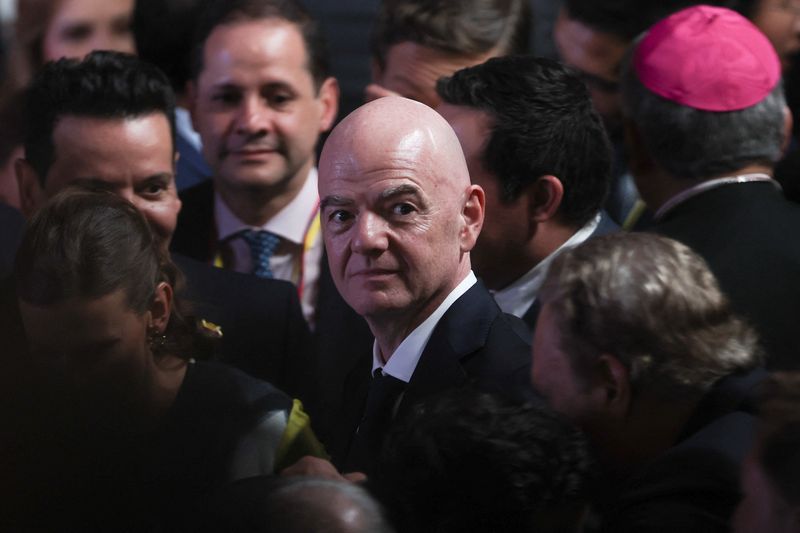
The Confederation of African Football president has thrown his weight behind FIFA's institutional procedures, insisting that Gianni Infantino's future as world football's chief executive should be determined through democratic channels at the organisation's membership congress scheduled for March 18 in Rabat, Morocco. Patrice Motsepe's intervention comes as the FIFA president navigates considerable institutional turbulence stemming from his failed attempt to restructure global competitions and introduce private capital into tournament formats, including the World Cup itself.
Infantino currently faces an unprecedented coordinated challenge from three of FIFA's six continental confederations. The European confederation UEFA, the Asian Football Confederation (AFC), and CONCACAF representing North and Central American nations have publicly censured his leadership and called for his resignation. This represents an unusual display of confederal unity against a sitting president, signalling deep fractures within FIFA's governing structure that extend beyond individual personalities into fundamental disagreements about the organisation's strategic direction.
Motsepe's position reflects a distinctly African perspective on institutional governance. The CAF leader articulated his philosophy of leadership accountability while simultaneously defending established procedural frameworks. He acknowledged that executives should face scrutiny and interrogation regarding their conduct, particularly on matters of due process and proper governance standards. However, he frames this scrutiny as something best conducted through FIFA's formal mechanisms rather than through public campaigns or confederal ultimatums.
The African football chief's core argument rests on democratic legitimacy. By emphasising that 211 member associations represent the true constituency of FIFA decision-making, Motsepe is essentially contending that no single confederation, regardless of its economic or sporting clout, should unilaterally determine FIFA's leadership. This position carries particular weight in a global football context where African nations collectively comprise over a quarter of FIFA's membership, giving them substantial numerical influence in voting scenarios.
Motsepe's language about "due process, governance and legality being non-negotiable" suggests a concern that the coordinated assault on Infantino, however well-intentioned regarding specific governance concerns, might itself represent a departure from proper institutional procedure. His framing implies that regardless of philosophical disagreements about FIFA's direction, the remedy must flow through established electoral and investigative channels rather than through public pressure or confederal rebellion.
The CAF president's explicit confirmation that Infantino retains African support provides the embattled FIFA leader with a crucial power base. African football's backing, combined with potential support from other confederations and federations not publicly opposed to Infantino, could prove decisive in any electoral contest. This calculus suggests that Infantino's position, whilst undoubtedly weakened, remains viable precisely because FIFA's distributed power structure prevents any single confederation from determining outcomes unilaterally.
Motsepe's emphasis on allowing "candidates who want to stand against him" to present alternative visions reflects a pragmatic acceptance that Infantino may face electoral opposition. Rather than dismissing the possibility, he frames competitive elections as legitimate and desirable, suggesting that open contests between candidates representing different footballing philosophies would strengthen rather than weaken the organisation. This stance implicitly criticises those seeking to remove Infantino through pressure rather than through electoral means.
For Malaysian and Southeast Asian football stakeholders, this debate carries significant implications. AFC members' decision to join the public criticism of Infantino fundamentally affects their confederation's relationship with FIFA's president. Any fracture between AFC and FIFA leadership could influence resource allocation, tournament scheduling, and strategic priorities affecting Asian football development. The outcome of the March 2027 congress will therefore shape the regional football landscape across Southeast Asia's major footballing nations and developing federations alike.
Motsepe's insistence that FIFA should focus simultaneously on addressing specific governance concerns whilst maintaining institutional stability represents a both-and rather than either-or approach. He suggests that procedural legitimacy and substantive reform need not be mutually exclusive. This perspective acknowledges real anxieties about FIFA's direction whilst arguing that solutions must emerge through established frameworks rather than through confederal revolt, however justified the underlying concerns might be.
The tension between Motsepe's position and that of UEFA, AFC, and CONCACAF ultimately reflects differing philosophies about accountability mechanisms in international sports governance. The three rebellious confederations apparently believe that the severity of Infantino's governance failures justifies extraordinary pressure outside normal electoral processes. Conversely, Motsepe contends that extraordinary measures, regardless of their justification, threaten the institutional integrity that football requires for long-term stability.
The approaching March 2027 Congress therefore promises to be a pivotal moment for global football governance. Infantino faces a genuine electoral challenge, yet his institutional position remains substantially stronger than the confederal pressure suggests. The outcome will likely depend less on rhetoric about governance than on the complex calculations of 211 separate national football associations weighing their own interests, their relationships with FIFA's president, and their visions for football's future direction across their respective regions.

