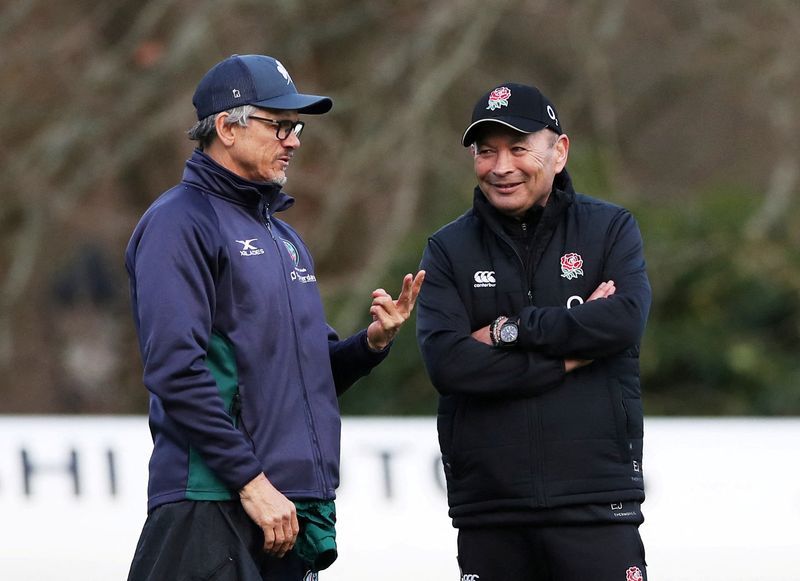
Australia's newly appointed rugby coach Les Kiss has adopted a markedly different philosophy from his predecessor, declaring he will pursue talent wherever it exists globally in his bid to reverse the Wallabies' alarming recent form and mount a genuine World Cup challenge. Speaking at his inaugural press conference in Sydney following the announcement of his first squad for the upcoming two-test series against Japan, Kiss made clear his willingness to look beyond Australia's domestic competition if overseas-based players could provide the competitive advantage needed for a struggling team currently languishing in eighth place in world rankings.
The 61-year-old former Queensland Reds boss has inherited a squad dealing with a concerning trajectory, having lost nine of their last eleven matches and recorded a heavy defeat to France alongside a narrow loss to Ireland during the recent Nations Championship. Kiss named his initial Wallabies contingent on Thursday, largely preserving the core group utilised by Schmidt during the home tests, a cautious opening move that nonetheless masks his more expansive strategic intentions. His comments regarding the recruitment approach represent a notable recalibration of Rugby Australia's traditional policy, which deliberately restricts overseas selection to encourage player development and retention within the domestic Super Rugby competition.
Schidt, Kiss's predecessor over two years in the role, exercised considerable restraint when it came to utilising discretionary picks for overseas-based players, maintaining strict adherence to the organisational policy. In contrast, Kiss has already begun preliminary discussions with several players based abroad, including outside back and centre Jordan Petaia currently recovering from injury in Japan. This proactive approach signals that the new coach intends to operate within a broader talent pool and will not be constrained by administrative convention if performance outcomes justify such selections. The shift reflects growing recognition within Australian rugby circles that domestic players alone may be insufficient to compete at the elite World Cup level.
Kiss articulated his position with characteristic bluntness during the Sydney media briefing, stating that his fundamental objective remains securing the strongest available personnel regardless of geographic constraints. He emphasised that while respecting the quality of players competing in Australian competitions, he would not hesitate to look internationally for athletes capable of making decisive contributions to Test match victories. This pragmatism contrasts markedly with the romantic platitudes offered by many incoming national coaches, who typically pledge adherence to some imagined authentic Australian playing style. Instead, Kiss grounded his philosophy in the concrete objective of winning matches and tournaments.
The coach's comments carry particular significance given the enormous financial investment Rugby Australia has made in securing high-profile defections from other codes. Joseph Suaalii, signed from the National Rugby League for approximately A$5 million, represents the most conspicuous example of this recruitment strategy. The 22-year-old athlete achieved an impressive debut during Australia's 2024 Northern Hemisphere tour but has subsequently delivered only sporadic flashes of the expected brilliance, creating ongoing debate within the sport regarding his optimal playing position. Kiss has determined to follow Schmidt's approach by deploying Suaalii at outside centre, though the coach acknowledged the player's capacity to perform effectively at fullback.
The positioning decision regarding Suaalii reflects Kiss's broader strategic thinking about the Wallabies' pathway forward. Rather than constantly experimenting with personnel placement, he intends to establish stability and allow players to develop consistency in defined roles. This represents a departure from the chaotic experimentation that characterised several previous coaching tenures, during which frequent positional changes and squad rotation created instability rather than improvement. Kiss's initial squad selection demonstrates his commitment to providing continuity while simultaneously signalling his readiness to supplement domestic talent with overseas-based alternatives if performance metrics justify such moves.
The Wallabies' participation as World Cup hosts places additional pressure on the coaching staff and player cohort to deliver competitive performances and maintain public support for the sport. Australia's history in rugby championships during the 1990s and early 2000s, when the team competed consistently at the highest level under coaches such as Bob Dwyer and Rod Macqueen, demonstrates what sustained excellence looks like. However, the subsequent two decades have witnessed a steady erosion of competitiveness, culminating in Michael Cheika's team reaching the 2015 World Cup final in England before suffering elimination. The organisation has cycled through multiple coaching appointments since that juncture, each promising renewal without delivering sustainable improvement.
Kiss invoked the concept of Australian rugby identity, asserting that the sport has traditionally embodied a spirit of innovation and creative thinking within a framework of competitive intensity. He suggested that the path forward involves reclaiming and amplifying these characteristics through deliberate playing patterns and squad development. This philosophical approach avoids the trap of attempting to impose unfamiliar systems or abandoning core strategic principles simply for novelty's sake. Instead, Kiss appears committed to evolving Australian rugby by refining what has historically worked while adapting to contemporary tactical demands.
The upcoming Japan tests provide Kiss with an initial platform to implement his vision and assess squad capabilities under match conditions. Japan, under the stewardship of Eddie Jones, will present a formidable challenge given the current strength of the Japanese rugby programme and the Wallabies' inconsistent recent performances. Success in these fixtures would generate momentum and provide tangible evidence that Kiss's pragmatic selection philosophy and emphasis on identity-based performance deliver improved outcomes. Conversely, failure would intensify scrutiny regarding both the coaching appointment and the organisation's broader strategic direction.
Kiss's tenure will ultimately be judged on World Cup performance and the broader trajectory of Australian rugby over the coming years. His willingness to challenge established conventions regarding overseas selection suggests confidence in his ability to identify and integrate talent from diverse sources. This openness to alternative approaches, combined with his emphasis on Australian rugby traditions, positions him as a coach willing to embrace pragmatism without abandoning principles. Whether this philosophy succeeds in reversing the team's decline and delivering World Cup competitiveness remains to be demonstrated through sustained on-field performance.

