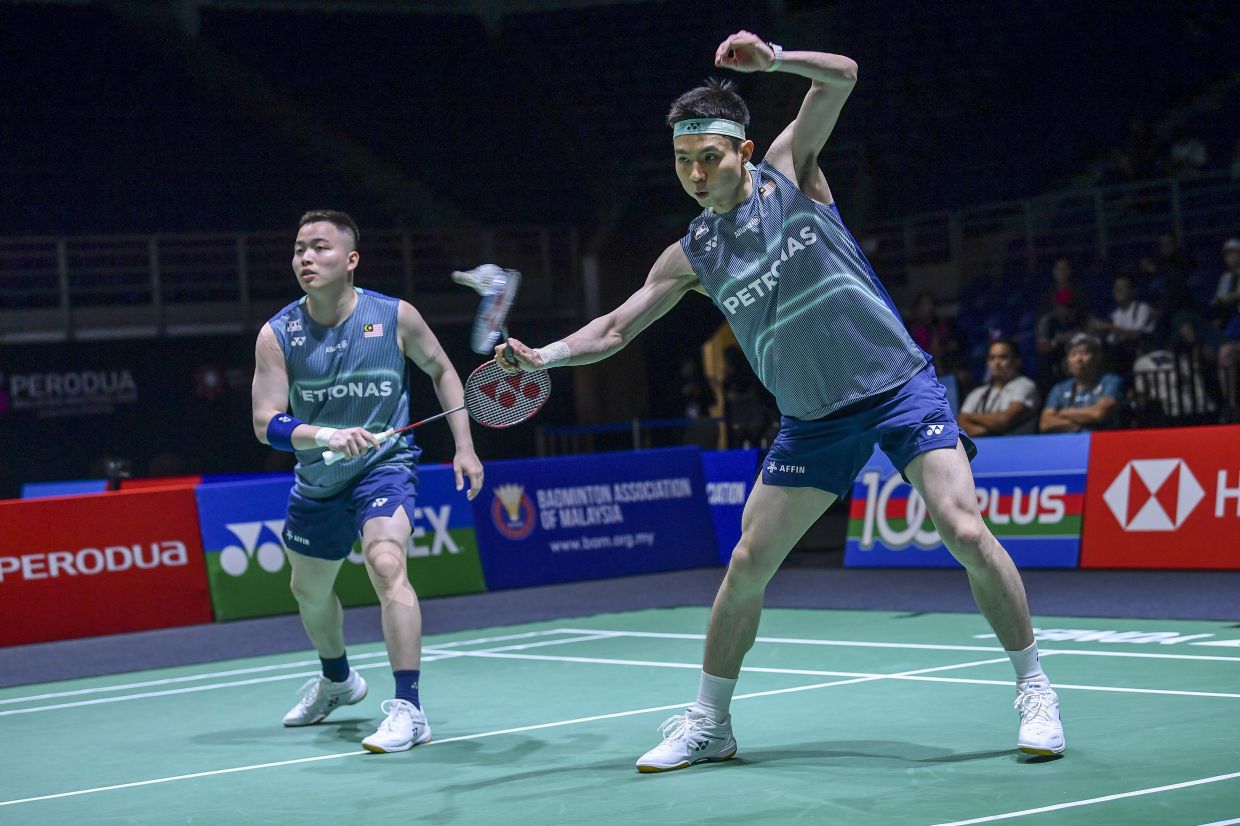
The Badminton Association of Malaysia's performance committee chairman Datuk Seri Lee Chong Wei has issued a firm message to the national team: no individual player holds enough sway to dictate terms through threats of departure. His declaration underscores growing tensions between the federation and its elite athletes over competitive strategy and player retention, matters that carry significant implications for Malaysian badminton's Olympic ambitions.
Lee's remarks directly addressed recent comments from men's doubles player Soh Wooi Yik, who signalled openness to exploring all available options as he and Aaron Chia attempt to remain paired together through the 2028 Los Angeles Olympic Games. The partnership, which captured a silver medal at last week's World Championships in New Delhi, has emerged as Malaysia's most competitive men's doubles combination, making its preservation a strategic priority for both players and the federation.
The BAM chief emphasised that while the association maintains an open-door policy for player negotiations, it will not be swayed by ultimatums. He stressed that athletes must recognise their institutional origins and remember the foundational role BAM played in their development from junior participants into world-class competitors. This framing positions the federation as not merely a current employer but as the architect of each player's career trajectory, creating an implicit debt that transcends individual achievement.
Lee's language revealed a management philosophy markedly different from predecessors, suggesting that previous administrations may have acquiesced to player pressure more readily. He explicitly stated that the current leadership team possesses both the resolve and appetite to make unpopular decisions, implying that capitulation to threats would undermine institutional authority. This posture reflects broader governance concerns within Malaysian sports organisations about maintaining hierarchical control and preventing precedent-setting that could embolden future demands from the athlete roster.
The underlying dispute concerns BAM's ongoing experimentation with alternative pairings despite Aaron-Wooi Yik's demonstrated success. Over the past two months, the coaching infrastructure has tested Aaron Chia alongside Aaron Tai, a combination that reached the Taiwan Open final, whilst Wooi Yik initially struggled with Man Wei Chong before achieving greater success at the Korean Masters when reunited with Aaron Tai. These rotations reflect the federation's commitment to identifying optimal pairings across the full Olympic cycle, a strategic approach that potentially conflicts with the players' preference for stability and continuity.
The federation's testing methodology will continue into September, with further reshuffles scheduled for the China Masters tournament beginning September 1st. During this competition, Aaron will pair with Wei Chong while Wooi Yik teams with Aaron Tai, perpetuating the separation that Chia and Soh view as counterproductive to their collective ambitions. For players and their supporters, this rotating approach generates uncertainty about which partnerships will ultimately represent Malaysia's official Olympic contingent, creating pressure to resolve compositional questions sooner rather than later.
The contractual architecture underlying player obligations provides BAM with substantial enforcement mechanisms should athletes attempt to circumvent federation authority. Aaron Chia and Soh Wooi Yik remain bound to BAM through contractual agreements extending to 2028, meaning unilateral departure would trigger compensatory financial obligations that could prove prohibitively expensive. Beyond monetary penalties, rogue athletes face the prospect of international competition bans that would devastate their ability to accumulate the world ranking points essential for Olympic qualification and participation.
For Malaysian badminton specifically, these tensions reflect the precarious balance between institutional control and athlete autonomy in high-performance sport. The federation's insistence on maintaining experimental flexibility, whilst administratively legitimate, conflicts with players' psychological need for partnership stability at elite levels of competition. International badminton research consistently demonstrates that men's doubles teams performing at championship level require extended periods working together to develop the intuitive court chemistry and tactical synchronisation that produces medal-standard outcomes.
The situation carries broader implications for Southeast Asian badminton development, as Malaysia's struggles with player management could influence how neighbouring federations approach comparable scenarios. Indonesia, Thailand, and Singapore all face similar pressures balancing institutional decision-making autonomy with athlete retention and satisfaction. Any perception that BAM successfully implemented disciplinary measures against defiant players could prompt regional competitors to adopt parallel strategies, potentially triggering a continent-wide recalibration of athlete-federation power dynamics.
Lee's warnings also illuminate how post-pandemic badminton governance has evolved globally, with federations increasingly asserting institutional primacy over individual player preferences. The COVID-era period witnessed numerous athletes successfully leveraging pandemic circumstances to negotiate improved terms, perhaps establishing precedents that current management now views as requiring corrective action. By drawing this line explicitly through public statements, BAM signals that the era of accommodating player ultimatums has concluded.
The federation's uncompromising stance may ultimately prove counterproductive if elite athletes like Aaron and Wooi Yik decide the personal costs of compliance exceed the benefits of remaining within the national system. Southeast Asia's badminton infrastructure, while historically strong, lacks the economic depth of Chinese or Indonesian federations, making player retention through institutional loyalty increasingly difficult without corresponding improvements in compensation, facility access, or coaching quality.
Moving forward, this dispute will likely establish precedent for how Malaysian badminton navigates athlete-federation conflicts. Lee's explicit rejection of capitulation to departure threats provides clarity regarding federation boundaries, yet leaves unresolved the substantive question of whether BAM's partnership experimentation strategy genuinely serves the 2028 Olympic campaign or instead reflects administrative caution about fully committing to specific pairings. Until the federation articulates the underlying logic justifying continued reshuffles, player frustration will probably persist regardless of warnings against public dissent.

