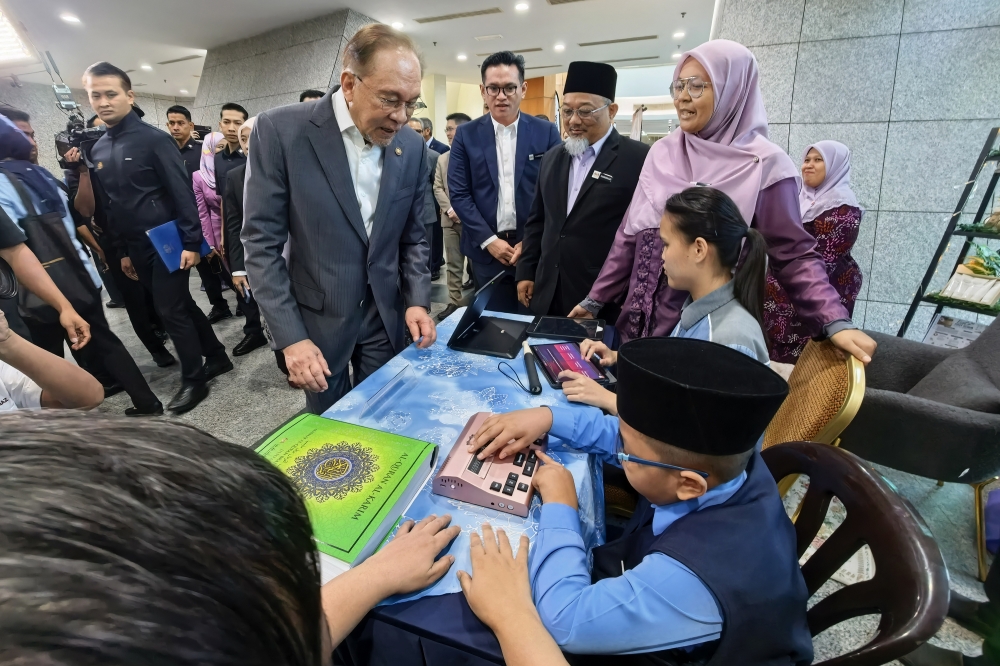
Prime Minister Datuk Seri Anwar Ibrahim has moved to reassure Malaysians that the pursuit of multilingual competency poses no threat to the standing or relevance of Bahasa Melayu, Malaysia's official language enshrined in the Federal Constitution. Speaking in Putrajaya on July 28, Anwar addressed lingering sensitivities surrounding language policy in a nation where debates over Bahasa Melayu often intersect with questions of national identity, cultural preservation, and economic advancement.
The Prime Minister's intervention comes amid broader discussions within Malaysian society about how best to position the country for success in an increasingly globalised economy. Anwar framed linguistic plurality not as a challenge to national cohesion but as a practical necessity for individuals seeking to compete effectively in international markets and engage with global knowledge systems. His comments suggest a deliberate effort to move away from zero-sum framings of language choice, where gains in one language are automatically perceived as losses for another.
Anwar's perspective reflects recognition that many successful economies maintain robust national languages while simultaneously fostering widespread competence in English, Mandarin, and other international languages. Countries throughout East Asia have navigated this balance by treating languages as complementary tools rather than competing loyalties. The PM's statement appears designed to encourage Malaysians to pursue educational and professional development opportunities without feeling that such efforts constitute a betrayal of national linguistic identity.
The timing of these remarks carries particular significance given Malaysia's aspirations to strengthen its position as a regional hub for finance, technology, and professional services. Sectors such as information technology, international commerce, and higher education increasingly require workers capable of communicating across multiple languages. By legitimising multilingualism at the highest political level, Anwar signals official endorsement for educational strategies that embed exposure to global languages within curricula while maintaining Bahasa Melayu as the foundation of national identity.
Historically, Malaysia has navigated complex language questions since independence, with the constitution designating Bahasa Melayu as the sole official language while acknowledging practical roles for English and other community languages. This framework has generally enabled coexistence rather than conflict, though periodic tensions arise during discussions of education policy, civil service recruitment, or media regulation. The current government's apparent comfort with overt promotion of linguistic diversity marks a notable rhetorical shift from approaches that sometimes emphasised protective stances toward Bahasa Melayu.
Anwar's position also acknowledges demographic realities within Malaysia itself. Significant portions of the population, particularly younger Malaysians and urban professionals, already operate fluently across Bahasa Melayu, English, and often Mandarin or other regional languages. Rather than resisting this reality, the PM's statement validates lived experiences while maintaining that such competence reflects sophistication rather than disloyalty. This framing potentially defuses tensions that sometimes arise when educational authorities or political figures suggest that language choices embody cultural preferences or patriotic commitment.
For Malaysian businesses seeking to expand internationally, the Prime Minister's endorsement of multilingualism removes potential policy uncertainty. Companies can now invest confidently in workforce development programmes emphasising English and regional languages without concern that such initiatives might attract political criticism or policy reversals. This clarity benefits sectors dependent on global engagement and may influence foreign investors' assessments of Malaysia's business environment and institutional stability.
The statement also carries implications for Southeast Asia's broader competitive landscape. Countries throughout the region compete for foreign direct investment and professional talent, with language capabilities affecting decisions about where international companies establish regional headquarters or development centres. By positioning Malaysia as a country where national pride in Bahasa Melayu coexists comfortably with genuine multilingual capacity, Anwar attempts to present the country as both culturally confident and practically cosmopolitan.
Educational institutions will likely interpret these remarks as guidance that curricula should maintain rigorous standards in Bahasa Melayu while expanding opportunities for quality instruction in international languages. Universities and schools have sometimes faced pressure to justify investment in English-medium programmes, but the Prime Minister's comments effectively provide political cover for such initiatives. This should encourage institutions to design integrated language strategies rather than viewing choices between languages as forced either-or decisions.
The broader context includes Malaysia's participation in regional and global initiatives requiring skilled personnel across multiple languages. Whether through ASEAN activities, international trade negotiations, or multilateral development projects, Malaysia benefits when its representatives and professionals command diverse linguistic capabilities. Anwar's remarks align government rhetoric with these practical operational requirements.
Likewise, the Prime Minister's position acknowledges that language preservation does not require limiting access to other languages. Bahasa Melayu's status as the official language, its centrality in Malaysian education, and its role in national institutions provide institutional protection that does not depend on restricting alternatives. This confidence in Bahasa Melayu's resilience contrasts with anxious approaches that treat any expansion of other languages as inherently threatening.
Moving forward, these comments may establish baseline expectations for how political leaders discuss language policy, shifting away from defensive rhetoric toward affirmative celebration of Malaysia's linguistic capabilities. The challenge will involve ensuring that Bahasa Melayu remains robustly taught and genuinely valued while creating space for linguistic diversity that reflects both demographic reality and economic necessity. Anwar's intervention suggests the government is attempting this calibration, though implementation through education policy, civil service standards, and institutional practice will ultimately determine whether the sentiment translates into sustainable policy.

