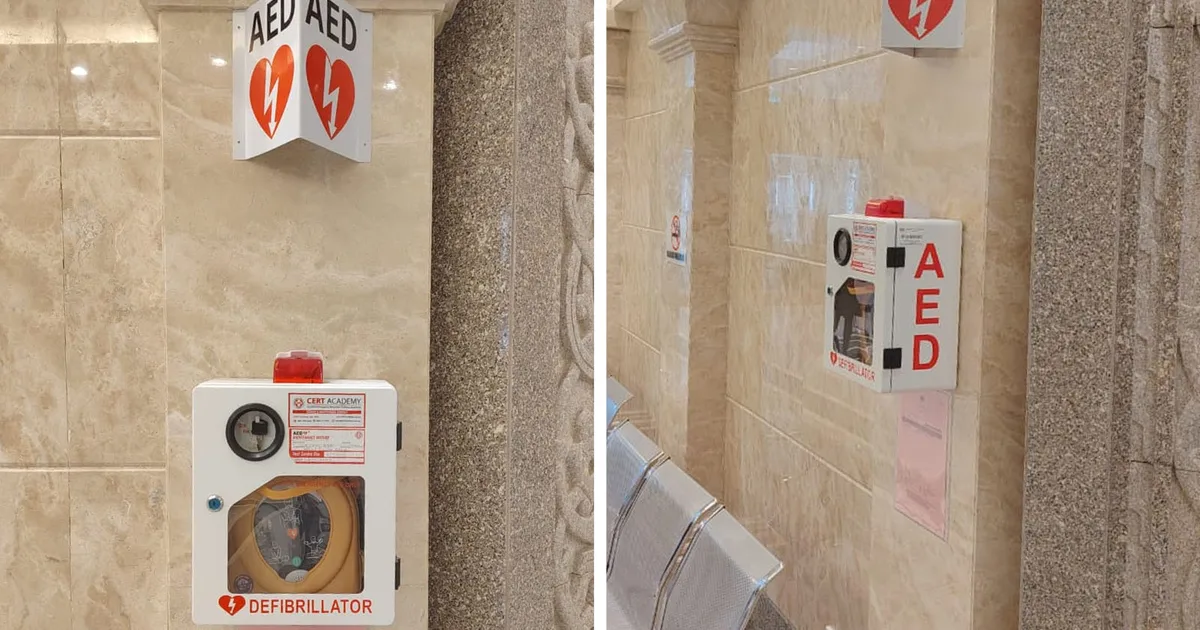
The Malaysian legal profession has launched a campaign to mandate the installation of automated external defibrillators (AEDs) at every major court complex nationwide, triggered by a recent tragedy involving a litigant who collapsed from sudden cardiac arrest while in a Kuala Lumpur High Court courtroom. The incident has reignited debate about medical emergency preparedness in judicial buildings and the urgent need for life-saving equipment in spaces where vulnerable populations regularly gather.
The push represents a significant shift in how Malaysia's legal institutions approach occupational health and safety, extending beyond traditional workplace protections to encompassing visitors, litigants, and members of the public who utilise court facilities. Court complexes serve as bustling public venues hosting thousands of individuals daily, many of whom are elderly, stressed, or dealing with health conditions that could increase cardiac risk. The presence of readily accessible defibrillators could substantially improve survival rates during cardiac emergencies, given that prompt intervention within the first few minutes can double or triple chances of recovery.
Current protocols at judicial facilities across Malaysia remain inconsistent. While some larger court complexes may have basic first aid equipment and trained personnel on site, many lack the specific infrastructure needed for sudden cardiac events. This patchwork approach creates dangerous inconsistencies, particularly given that cardiac arrest can strike anyone without warning, regardless of age or apparent health status. The High Court in Kuala Lumpur, one of the nation's busiest judicial institutions, processes hundreds of cases daily involving litigants, lawyers, families, and court staff, making it a prime location where medical emergencies inevitably occur.
The tragedy that prompted this advocacy effort underscores the critical gap between available medical technology and its actual deployment in key public institutions. While many shopping malls, airports, and sporting facilities across Kuala Lumpur and other major Malaysian cities have embraced AED installation as standard practice, the judicial system has been slower to adopt this life-saving measure. This disparity is particularly troubling given that courts are stressful environments where anxiety and emotional strain can trigger or exacerbate cardiovascular events.
Lawyers argue that implementing AED infrastructure represents both a moral imperative and a practical investment in public safety. The devices are relatively affordable, require minimal maintenance, and increasingly feature user-friendly interfaces that allow even untrained individuals to operate them effectively during emergencies. The cost-benefit analysis overwhelmingly favours installation across all major court complexes, especially when one considers the irreplaceable value of human life and the reputational and legal liability courts could face if avoidable deaths occur on their premises.
The proposal also intersects with broader healthcare concerns throughout Southeast Asia, where sudden cardiac deaths remain a leading cause of mortality. Malaysia's ageing population means courts will increasingly serve individuals at higher cardiovascular risk, making preventive infrastructure investments even more critical. Regional medical associations have increasingly advocated for widespread AED placement in public buildings, recognising that survival rates for cardiac arrest victims improve dramatically when defibrillation occurs within minutes rather than hours.
Beyond the specific case, this campaign reflects a growing maturation in Malaysian institutional thinking about emergency preparedness. Progressive organisations across the public and private sectors have recognised that comprehensive medical response capacity—not merely reactive first aid—represents a foundational responsibility. Courts, as government institutions entrusted with administering justice, should arguably be among the first to embrace such protective measures, setting an example for other public facilities.
The legal community's advocacy is expected to gain traction with relevant government bodies, including the Federal Court, the Judiciary, and the Attorney General's Chambers, which oversee court operations. Implementing this recommendation would require coordination across multiple stakeholders, but the technical and logistical barriers are minimal compared to the potential lifesaving impact. Establishing clear guidelines for AED placement, maintenance, and staff training could be accomplished within existing budget frameworks, particularly if phased across Malaysia's major urban court complexes.
International precedent supports this initiative. Courts in developed nations, including Australia, Canada, and several European countries, have already standardised AED installations as part of their facility infrastructure. These implementations have documented instances where the equipment successfully prevented deaths among both court users and staff members. Malaysia's legal system would benefit from adopting these proven international practices rather than waiting for additional preventable tragedies to force policy change.
The broader institutional challenge remains implementing the recommendation swiftly and comprehensively. While the moral case is compelling and the technical case straightforward, bureaucratic processes in Malaysia's judicial system can be lengthy. Advocates suggest that framing AED installation as part of a wider occupational safety and health upgrade could accelerate the process and secure necessary funding allocations. Court management should also consider conducting cardiac emergency drills and training staff in basic life support techniques, ensuring that installed defibrillators are paired with human capacity to use them effectively.
Looking forward, this incident and subsequent advocacy may establish a template for how Malaysia's public institutions identify and remedy safety gaps. The legal profession's willingness to push for systemic improvements following a tragedy demonstrates civic maturity and professional responsibility. Whether government agencies respond with equal urgency will determine whether this campaign yields concrete policy changes or remains another well-intentioned proposal lost to bureaucratic delays.

