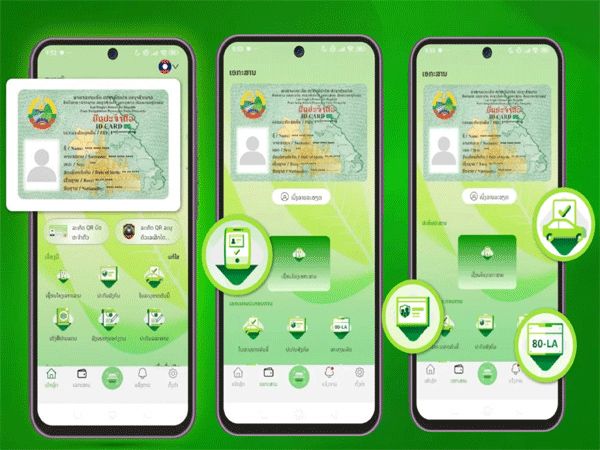
Laos has taken a decisive step toward digitising its public administration by formally retiring physical identity cards and paper household registration documents in favour of a unified mobile application. The Ministry of Public Security has officially launched the LAeID system, which consolidates essential personal identification onto smartphones, effective from July 18. This transition represents a watershed moment for the Southeast Asian nation's digital governance agenda, moving millions of citizens away from carrying multiple paper documents to managing their official records through a single application.
The phased withdrawal of the old white and green identity cards signals the end of an era for Laotian documentation practices. Simultaneously, paper household registration books—which have long served as proof of family relationships and residency—are being phased out for citizens who complete their digital identity registration. Under the new system, all household information will be stored within the LAeID platform, eliminating the need for physical paperwork that citizens previously had to present at various government offices. This consolidation addresses a persistent inefficiency in Southeast Asian bureaucracies, where citizens often must navigate multiple agencies with different paper-based requirements.
The LAeID application functions as a comprehensive digital wallet designed to eventually house an extensive array of official documents. Currently, the system offers digital identity card functionality, but the Ministry of Public Security has outlined an ambitious long-term vision. Future iterations will integrate birth certificates, marriage certificates, health insurance documentation, social security records, vehicle registration papers, driving licences, and passports. This staged rollout approach, adding services gradually rather than attempting complete integration immediately, reflects pragmatic recognition of the infrastructure challenges inherent in connecting disparate government databases across a developing nation.
For ordinary Laotian citizens, the practical benefits are immediately apparent. The new system eliminates the burden of carrying multiple documents to government offices, substantially reducing administrative friction in daily interactions with state institutions. Instead of presenting separate paper documents at different agencies—a process that can consume hours or even days—users can now present a single digital identity through their mobile phone. For a population still developing familiarity with digital services, this simplification could dramatically improve access to government functions, particularly in rural areas where travel to distant offices was previously necessary.
The efficiency gains extend equally to government operations and public administration. By consolidating data within a single digital system, Laos can significantly reduce the paperwork burden on both citizens and state agencies. The LAeID platform promises lower operational costs for government departments while simultaneously accelerating the delivery of services. Enhanced data management capabilities within the system should enable faster processing times and more accurate record-keeping compared to decentralised paper-based systems. These improvements address longstanding complaints about government responsiveness that are common across Southeast Asia.
Implementation mechanics reveal careful consideration of accessibility across Laos' diverse population. Citizens must register for digital identity cards at district and provincial public security offices nationwide before activating electronic identification accounts within the LAeID application. The registration process uses each citizen's identity number as their username, with passwords distributed via SMS following account approval or customised during initial registration. This decentralised registration approach, distributing access points throughout the country rather than centralising the process, demonstrates awareness that rural populations may have limited convenient access to major administrative centres.
The LAeID initiative positions Laos within a broader regional wave of digital government transformation. Fellow Southeast Asian nations including Thailand, Vietnam, and Singapore have already implemented or are developing similar digital identity ecosystems. Laos' movement toward this model reflects recognition that digital identity systems are fundamental infrastructure for modern governance and e-commerce participation. By establishing this foundation now, Laos positions itself to integrate with future regional digital frameworks and potentially enhance cross-border service delivery as Southeast Asian integration deepens.
However, the system's success depends fundamentally on sustained investment in backend infrastructure. While the current rollout focuses exclusively on digital identity functions, genuine transformation requires connecting dozens of government databases operated by different ministries with varying technical capabilities and security protocols. This technical challenge has proven problematic in other developing nations attempting similar projects. Laos must ensure that cybersecurity measures evolve as the system integrates more sensitive information, and that data privacy safeguards meet international standards.
The transition also raises important questions about digital equity and inclusion. Although smartphone penetration has increased throughout Southeast Asia, significant populations in rural Laos still lack reliable mobile devices or consistent internet access. The government must develop contingencies ensuring that citizens unable to use digital systems are not disadvantaged. Maintaining alternative paper-based processes during an extended transition period, rather than abrupt cessation of traditional services, will be crucial for inclusive implementation.
Cultural and administrative adaptation represents another consideration often underestimated in such transitions. Government officials trained for decades to process paper documents require reorientation toward digital workflows. Citizen expectations shaped by generations of paper-based interactions need recalibration. Training programmes for public servants and public awareness campaigns explaining the new system's operation and benefits will determine whether technological capability translates into genuine service improvements. Southeast Asian governments that successfully managed such transitions typically invested heavily in change management alongside technological deployment.
The LAeID launch reflects Laos' determination to modernise its public infrastructure and align with global digital governance trends. Yet implementation success ultimately depends less on the technology itself than on sustained government commitment, adequate long-term funding, continuous security enhancements, and genuine attention to ensuring inclusive access. As Laos advances this ambitious digitisation agenda, the outcomes will offer valuable lessons for other developing nations throughout Southeast Asia wrestling with similar challenges.

