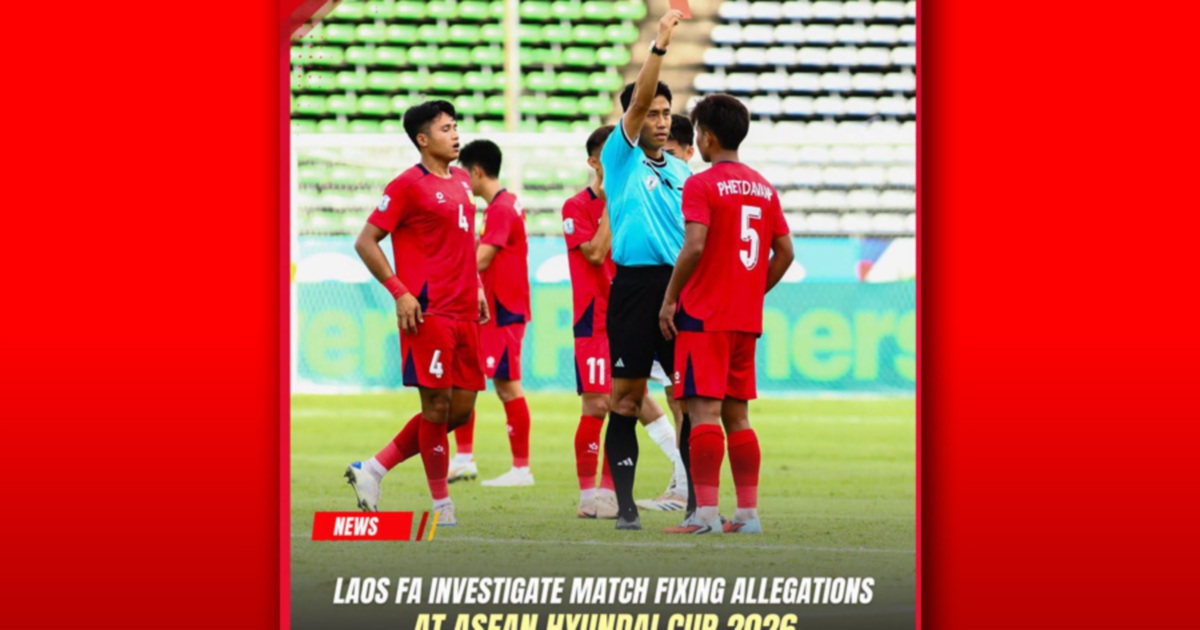
The Lao Football Federation has triggered alarm across Southeast Asian football by announcing a full inquiry into widespread corruption allegations shadowing its national team's participation in the ongoing Asean Cup tournament. The federation's decision to pursue a high-level investigation into suspected match-fixing, bribery arrangements, and clandestine gambling operations marks a watershed moment for the region's football governance, laying bare vulnerabilities in institutional oversight that have long concerned administrators across the Association of Southeast Asian Nations.
Match-fixing in professional football represents one of the most insidious threats to competitive integrity and public trust in sport. When allegations surface involving national teams competing at prestigious continental tournaments, they reverberate far beyond the pitch, raising uncomfortable questions about regulatory frameworks and the effectiveness of anti-corruption mechanisms. The involvement of Laotian players in the Asean Cup—a biennial championship that commands significant viewership across the region—amplifies the seriousness of the federation's allegations and the potential scale of any misconduct.
The Asean Cup attracts substantial betting interest throughout Southeast Asia, creating financial incentives that have historically fuelled match-fixing networks. Criminal syndicates operating across multiple countries have long recognised football as a vehicle for money laundering and illicit profit generation, particularly in tournaments involving teams from developing football nations where institutional safeguards may be comparatively underdeveloped. The federation's willingness to confront these allegations publicly, rather than attempting internal damage control, suggests that the evidence of wrongdoing has reached a threshold demanding transparency and accountability.
Laos, like several other mainland Southeast Asian nations, has faced recurring challenges in professionalising its football administration and establishing independent oversight systems resistant to corruption. The country's football infrastructure, whilst improving steadily, remains substantially less developed than that of regional powers such as Thailand, Indonesia, and Vietnam. This disparity in institutional capacity can create vulnerabilities that unscrupulous operators exploit, potentially targeting less-established teams and federations with promises of financial gain to individual players or officials.
The allegations encompass multiple distinct offences that require separate investigative approaches. Match-fixing investigations demand forensic analysis of performance data, betting patterns, and communication records to establish whether outcomes appear anomalous compared to established norms and player capability levels. Bribery inquiries must identify payment flows and determine whether officials or players received inducements to influence results. Illegal gambling investigations require cooperation with regional law enforcement agencies to trace betting networks and identify criminal syndicates operating across international borders.
The federation's decision to escalate this matter to high-level investigative mechanisms suggests that internal administrative channels were deemed insufficient for the scope of alleged misconduct. This approach reflects growing recognition within Asian football bodies that corruption of this magnitude demands specialist resources, forensic expertise, and potentially international cooperation. Regional bodies such as the ASEAN Football Federation and continental authorities may need to become involved to ensure comprehensive investigation and implementation of preventative measures.
The timing of these allegations during the Asean Cup tournament creates additional complications for all participating nations. Tournament scheduling cannot be halted to accommodate investigations, yet the credibility of competition results may be questioned if suspicions of manipulation remain unresolved. Other national teams competing in the tournament face reputational risks through association with the scandal, potentially affecting their standing with international football bodies and sponsors regardless of their own integrity standards.
For Malaysian football stakeholders, this scandal carries direct implications. Malaysia competes regularly in Asean Cup tournaments and maintains substantial betting markets connected to the competition. Any systemic corruption involving other nations' teams erodes confidence in tournament integrity that Malaysian fans and administrators depend upon. Additionally, if investigation reveals involvement of individuals or organisations operating across Southeast Asian borders, Malaysian authorities and institutions may require involvement in international cooperation efforts.
The federation's investigation will likely examine communication records between players, coaching staff, and external parties; financial transactions and bank records; and betting patterns on matches involving the accused players. International football governance bodies including FIFA maintain anti-corruption standards and investigation protocols that national federations are increasingly obliged to implement. The Lao Football Federation's commitment to pursue high-level investigation demonstrates alignment with these emerging global standards, though the investigation's ultimate effectiveness will depend on resource allocation and political will to pursue findings wherever evidence leads.
This scandal underscores a broader regional challenge: as Southeast Asian football continues expanding commercially, with increasing television rights fees and betting revenue, the sport simultaneously becomes more attractive to criminal networks seeking to exploit competitive outcomes for profit. Federations throughout the region must accelerate implementation of robust integrity systems including secure reporting mechanisms, player education programmes, and cooperation frameworks with law enforcement agencies. The Lao Football Federation's investigation will provide crucial insights into how corruption networks operate within Southeast Asian football, knowledge that other national federations urgently require to fortify their own institutional defences.
The investigation's outcomes will likely trigger regulatory responses extending beyond Laos, potentially including new requirements for match-monitoring, player conduct standards, and information-sharing between national federations and regional bodies. How thoroughly the Lao Football Federation pursues this inquiry and whether findings result in substantial disciplinary action will substantially influence whether Southeast Asian football can credibly address the corruption challenge or whether the region will continue attracting predatory criminal interest.

