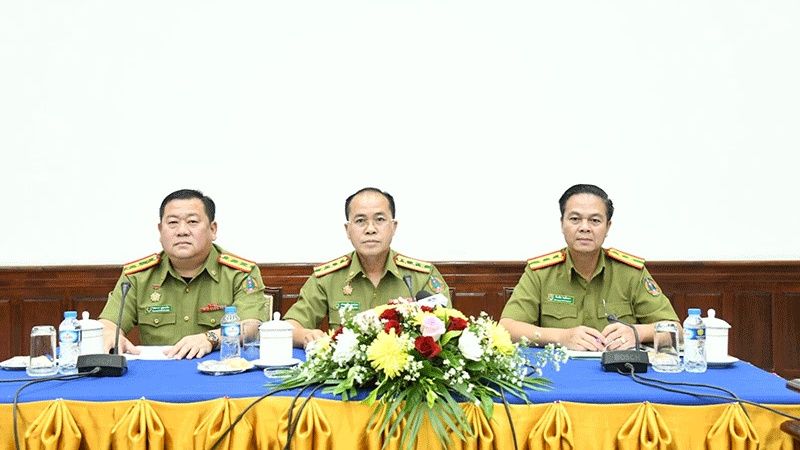
Lao authorities have formally indicted the proprietor of Tiger Vodka distillery and multiple staff members at Nana Backpackers Hostel in connection with the deaths of six international visitors to Vangvieng in late 2024, authorities announced Friday during a significant public briefing at the Ministry of Public Security. The announcement represents the most comprehensive official disclosure yet regarding the investigation into an incident that sent shockwaves through Southeast Asia's backpacker tourism circuit and raised urgent questions about alcohol safety standards in the region.
The case centers on findings that Tiger Vodka produced at a privately-operated distillery in Xaimoungkhoun village, Naxaithong district, contained methanol levels exceeding permitted safety thresholds. Deputy Chief of the Vientiane Province Police Command Colonel Khamfong Vongdalasane confirmed that investigators detected dangerous concentrations of the toxic chemical in bottles from the facility. Further corroboration came through the Australian Embassy, which verified that Aek Udon Hospital in Thailand had identified methanol in blood samples from two deceased Australian women, Bianca Jones and Holly Bowles, strengthening the connection between contaminated alcohol and at least some of the fatalities.
The six victims included American national James Louis Hutson, Danish nationals Freja Vennervald Sorensen and Anne-Sofie Orkild Coyman, Australians Bianca Jones and Holly Bowles, and British national Simone White. The multinational composition of the deceased underscores the case's significance for Southeast Asian tourism safety and international relations. The deaths triggered diplomatic engagement involving embassies from the United States, Australia, Denmark, and the United Kingdom, all represented at the official briefing.
Despite the methanol evidence, investigators face substantial legal constraints in establishing direct causation for five of the six deaths. Colonel Khamfong acknowledged that Lao law prevents authorities from drawing definitive conclusions about what killed these individuals without autopsy evidence, a limitation that highlights challenges in death investigations across the region. Families of the deceased declined permission for post-mortem examinations in most cases, a decision that, while respecting their wishes, has left investigators unable to satisfy the stringent evidentiary standards required under Lao criminal procedure.
The distillery owner faces charges of manufacturing and distributing consumer goods harmful to health under Article 275 of the Penal Code and operating an unlicensed business under Article 297. The case has advanced to Vientiane Province People's Court for trial. Prosecutors initially considered pursuing food safety violations but ultimately pivoted to the more serious charge framework concerning hazardous consumer products, recognizing insufficient evidence for the narrower food safety allegation.
James Louis Hutson's death triggered a separate criminal matter involving the hostel. When Hutson died in Room 205 on November 13, 2024, hostel personnel transported his body to Vangvieng District Hospital without immediately notifying police, effectively preventing officers from conducting an on-scene investigation of the room where he had died. This action allowed potential evidence to be disturbed, prompting authorities to charge the hostel owner and ten staff members with destroying evidence under Article 383 of the Penal Code. The Vangvieng District Court convicted all ten defendants, but the Vangvieng People's Prosecutor's Office subsequently appealed, arguing the sentences were insufficiently severe and requesting the higher court reconsider penalties upward.
Investigators discovered multiple items in Hutson's room including beer bottles, glasses containing Tiger Vodka, soft drinks, bottled water, medication, and a suicide note. The presence of the note complicated the investigation's trajectory, introducing questions about causation beyond potential alcohol poisoning. Hutson's family declined an autopsy, permitting his body's release for funeral arrangements and foreclosing forensic examination that might have clarified his death's circumstances.
The two Danish women, Sorensen and Coyman, developed acute respiratory distress, dizziness, and vomiting before receiving treatment at Vangvieng District Hospital and subsequent transfer to Hospital 103 in Vientiane, where they died. Like the Hutson family, their relatives refused autopsy requests. The two Australian women arrived at the Nana Backpackers Hostel on November 9, 2024, but investigators could not fully reconstruct their movements or comprehensively document their food and beverage consumption during their stay. Following severe illness, they received treatment at Vangvieng District Hospital before transfer to Settathirath Hospital in Vientiane. Their families arranged medical evacuation to Thailand for continued treatment, where both subsequently died. British national Simone White fell unconscious and was transferred from Mahosot Hospital to Kasemrad International Hospital in Vientiane on November 13, 2024, and died on November 21.
The hostel remains shuttered pending legal resolution. The owner and ten staff members have had their passports seized and face travel restrictions within Laos until proceedings conclude. This combination of closure and mobility restrictions signals the gravity with which authorities are treating the evidence-tampering allegations.
Police have acknowledged that despite methanol contamination in Tiger Vodka and methanol detection in Australian victims' blood, available evidence remains insufficient under Lao law to definitively attribute deaths to specific individuals' actions. This evidentiary gap—between suggestive evidence and legally sufficient proof—reflects both the absence of comprehensive autopsies and the challenges of reconstructing movements and consumption patterns months after incidents occurred. Colonel Khamfong pledged continued investigation consistent with Lao Criminal Procedure Law and ongoing cooperation with Western embassies, promising transparent and lawful proceedings while expressing official condolences to bereaved families.
The case carries implications extending beyond Laos into broader Southeast Asian tourism governance and alcohol safety standards. The incident has exposed vulnerabilities in informal sector manufacturing oversight and raises questions about enforcement mechanisms across the region's less regulated economies. Tourism-dependent nations face mounting pressure to demonstrate credible investigation capabilities and transparent justice processes when international visitors die within their borders, particularly when preventable contamination appears implicated.

