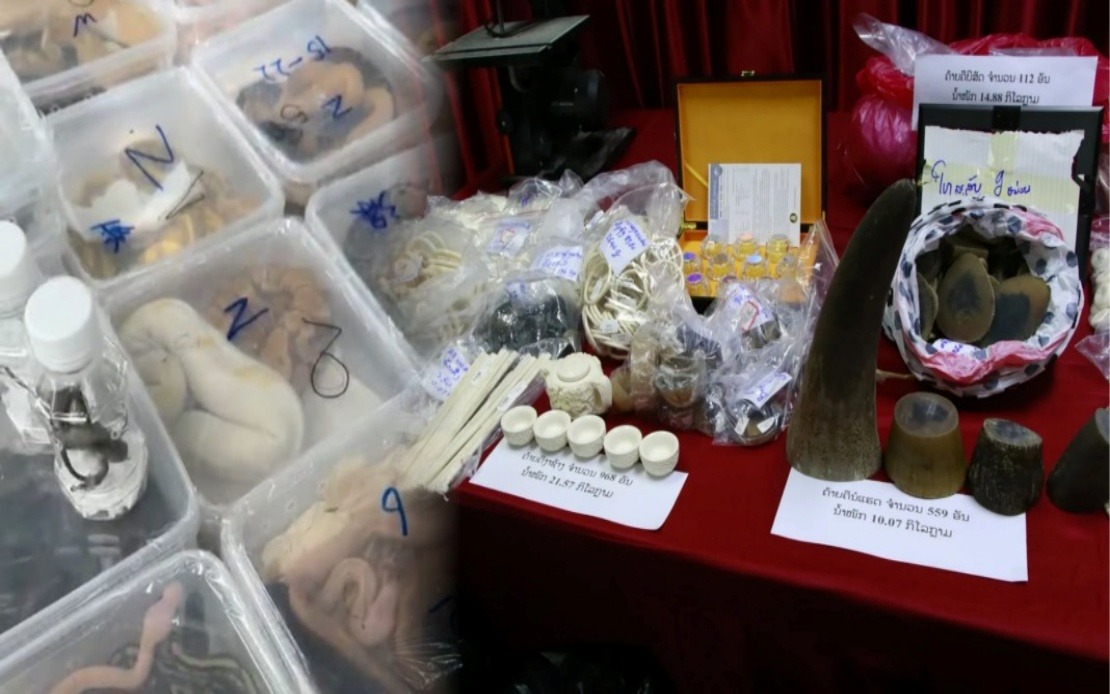
A coordinated law enforcement operation in Laos has exposed the scale of wildlife trafficking plaguing Southeast Asia's Mekong region, with authorities rescuing nearly 300 live animals and confiscating large quantities of illegal wildlife products in raids across two provinces. The seizures underscore how the Laos-Thailand border has become a critical chokepoint for international animal smugglers, with the nation's strategic geography making it vulnerable to exploitation by criminal networks moving contraband across Southeast Asia.
Laotian wildlife rangers conducted successive operations in Luang Prabang and Champasak provinces that revealed the sophistication of trafficking operations in the region. During searches in Luang Prabang, the Lao Wildlife Enforcement Network discovered approximately 60 kilogrammes of suspected illegal wildlife materials at what authorities described as transit points. The confiscated items included ivory-like objects, animal gallbladders sourced from bears, pangolin scales, rhinoceros horn specimens, elephant skin powder, hornbill heads, and various herbal medicine products believed to contain wildlife-derived ingredients. These materials, bound for destinations across Southeast Asia and beyond, represent a fraction of the estimated value traffickers extract from endangered species annually.
The Luang Prabang findings pale in comparison to the scale of live animal trafficking intercepted days later at the Vang Tao International Checkpoint in Champasak Province. Officers stationed at this critical border crossing, which connects directly to Ubon Ratchathani Province in Thailand, halted the movement of 294 live animals seized from trafficking suspects. The confiscated creatures included turtles of multiple species, pythons, green snakes, gold-ringed cat snakes, and various lizard species, all destined for black market distribution across the region. The diversity of reptile species seized suggests that trafficking networks operate across multiple supply chains simultaneously, accessing different ecological zones to sustain demand.
These operations form part of a broader enforcement surge across the Mekong region. Thai authorities arrested a Thai woman operating a traditional medicine and souvenirs shop in Nakhon Phanom, in Thailand's northeast, on May 27, recovering more than 100 protected wildlife remains suspected of originating from Laos. The arrest demonstrates how retail operations in border communities serve as distribution nodes for wildlife trafficking networks. Additionally, Thai and Laotian officials coordinated to prevent a major ivory smuggling attempt on May 16, intercepting 130 kilogrammes of cut elephant ivory and animal carcasses being transported across the Thai-Lao border. This incident alone represents the remains of multiple elephants, highlighting the lethal consequences of trafficking for wild populations.
Laos's geographical position amplifies its role in regional trafficking networks. The country shares borders with five nations—Cambodia, China, Myanmar, Thailand, and Vietnam—positioning it as a natural transit corridor for contraband. Wildlife experts note that this geographic centrality, combined with porous borders and limited enforcement resources, creates ideal conditions for smugglers to consolidate shipments before distributing them across Southeast Asia, to China, or beyond. The Mekong River itself facilitates transport, with waterborne smuggling routes providing alternatives to land checkpoints.
The trafficking surge reflects global demand patterns that show no sign of abating. According to the United Nations Office on Drugs and Crime's World Wildlife Crime Report 2024, the illegal wildlife trade remains deeply entrenched despite decades of international cooperation and national-level enforcement initiatives. The UNODC estimates that global illegal wildlife commerce generates nearly US$10 billion annually, placing it on par with human trafficking, narcotics smuggling, and arms dealing in terms of illicit financial flows. This economic equivalence underscores why enforcement agencies struggle to disrupt supply chains—the financial incentives for traffickers rival those in other major criminal industries.
Corruption emerges as a persistent enabling factor in trafficking networks, according to UNODC analysis. Border officials, transport operators, and retail merchants involved in laundering wildlife products through legitimate channels benefit from payments that often exceed legitimate economic opportunities available in border communities. This corruption challenge resonates particularly in Southeast Asia, where enforcement agencies frequently report that traffickers exploit weaknesses in inter-agency coordination and cross-border information sharing. Local officials may receive compensation to overlook suspicious shipments or provide advance warning of enforcement operations.
The species targeted in recent Laotian seizures reflect broader conservation priorities. Pangolins, the world's most trafficked mammals, face extinction pressures as scales serve demand in traditional medicine markets in China and Vietnam. Elephants and rhinoceroses continue experiencing poaching pressure despite international bans, with ivory and horn commanding prices that incentivize continued hunting. Reptiles including pythons and specific snake species face overcollection for the exotic pet trade, driven by demand from hobbyists in developed nations. This diversity of end markets—traditional medicine, luxury goods, and exotic pets—means that trafficking networks must maintain relationships with multiple buyer networks, complicating enforcement strategies that target single supply chains.
For Malaysia and other Southeast Asian nations, the implications extend beyond Laos's borders. Malaysian authorities have documented trafficking networks moving animals through Malaysian ports and airports en route to final destinations in China, Thailand, and Vietnam. The seizures in Laos represent intelligence opportunities for regional agencies to map trafficking corridors and identify key nodes for coordinated intervention. ASEAN member states increasingly recognize that unilateral enforcement cannot succeed when supply chains cross multiple jurisdictions, prompting calls for strengthened regional cooperation frameworks and harmonized legal penalties for trafficking offenses.
The scale of wildlife rescued in these operations offers a rare glimpse into trafficking volumes that authorities never intercept. For every successful seizure, law enforcement estimates that multiple shipments reach their destinations undetected. This enforcement gap reflects resource limitations, with ranger patrols unable to monitor all remote crossing points and checkpoint capacity insufficient to inspect every vehicle. Investment in wildlife enforcement infrastructure—including ranger training, surveillance technology, and cross-border communication systems—remains critically underfunded relative to trafficking volumes.