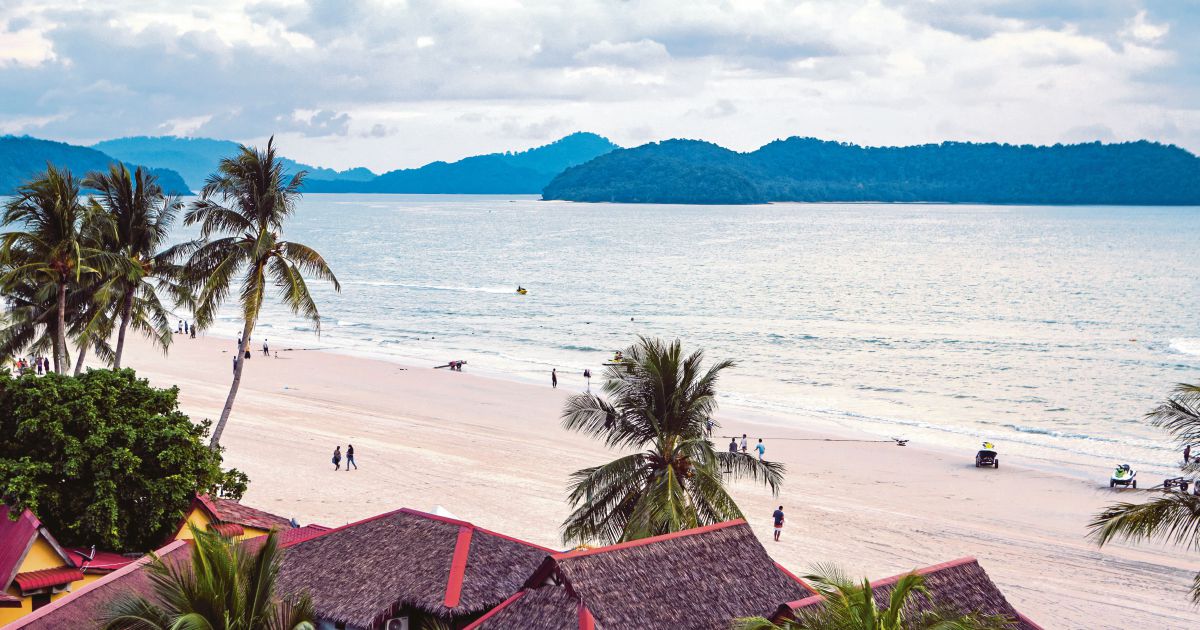
Langkawi's trajectory as a regional tourism and trade hub has stalled far below expectations despite nearly 40 years as a duty-free island, according to Tun Dr Mahathir Mohamad, who highlighted the economic underperformance during recent remarks. The former prime minister's assessment underscores growing concerns that Malaysia's marquee island destination has failed to leverage one of its most significant policy advantages, leaving billions in potential revenue unrealised.
Declared a duty-free island in the mid-1980s, Langkawi was conceived as a transformative economic zone that would position Malaysia competitively against emerging regional tourism and commercial hubs. The duty-free status was meant to attract international visitors through retail arbitrage, anchor major retail and hospitality developments, and create a sustainable ecosystem of related industries. Instead, the island's development has proceeded unevenly, with certain sectors flourishing while others languish in comparative neglect. This mixed record has prompted strategic reassessment among policymakers and business leaders about whether current frameworks adequately capitalise on the island's geographic and regulatory advantages.
Regional competitors have meanwhile strengthened their positions considerably. Thailand's Phuket, Singapore's strategic free ports, and Indonesia's Batam have invested heavily in infrastructure, marketing, and regulatory harmonisation with global standards. These destinations have captured growing shares of tourist expenditure and regional trade flows that Langkawi might reasonably have expected to retain. The gap has widened as neighbouring countries modernised port facilities, aviation infrastructure, and commercial frameworks while Langkawi's competitive edge gradually eroded through relative underinvestment and policy inertia.
The economic implications extend well beyond tourism statistics. A functioning duty-free zone generates employment across hospitality, retail, logistics, and ancillary services. It attracts foreign direct investment into related infrastructure and manufacturing. It generates government revenue through licensing, corporate taxation on supporting enterprises, and indirect tax collection. Achieving only fifty percent of potential represents a massive opportunity cost to the national economy, particularly for a state dependent on tourism revenues and a nation seeking diversified income streams beyond petroleum and palm oil exports.
Dr Mahathir's critique reflects broader frustration with Malaysia's tendency to establish policy frameworks and then fail to implement them with sufficient rigour or resources. Langkawi received its duty-free designation during his first tenure as prime minister, when he championed grand development schemes meant to position Malaysia as a tiger economy. Yet maintaining competitive advantage in tourism and trade requires sustained strategic focus, infrastructure investment, skills development, and adaptive regulatory management. The island's trajectory suggests these elements have been inconsistently applied over the decades of political transitions and shifting priorities.
Infrastructure deficits have particularly constrained development. While competing destinations expanded and modernised port facilities, airport capacity, and road networks, Langkawi's infrastructure investments lagged. This creates cascading disadvantages: flight connections remain limited compared to regional hubs, cargo-handling capacity constrains trade volumes, and road conditions affect visitor experience and business logistics. These physical constraints directly translate into lost transactions and reduced competitiveness against destinations offering superior connectivity and facilities.
Human capital development represents another critical gap. Tourism excellence, retail service standards, and international trade management require sophisticated workforce capabilities. Malaysia has not consistently invested in training programmes tailored to Langkawi's strategic sectors, creating skills mismatches that limit service quality and operational efficiency. Competing regions have prioritised workforce development as integral to maintaining destination appeal and operational standards.
The duty-free framework itself requires continuous refinement to remain relevant. Global retail patterns have shifted toward online commerce and destination experiences rather than pure price arbitrage. Langkawi's duty-free advantage means less when consumers can access global pricing through digital channels. Progressive destinations have adapted by expanding beyond retail into experiential tourism, wellness offerings, and specialized services that justify premium pricing. Langkawi's policy framework has not evolved commensurately with these market transformations.
Marketing and branding have also suffered from inconsistent execution. Major regional competitors invest substantially in integrated marketing campaigns targeting affluent Asian travellers and long-haul tourists. Langkawi's promotional efforts have been fragmented across government agencies and private operators without coherent strategic direction. This fragmentation has allowed competing destinations to claim mindshare and shape regional narratives about attractive tourism experiences and commercial environments.
Local governance and coordination across stakeholders presents additional structural challenges. Tourism development requires seamless coordination between federal and state authorities, private investors, port operators, hospitality businesses, and regulatory agencies. Bureaucratic silos, unclear responsibility allocation, and occasional conflicts between development actors have impeded integrated planning and execution. Competing destinations have achieved competitive advantage partly through institutional frameworks that enable rapid decision-making and coordinated strategic implementation.
The social and environmental dimensions of tourism development have also received insufficient attention. Sustainable tourism requires active management of environmental impacts, community benefit-sharing, and cultural preservation. Neglecting these elements degrades the destination experience and invites criticism that development enriches external investors while local communities absorb costs. This narrative undermines long-term destination appeal and attracts competing criticism that constrain expansion opportunities.
Recovering Langkawi's trajectory demands comprehensive institutional renewal. This includes infrastructure modernisation, workforce development programmes embedded in educational institutions, updated regulatory frameworks aligned with contemporary market realities, coordinated strategic marketing, and governance structures enabling rapid adaptation. The challenge is substantial but not insurmountable—competing destinations have demonstrated that transformed execution can rebuild competitive position within regional hierarchies.
Dr Mahathir's warning carries particular resonance because it articulates a reality many stakeholders already sense. Langkawi remains an important destination with inherent advantages, but realising its full potential requires decisive strategic and institutional intervention beyond incremental adjustments. Without substantive action, the island risks permanent relegation to secondary status within Southeast Asia's tourism economy.

