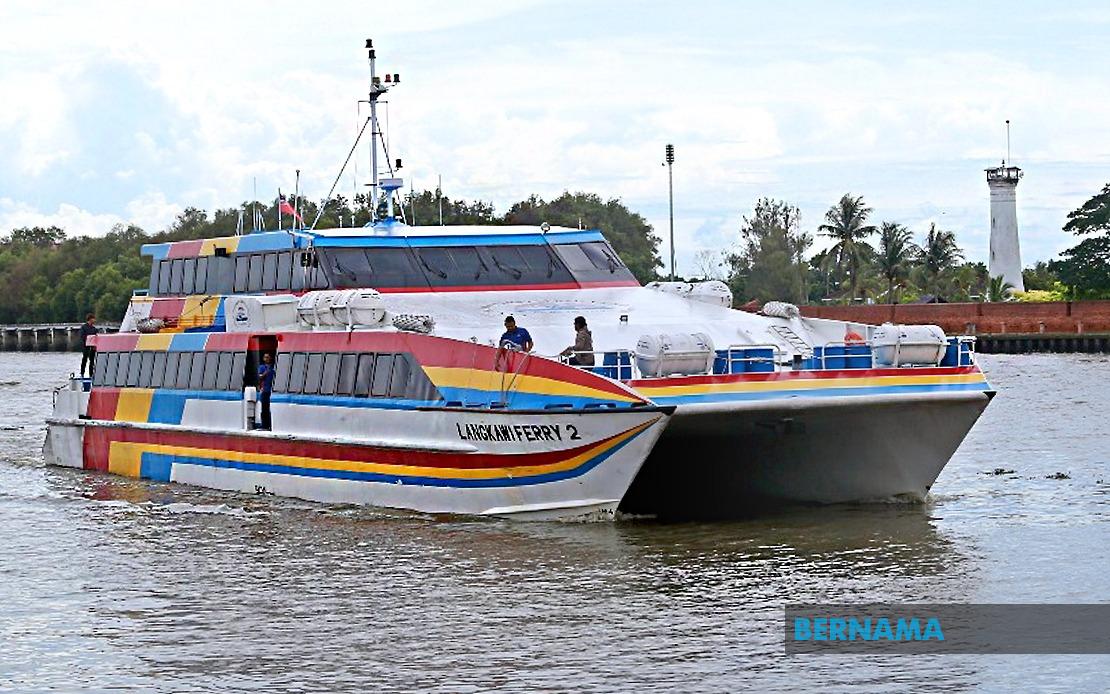
Langkawi's ferry operators have made an urgent appeal to the federal government to prioritise dredging operations in the shipping channels serving the island, citing growing safety concerns and operational disruptions caused by silt accumulation. The operators argue that the deteriorating conditions in Kuala Kedah and Kuala Perlis navigation lanes threaten not only the reliability of ferry services but also Malaysia's broader tourism and maritime interests.
Lieutenant Commander (Retired) Norhafiz Abdul Wahid, operations manager at Ferry Line Ventures Sdn Bhd, outlined the severity of the situation in recent remarks from Alor Setar. The increasingly shallow waters present tangible risks to passenger ferry operations, he explained, noting that even minor delays cascade into schedule disruptions during high-traffic periods. For an island destination like Langkawi that depends entirely on sea-based transport infrastructure, such operational uncertainty creates a ripple effect across the tourism economy and traveller confidence.
The scale of ferry operations underscores why channel maintenance has become critical. Ferry services function as the lifeline connecting Langkawi to the peninsula, transporting thousands of visitors daily. During peak tourism seasons, Ferry Line Ventures alone manages passenger loads reaching 25,000 per day—a volume that depends on reliable, safe navigation channels. Without adequate dredging, the company faces potential reductions in sailings or vessel capacity, directly impacting the island's ability to absorb tourism demand and generate revenue for hospitality and retail sectors dependent on visitor spending.
The timing of this appeal carries particular urgency given Malaysia's international commitments. Langkawi International Maritime and Aerospace Exhibition (LIMA) is scheduled for next year, a major event that attracts thousands of international delegates and generates significant tourism activity. If the silt problem remains unresolved, ferry capacity constraints could undermine the island's ability to accommodate the influx of visitors and dignitaries attending the exhibition, potentially damaging Malaysia's reputation as a well-organised host for international gatherings.
Norhafiz emphasised that addressing the problem requires more than one-time intervention. Comprehensive and periodic dredging operations must become standard practice to maintain permanently safe shipping routes. The silting appears to be an ongoing process rather than a temporary anomaly, suggesting that without sustained maintenance protocols, the channels will simply deteriorate again. This represents a systems-level challenge requiring coordination between federal maritime authorities, port management, and tourism stakeholders to establish lasting solutions.
The operational demands on ferry services intensified significantly during the period spanning late August through early September. Between 27 August and 6 September, Ferry Line Ventures scheduled 176 regular trips plus an additional 66 sailings to accommodate both the school holiday migration and National Day travel surges. These peaks reveal the infrastructure pressure that Langkawi's transport system experiences seasonally—moments when any constraint, such as shallow channels, becomes acutely problematic.
Passenger projections for this specific holiday window illustrate the volume at stake. Approximately 90,000 travellers were expected to transit Langkawi via the two primary routes—the Langkawi-Kuala Perlis-Langkawi corridor and the Langkawi-Kuala Kedah-Langkawi corridor. Ticket sales data provided a tangible measure of demand: by the time of Norhafiz's statement, 86,978 tickets had already been sold through online channels, ticketing counters, and reservation systems. This near-capacity booking scenario left little margin for error or operational constraint.
The ferry operators' strategy for managing holiday demand included encouraging advance ticket purchases through the Cuti-Cuti Langkawi application, a digital initiative designed to streamline booking processes and reduce on-site congestion. Such measures reflect industry adaptation to peak demand, yet they cannot fully compensate for infrastructure limitations. Shallow channels remain an immovable constraint regardless of ticketing efficiency or passenger management protocols.
The appeal from Ferry Line Ventures reflects broader challenges facing Malaysia's island and coastal transport infrastructure. As tourism expands and domestic travel increases, maintenance backlogs on critical maritime routes become increasingly consequential. The Langkawi situation exemplifies how deferred infrastructure maintenance in one sector—maritime channel upkeep—cascades into economic impacts across tourism, hospitality, and retail.
For Malaysian policymakers, the operators' call for action carries implications beyond Langkawi's borders. Other regional ferry routes and coastal shipping channels likely face similar silting pressures. A comprehensive review of federal dredging priorities and maintenance budgets could identify other bottlenecks threatening transport efficiency and economic activity across Southeast Asia's maritime-dependent regions, including the Straits of Malacca and Johor Strait approaches.
The ferry operators' readiness commitments suggest they are prepared to maintain service levels throughout the holiday period despite channel constraints. However, such operational stretching is inherently risky—it squeezes safety margins and increases wear on vessels. Prompt government action on dredging would relieve this pressure, allowing ferry services to operate within optimal parameters rather than at the edge of their capabilities. The investment in channel maintenance represents cost-effective infrastructure spending that protects both maritime safety and tourism revenue, making the operators' request both reasonable and economically justified.

