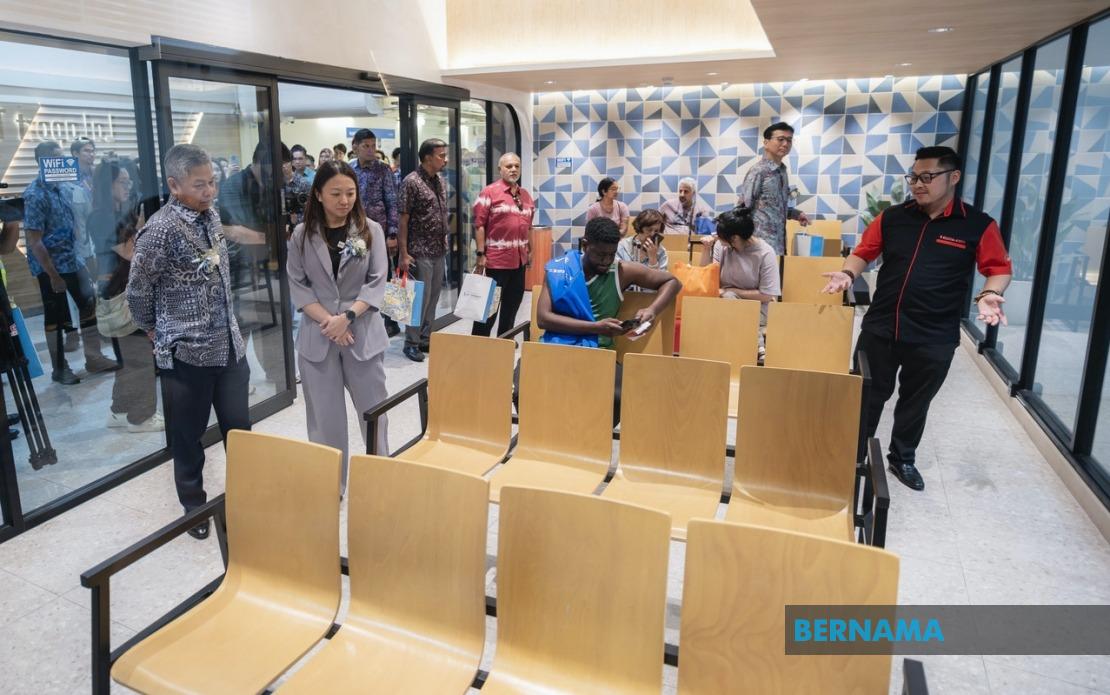
The newly inaugurated LaLaport Transportation Hub (LTH) in Kuala Lumpur marks a significant step forward in addressing the Malaysian capital's transport infrastructure challenges. Located adjacent to the Hang Tuah LRT and Monorail interchange on the LG1 level of the East Atrium, the facility aims to consolidate various transport modes under one roof, potentially serving up to 10,000 passengers each day. Minister in the Prime Minister's Department (Federal Territories) Hannah Yeoh unveiled the hub in a ceremony that underscored the government's commitment to modernising urban transit networks across the capital.
The motivation behind developing such an integrated terminal stems from the sheer volume of movement within Kuala Lumpur itself. The city experiences 1.2 million entries and exits daily, with approximately 5.5 million total journeys recorded across all transport modes. These figures illustrate the mounting pressure on existing infrastructure and the necessity for more efficient, coordinated transport solutions. By consolidating multiple transport services in a single location, planners hope to reduce congestion at various terminals scattered throughout the city centre and encourage greater use of public transportation among commuters and visitors alike.
The hub's design emphasises passenger comfort and connectivity. A fully sheltered pedestrian walkway creates seamless transitions between rail services, express buses, e-hailing platforms, taxi stands, and shared mobility options. The facility itself spans 11 bus parking bays and features an air-conditioned waiting area equipped with manned information counters and self-service kiosks. A Passenger Information Display System (PIDS) provides real-time bus schedules, allowing passengers to plan journeys with greater confidence. These amenities represent a departure from many existing terminals, where basic facilities and unclear signage often frustrate travellers.
Operator Asia Success Resource Sdn Bhd has structured the terminal to handle approximately 150 bus trips daily, with particular emphasis on cross-border services between Kuala Lumpur and Singapore. The hub will accommodate roughly 30 bus operators, many of whom have made it their primary transit point for city centre operations. A round-the-clock express bus service connecting Kuala Lumpur and Singapore will anchor the facility's long-distance offerings, addressing a critical gap in convenient transportation between the two nations. Additionally, the Boleh-Boleh Ride on-demand van shuttle service complements fixed-route buses by offering flexible connections to key destinations throughout the city centre.
Airport accessibility has been integrated into the hub's service offering. Shuttle van services connecting passengers directly to Kuala Lumpur International Airport (KLIA) Terminals 1 and 2 eliminate the need for complicated multi-stage transfers. For frequent travellers and tourists, this feature substantially simplifies journey planning and reduces overall travel time. The addition of airport services transforms the hub from a mere city-centre interchange into a comprehensive gateway serving both regional and international travel needs.
The regulatory framework supporting the hub reflects evolving government approaches to transport management. Dewan Bandaraya Kuala Lumpur (DBKL) has recently transitioned from annual to three-year operating licences for transport terminals, a policy shift that provides operators greater stability and encourages longer-term investment in facility improvements. This extended licensing period contrasts with the shorter renewal cycles that previously dominated the sector, suggesting a more strategic approach to terminal development and management.
Safety and security remain central to the city's transport modernisation agenda. DBKL is currently deploying approximately 10,000 operational closed-circuit television cameras across Kuala Lumpur. The LaLaport Transportation Hub will form part of this broader surveillance network, enhancing passenger safety and enabling rapid response to security incidents. Such measures address longstanding concerns among commuters regarding personal security while using public transport, particularly during off-peak hours.
The hub also represents a tangible outcome of Malaysia-Japan bilateral cooperation in urban development. Japanese Ambassador to Malaysia Noriyuki Shikata attended the launch and highlighted how the project exemplifies the close partnership between the two nations in advancing sustainable cities. Prime Minister Datuk Seri Anwar Ibrahim's recent visit to Japan reaffirmed both governments' commitment to expanded cooperation, encompassing not only transport and urban planning but also energy security and strategic partnership. The two nations will commemorate 75 years of diplomatic relations next year, making collaborative infrastructure projects like the LaLaport Hub symbolically significant alongside their practical value.
The hub's strategic positioning at Hang Tuah reflects deliberate urban planning choices. This interchange already serves as a critical node connecting the city's Light Rail Transit and Monorail systems, making it a logical location for an integrated bus terminal. By anchoring the facility at an existing major transit point, planners maximise the potential for passenger transfers between different transport modes, reducing the fragmentation that characterises many Asian cities where different transport operators maintain separate terminals.
For Malaysian and Southeast Asian business communities, the hub's emphasis on Kuala Lumpur-Singapore connectivity carries particular significance. Regular express bus service between the two cities facilitates business travel and cross-border commerce, reducing reliance on private vehicles for this important corridor. Enhanced transport links between major regional hubs strengthens economic integration across Southeast Asia and supports the increasingly fluid movement of professionals and traders within the region.
The 10,000 daily passenger target, while ambitious, reflects realistic traffic assessments. Express buses alone will generate substantial passenger volumes, particularly if services between Kuala Lumpur and Singapore achieve good load factors. Local commuters connecting between different transit modes and travellers accessing airport services will contribute additional demand. Whether the hub achieves or exceeds this target will depend partly on marketing efforts to educate potential users about the facility's location, services, and advantages over alternative transport options.
Looking forward, the LaLaport Transportation Hub represents a model that other Malaysian cities might emulate. As urbanisation accelerates across the country and traffic congestion worsens, integrated transport terminals offering multiple connectivity options become increasingly essential. The hub's success will likely influence future transport planning in Klang Valley and beyond, potentially inspiring similar developments in other major Malaysian metropolitan areas seeking to improve urban mobility and reduce dependence on private vehicles.

