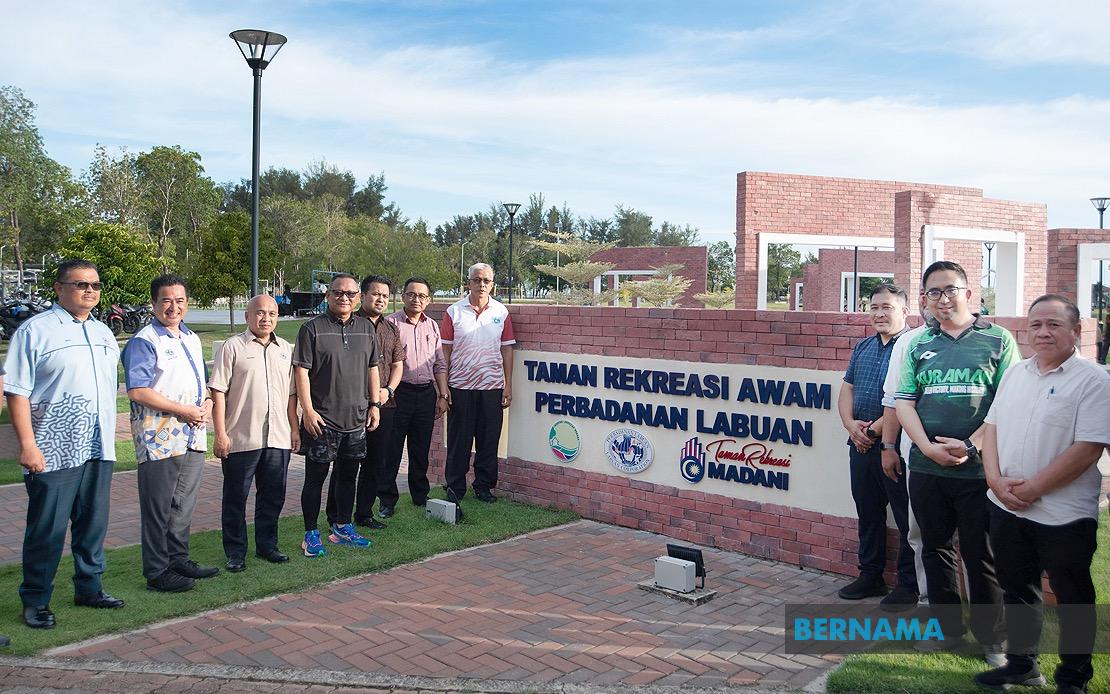
Labuan has officially opened its revamped Public Recreation Park at Tanjung Purun, marking a significant milestone in the federal territory's push to foster healthier living standards and strengthen social cohesion among residents. The facility, developed through a RM495,382 upgrade funded by the National Landscape Department under the Ministry of Housing and Local Government, represents part of the broader Madani Recreation Park initiative aimed at improving public spaces across the country. Labuan Corporation chief executive officer Rithuan Ismail presided over the opening ceremony, underscoring the facility's role in addressing longstanding community needs.
The transformation of the former LDA Field into this modern recreational space addresses what had become an increasingly obvious gap in Labuan's public infrastructure. Previously, the downtown site suffered from significant operational challenges that rendered it largely ineffective as a community asset. Inadequate lighting discouraged evening use, while the ageing casuarina trees created genuine safety concerns for visitors. Limited recreational amenities further contributed to the area's underutilisation despite its valuable position in the heart of town. According to Rithuan, the selection of this particular location was deliberate and strategic, capitalising on its accessibility, suitable dimensions, and the absence of complicated land tenure issues that often impede such development projects.
The upgraded facility now encompasses a carefully designed array of amenities intended to accommodate diverse recreational needs and age groups. An 800-metre jogging track serves fitness-focused users, while concrete benches and manicured garden spaces cater to those seeking quieter relaxation and social engagement. The installation of outdoor fitness gym equipment represents an increasingly popular approach to public health infrastructure, providing free access to strength and cardiovascular training options that might otherwise be unavailable to residents with limited means. These features collectively aim to encourage regular physical activity and create conditions for meaningful community interaction.
The project's significance extends beyond its immediate physical improvements. In Southeast Asian urban contexts where public health challenges increasingly intersect with concerns about social fragmentation, well-designed recreational spaces serve multiple policy objectives simultaneously. The park's evening use appeal is particularly noteworthy, as many residents in tropical regions prefer exercising during cooler hours. By providing adequate lighting and safe facilities during these periods, Labuan Corporation has directly responded to actual usage patterns rather than designing for daytime traffic alone. This demonstrates a practical understanding of how environmental design must adapt to local conditions and community behaviour.
Rithuan emphasised that the park's development reflects a broader institutional commitment to elevating residential quality of life throughout Labuan. Public statements from local leaders about creating "inclusive public spaces" signal recognition that well-maintained recreational facilities contribute to measurable improvements in community wellbeing, potentially reducing lifestyle-related health conditions and associated healthcare burdens. For a federal territory like Labuan, which competes with larger urban centres for investment and talent retention, such amenities carry particular importance in demonstrating developmental commitment.
Looking ahead, Labuan Corporation has outlined plans to further expand the park's appeal through the addition of three open courts designated for pickleball and sepak takraw. These sport-specific facilities are expected to be completed by year's end, reflecting a phased approach to infrastructure development. The inclusion of sepak takraw—a traditional Southeast Asian sport—alongside pickleball suggests an attempt to bridge generational interests and acknowledge both established recreational preferences and emerging sporting trends. Such courts would position the facility as a genuine multi-purpose community hub rather than a generic exercise area.
The upgrade investment itself warrants examination within broader Malaysian fiscal priorities. At nearly half a million ringgit for a single park, the expenditure reflects confidence in public recreational infrastructure's value relative to competing budget demands. For comparison and context within Malaysia's development landscape, such investments in medium-sized towns and cities have become increasingly common as federal and state governments recognise the electoral and public health dividends of visible amenity improvements. Labuan's project follows a pattern seen across Malaysian urban and semi-urban areas where recreational spaces function as tangible expressions of governance effectiveness.
Rithuan's appeal to residents to take stewardship responsibility for the facilities points to a persistent challenge in Malaysian public infrastructure management—the relationship between facility provision and community maintenance. Well-designed spaces often deteriorate rapidly without consistent upkeep and user respect. By explicitly calling on the public to preserve the park, the Corporation acknowledges that opening ceremonies mark the beginning rather than the completion of the asset lifecycle. This appeal also implicitly recognises that community engagement and buy-in significantly influence long-term viability.
For Malaysian readers beyond Labuan, this development offers relevant lessons about public space reimagining in compact urban areas. The project demonstrates how formerly marginal sites can be revitalised through strategic investment and thoughtful design that responds to genuine community needs. The emphasis on accessibility and inclusivity across age groups aligns with broader demographic trends in Malaysia, where ageing populations increasingly require readily available, barrier-free recreational options. As similar parks are planned and implemented across other Malaysian towns and cities, Labuan's model—balancing fitness infrastructure, social spaces, and culturally resonant sporting facilities—may provide a useful template.
The Madani Recreation Park initiative framework itself deserves consideration as a policy intervention designed to distribute recreational infrastructure investment beyond major metropolitan areas. By channelling funding through the National Landscape Department toward medium-sized federal territories and towns, the programme addresses equity concerns within Malaysia's development geography. Labuan, as a smaller federal territory with a population around 100,000, might otherwise struggle to justify major recreational infrastructure investment through purely economic rationales. The existence of dedicated national funding mechanisms enables such projects to proceed, potentially improving quality of life metrics across less prominent population centres.
The facility's integration into Labuan's urban fabric should prove particularly significant given the territory's economic characteristics. As a financial centre and popular tourist destination, Labuan benefits from recreational spaces that appeal to both residents seeking regular exercise opportunities and visitors exploring the territory's attractions. A well-maintained, attractive public park enhances the town's perceived livability and contributes to the overall visitor experience. This dual functionality—serving local community health objectives while also supporting tourism and economic positioning—demonstrates how modern public infrastructure increasingly operates at multiple strategic levels simultaneously.
Moving forward, the success of this recreational facility will likely depend on factors extending beyond its physical design. Consistent maintenance, responsive management of any safety issues, programming of organised activities, and community engagement will determine whether the park achieves its stated objectives of promoting healthier living and strengthening community bonds. The inclusion of future sporting facilities suggests organisers understand that passive provision of infrastructure alone rarely maximises utilisation. Active management, programming, and community involvement typically determine whether public recreational spaces become genuinely central to community life or gradually deteriorate into underutilised amenities.