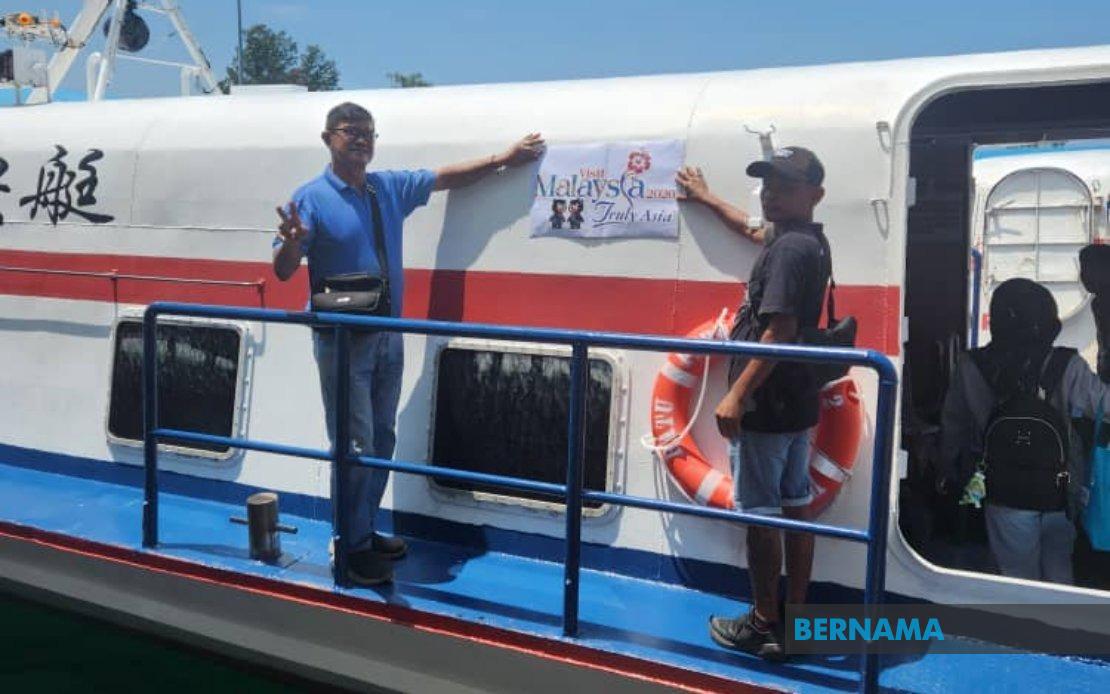
The passenger ferry connecting Labuan with Lawas in Sarawak has ceased operations effective immediately, marking the first interruption in more than three decades of continuous service. RPL Shipyard Co, the vessel operator, notified LDA Holdings Sdn Bhd that the shutdown would remain in place through October 14 as it grapples with mounting financial pressures that have become untenable under current fare structures.
The suspension stems from a confluence of operational challenges that have progressively eroded the service's viability. Foremost among these is a persistent diesel supply problem that has destabilised the boats' regular scheduling and reliability. Beyond fuel constraints, the operator faces relentlessly climbing expenditures across manpower and vessel maintenance, expenses that have accelerated beyond the revenue generated by existing passenger ticket prices. According to RPL Shipyard's formal notice, the gap between operating costs and income has widened sufficiently to justify a temporary halt rather than continuing at financial loss.
Noor Halim Zaini, chief executive officer of LDA Holdings Sdn Bhd, which manages the Labuan International Ferry Terminal, acknowledged receipt of the official notification and pledged immediate engagement with the operator. He indicated that discussions scheduled for the day following the announcement would explore potential remedies and clarify the pathway toward service restoration, signalling receptiveness to collaborative problem-solving between the terminal management and RPL Shipyard.
The ferry's suspension carries particular weight for Sarawak's academic community, as the vessel has long functioned as a critical transport artery for university students travelling between Lawas and Labuan's higher education institutions. Universiti Malaysia Sabah (UMS) and Labuan Matriculation College both draw significant student populations from the Lawas district and surrounding areas, with many individuals dependent on this affordable maritime link to reach campus. The interruption threatens to disrupt academic schedules and impose additional logistical burdens on students already managing the demands of distant tertiary education.
The medical dimension of this service suspension similarly warrants attention. Residents of Lawas and proximate communities have historically utilised the ferry to access Labuan Hospital for healthcare services, leveraging the relatively economical and straightforward sea crossing. The temporary closure forces patients seeking specialist treatment or emergency care to pursue alternative transport routes, potentially involving longer journeys by road through Brunei or other circuitous paths. This geographical displacement poses genuine health implications for a rural population with limited options for expedited medical access.
The financial restructuring that RPL Shipyard seeks to undertake during this three-month window reflects a broader challenge facing maritime transport operators across Southeast Asia. Operating a passenger ferry service in low-density maritime corridors requires careful calibration between operational reality and affordability mandates. The company's explicit hope that improved conditions might enable resumption suggests optimism around potential diesel supply stabilisation, cost moderation, or possibly fare adjustments that stakeholders might collectively accept.
Labuan's position as a federal territory with distinct administrative standing has occasionally enabled it to receive transport infrastructure support unavailable to other Malaysian jurisdictions. The territory's development priorities and the terminal management's apparent willingness to engage constructively offer potential avenues for policy intervention or subsidy mechanisms that could address the service's structural viability problem. Whether state governments or federal authorities might contemplate financial support to preserve essential rural connectivity remains an open question as discussions unfold.
The timing of this suspension during the academic calendar warrants urgent resolution, particularly given how the disruption coincides with the university semester cycle. Students already enrolled at UMS and Labuan Matriculation College face immediate transport complications, while prospective students considering applications to these institutions must now factor unpredictable ferry access into their decision-making. The reputational and recruitment implications of unreliable inter-island connectivity deserve consideration alongside immediate operational concerns.
Regionally, this incident reflects persistent vulnerabilities in maritime transport infrastructure connecting Malaysia's more remote territories. Sarawak's geography and Labuan's island status necessitate reliable ferry services as economic and social linchpins, yet operators frequently struggle with the economics of serving dispersed populations across vast distances. Similar challenges plague other Malaysian maritime routes, suggesting that systemic solutions around fuel supply chains, operational subsidies, or fare-setting mechanisms merit cross-sector examination.
The three-month suspension window provides a bounded opportunity for all stakeholders—the operator, terminal management, academic institutions, and relevant government agencies—to collaboratively engineer a sustainable solution. Whether this interim period yields genuine restructuring that addresses diesel procurement, cost containment, or fare rationalisation will determine whether October 14 marks a genuine resumption of service or merely a placeholder date facing further extension. For Lawas residents and Labuan-bound students, the coming weeks hold particular significance as negotiations unfold.

