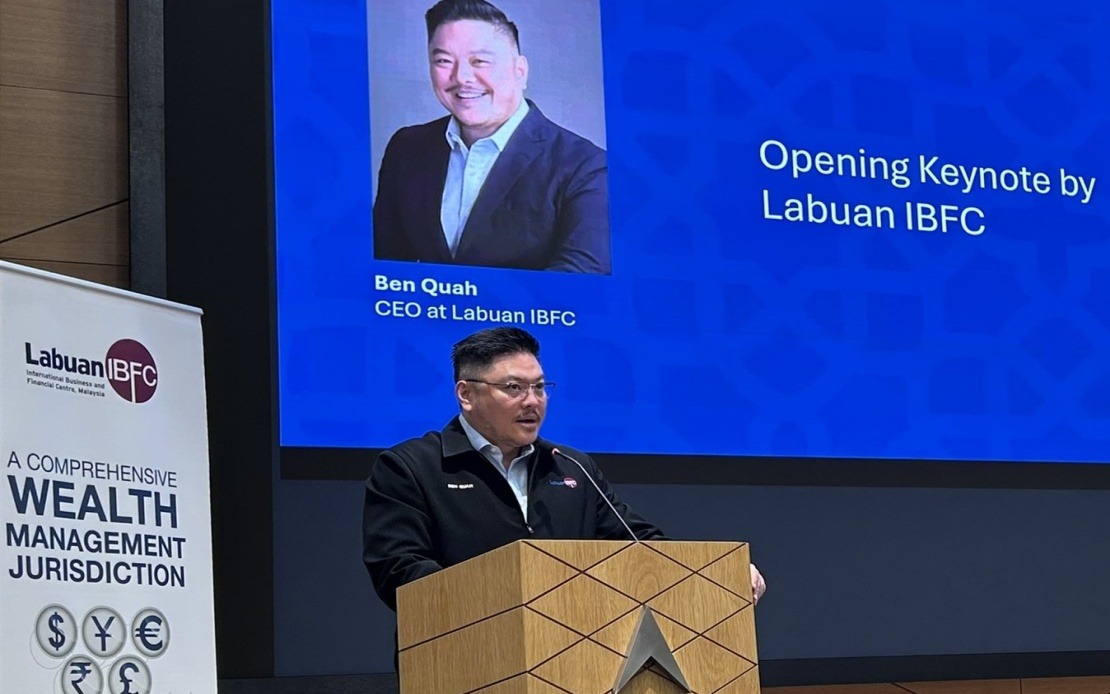
Malaysia's international financial hub Labuan IBFC has convened a significant gathering of wealth management professionals, Islamic advisers and legal experts to advance standards in Islamic estate planning and Shariah-compliant wealth governance. The Islamic Wealth & Legacy Forum 2026, held in Kuala Lumpur earlier this month, represented a strategic convergence of three organisations working to professionalise how Muslim families structure, protect and transfer assets across generations and borders.
The forum, organised jointly by Labuan IBFC Incorporated Sdn Bhd, the Association of Shariah Advisors in Islamic Finance Malaysia (ASAS) and the Society of Trust and Estate Practitioners (STEP) Malaysia, tackled a critical gap in the region's wealth management landscape. While traditional Islamic inheritance law, or faraid, provides foundational principles for asset distribution, contemporary wealth planning—particularly for high-net-worth families with international holdings—demands more sophisticated structuring. The collaborative initiative signals recognition that Malaysian practitioners need coordinated platforms to develop expertise spanning Islamic jurisprudence, estate administration techniques and cross-border financial arrangements.
Ben Quah, chief executive of Labuan IBFC Inc, emphasised that Labuan's emergence as a centre for Islamic private wealth responds to genuine market dynamics. As affluent Muslim families accumulate assets across multiple jurisdictions, they require structures offering both asset protection and intergenerational continuity while maintaining Shariah compliance. Quah articulated Labuan's competitive positioning: the jurisdiction provides international frameworks and structuring flexibility while Malaysia itself leads the Islamic finance industry globally. This complementary relationship—domestic Islamic expertise paired with offshore structural capability—addresses a specific need among families whose wealth transcends national boundaries.
The forum's thematic architecture reflected this integrated approach. Sessions moved beyond faraid's fixed inheritance formulae to examine how estate administration actually functions in practice. Speakers and panellists explored the practical complications Muslim families encounter: determining optimal distribution mechanisms when assets span different countries with varying legal systems, identifying protective structures that satisfy both fiduciary duty and religious obligation, and ensuring documentation clearly reflects Shariah principles so intentions translate into enforceable arrangements. By framing faraid as one component within broader wealth governance rather than the sole framework, the forum acknowledged evolving Muslim professional practice without suggesting Islamic principles themselves become negotiable.
Farah Deba, chair of STEP Malaysia, articulated this calibration in her remarks, noting the three partner organisations bring distinct professional competencies. STEP members serve as multigenerational family advisers, understanding practical succession challenges. Labuan IBFC provides international structuring expertise and jurisdictional frameworks. ASAS contributes Shariah scholarship and religious governance oversight. Together, they enable practitioners to construct arrangements that simultaneously address family continuity, asset protection, tax efficiency and religious fidelity—dimensions that cannot be adequately handled by any single discipline.
The afternoon programming addressed specific wealth preservation mechanisms including takaful insurance products, trust arrangements and other investment vehicles. Panellists examined how such structures might operate within Islamic frameworks, allowing families to manage liquidity, mitigate risks and facilitate intergenerational transfers. This practical orientation matters considerably for Malaysian practitioners who must advise clients on concrete implementation rather than theoretical principles. The forum thus served dual purposes: advancing professional capability while normalising cross-disciplinary collaboration among lawyers, wealth managers, Shariah advisers and financial planners.
Yusaini Yusof, representing ASAS, grounded the initiative in Maqasid Shariah—the overarching objectives of Islamic law. Her framing suggested that robust estate planning serves Islamic jurisprudence by ensuring legacy arrangements are properly structured, transparently documented and faithfully implemented according to religious principles. This perspective resituates professional estate planning as integral to Islamic practice rather than merely instrumental or supplementary. By connecting technical professionalism to theological purpose, ASAS signalled its commitment to elevating standards across the Shariah advisory fraternity.
The forum built upon existing institutional relationships. A memorandum of understanding between Labuan IBFC Inc and ASAS undergirds ongoing collaboration, while engagement with STEP Malaysia and the wider professional community continues expanding. These formalised partnerships suggest the initiative transcends a single event to constitute an emerging ecosystem supporting continuous professional development and knowledge exchange. For Malaysian practitioners seeking international accreditation or exposure to cross-border techniques, such platforms provide structured pathways.
For Malaysian readers and regional wealth management professionals, the forum's significance extends beyond technical instruction. It indicates Malaysia's institutional readiness to compete in high-value Islamic wealth management services. As wealth concentration grows throughout the Muslim world, practitioners and jurisdictions capable of delivering integrated Islamic-compliant solutions gain competitive advantage. Labuan IBFC's positioning reflects deliberate strategy: the centre offers itself as implementation platform for expertise developed through Malaysia's decades of Islamic finance innovation. This approach potentially attracts private clients from across ASEAN, the Middle East and beyond—generating revenue, employment and intellectual capital for Malaysia.
The emphasis on governance and documentation also addresses a practical vulnerability in Islamic wealth arrangements. Many Muslim-majority societies lack sophisticated mechanisms for formalising Shariah-compliant trust arrangements or cross-border structures. Professionals educated through forums like this can help standardise practices, reduce implementation failures and build confidence among high-net-worth families that their religious obligations and commercial interests can be simultaneously satisfied. Enhanced confidence drives client engagement and expands market opportunity.
Looking forward, the collaborative model established through this forum suggests potential expansion into formal professional qualifications, ongoing educational programming and possibly unified standards for Islamic wealth planning practice across Malaysia and Southeast Asia. Regional practitioners increasingly recognise that Islamic finance's legitimacy and sophistication depend upon professional competence matching international standards. Forums bringing together Shariah scholars, international advisers and local practitioners help build that capability—ultimately strengthening both the Islamic finance industry and Malaysia's position as its regional and global leader.

