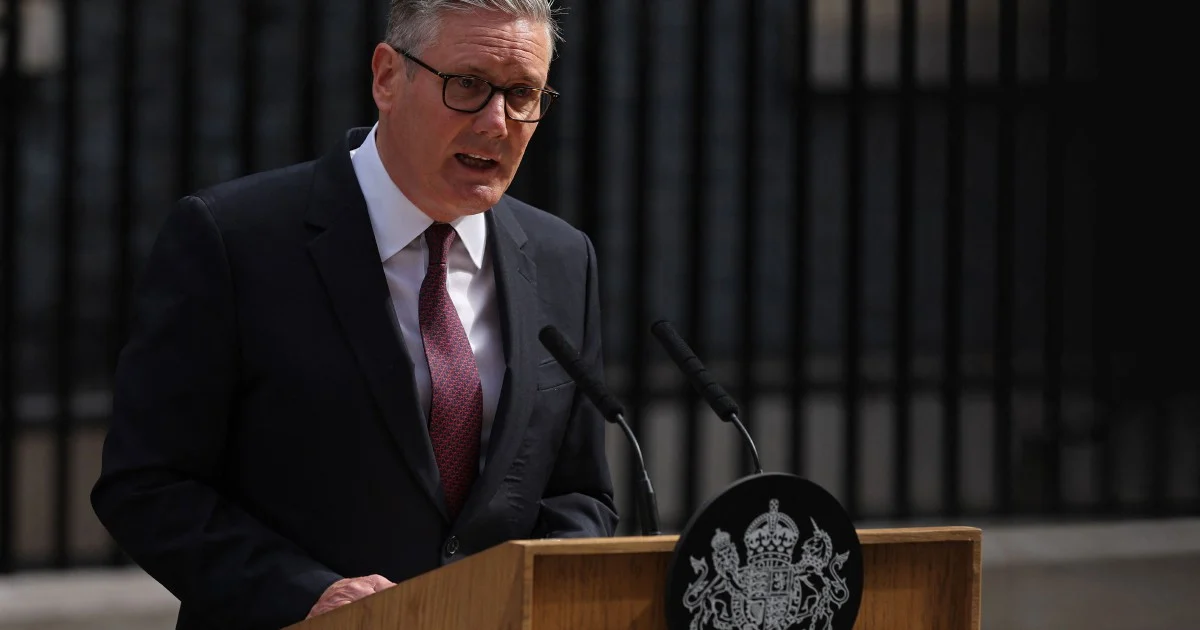
British Prime Minister Keir Starmer announced on Monday that he would be stepping down from his position, setting in motion a formal leadership election process within the Labour Party. The transition is expected to be completed before parliament returns from recess in September, ensuring continuity in government operations. Starmer's departure marks another significant shift in Britain's political landscape, adding to a remarkable pattern of prime ministerial turnover that has defined the past decade.
The resignation represents a notable moment in British politics, as it signifies the seventh change in prime ministerial leadership since 2014. This frequency of transitions underscores the volatile nature of British governance in recent years, shaped by Brexit divisions, internal party conflicts, and electoral outcomes that have reshaped both major political parties. The speed at which Labour will need to select a replacement reflects the compressed timeline and the institutional mechanisms already in place for such contingencies.
When a sitting prime minister resigns and remains as Labour Party leader, or when a leader departs mid-term, the party's constitution outlines a specific procedure for selecting a successor. The Labour Party membership, along with registered supporters and affiliated members, participates in electing a new leader. This democratic process differs from systems in some other democracies where only parliamentary colleagues vote, granting broader input to party grassroots supporters. The inclusive approach aims to reflect party sentiment beyond Westminster.
The timeline for the leadership election is critical in this instance. With parliament scheduled to return in September, the Labour Party needs to complete its nomination and voting rounds before that date. Typically, potential candidates must secure nominations from fellow members of parliament or members of the House of Lords, establishing a threshold that prevents frivolous candidacies. This nomination phase often determines which contenders gain sufficient visibility and institutional support to compete in the broader membership vote.
Once nominations close, the party moves into a campaign phase where candidates present their vision to party members. This period allows different factions within Labour to coalesce around preferred candidates and debate the party's direction. The membership then casts votes, typically conducted electronically, with results determining the new leader. The entire process usually spans several weeks, though compressed timelines can accelerate proceedings when needed.
For Malaysia and Southeast Asian observers, the rapid succession of British leaders raises questions about governmental stability and policy continuity. Britain's frequent changes in prime minister contrast sharply with the more stable political leadership seen in several Asian democracies. Each new British administration brings potential shifts in foreign policy, trade relations, and defence commitments—matters of direct interest to Malaysia and the broader region. Investors and policymakers across Southeast Asia monitor these transitions carefully, as they influence Britain's approach to regional security partnerships and economic engagement.
The broader context of British political instability reflects deeper societal fractures that emerged prominently during the Brexit referendum and have persisted through subsequent elections. Both the Conservative Party and Labour have experienced internal upheaval, with leaders removed or departed based on various pressures from party members, parliamentary colleagues, or external circumstances. This instability contrasts with Malaysia's recent political experience, where transitions, though sometimes contentious, have generally been managed through established constitutional frameworks rather than sudden party-driven resignations.
Starmer's departure, whenever its specific causes, arrives at a juncture when Britain continues navigating post-Brexit arrangements and addressing economic challenges. A new Labour leader will inherit these complex policy portfolios and the need to articulate a coherent vision for government. The selection process will likely feature candidates representing different ideological wings of the party, from those favouring stronger progressive commitments to those emphasizing centrist approaches to economic management and public services.
The international dimension of this leadership change warrants consideration as well. Britain's role in global affairs, its relationships with key allies including the United States and European nations, and its strategic positioning in an increasingly complex geopolitical environment all depend on consistent leadership and clear policy direction. A new prime minister will need to establish credibility quickly with international counterparts while managing domestic expectations. For Malaysia, particularly given Britain's role in regional security frameworks and trade negotiations, understanding the new leader's foreign policy orientation becomes important.
The Labour Party's need to complete its selection before September places practical constraints on the process. Campaign periods are compressed, candidates have limited time to build support among dispersed membership, and the party leadership must manage logistics efficiently. This urgency could influence the outcome, potentially favouring candidates with existing high profiles or strong organizational networks within party structures. The membership's priorities during this compressed timeline may differ from a more leisurely campaign allowing deeper examination of policy differences.
Historically, Labour leadership elections have produced varied results depending on membership composition and priorities. The party's electorate has swung between supporting candidates representing different ideological traditions, reflecting evolving concerns among members. Whether the current membership prioritizes experience, ideological positioning, demographic representation, or other factors will shape who emerges as the next prime minister.
As Britain embarks on this leadership transition, the implications extend beyond Westminster. Regional partners, global markets, and institutional relationships respond to signals about policy direction and leadership competence. The new Labour leader will inherit both opportunities and constraints, must address public expectations shaped by recent governance, and will be judged against inherited circumstances. For Malaysian policymakers and businesses with interests in Britain or engaged in broader Commonwealth and global relationships, the forthcoming leadership change presents both uncertainty and potential for recalibrated engagement.

