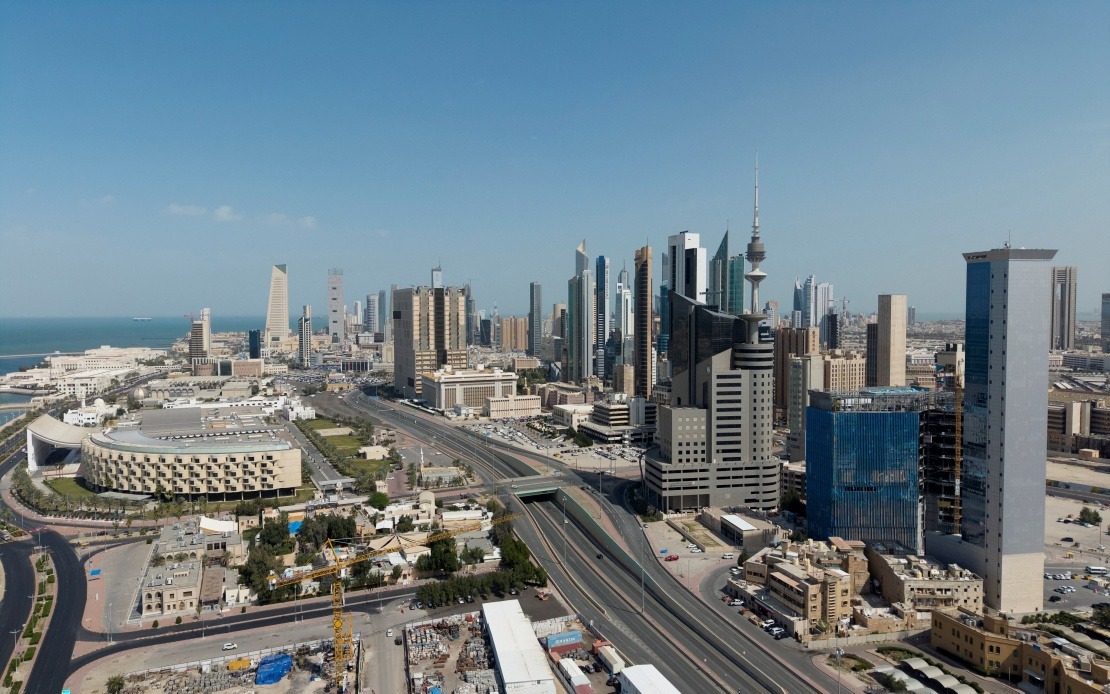
Kuwait has announced a major financial initiative designed to address the physical damage sustained during heightened regional tensions, establishing an emergency response fund with an initial allocation of US$100 million. The announcement, made on Sunday by Foreign Minister Sheikh Jarrah Jaber Al-Ahmad Al-Sabah, represents a strategic effort to mobilise resources for infrastructure reconstruction and strengthen the country's capacity to respond to future crises. The Kuwait Emergency Response Fund, administered through the Kuwait Fund for Arab Economic Development, signals the government's commitment to rebuilding critical facilities affected by the conflict.
The fund operates within a broader framework designed to create systematic emergency financing mechanisms and enhance Kuwait's national crisis management infrastructure. Rather than treating infrastructure damage as an isolated incident requiring reactive repairs, the initiative establishes permanent institutional structures for responding to future emergencies. This approach reflects the evolving security landscape facing Gulf states, where infrastructure vulnerability has become a persistent policy concern requiring dedicated financial and administrative oversight.
Waleed Al-Bahar, Acting Director General of the Kuwait Fund for Arab Economic Development, explained that the fund's establishment implements a cabinet decision aimed at creating a transparent, prioritised approach to infrastructure financing. The mechanism will involve assessing requests from government institutions and evaluating projects based on urgency and strategic importance. This structured methodology ensures that limited resources are directed toward facilities deemed most critical for national functionality and public welfare.
The Kuwaiti government has explicitly framed the damage to infrastructure as resulting from what Foreign Minister Al-Ahmad Al-Sabah characterised as Iranian aggression, positioning the emergency fund within a broader geopolitical narrative about regional security threats. This framing underscores how Gulf states increasingly view infrastructure resilience as integral to national security strategy. By creating dedicated financing mechanisms, Kuwait demonstrates that regional conflict poses not merely temporary military challenges but sustained economic and reconstruction burdens requiring permanent institutional responses.
Beyond government funding, authorities have appealed to the private sector to contribute resources to the emergency fund. This call reflects recognition that substantial infrastructure repair requires coordination across both public and private institutions. Kuwait's business community, historically influential in national economic planning, possesses significant capital reserves that could substantially augment government commitments. Private sector participation would also distribute reconstruction costs across the economy more broadly, potentially accelerating project timelines and expanding the scope of possible repairs.
The initiative emerges from a context of escalating military tensions that intensified dramatically in February when the United States and Israel conducted coordinated military strikes against Iran. Iran subsequently responded with waves of missile and drone attacks targeting Israeli facilities and American military installations positioned across the region, including bases in countries neighbouring Iran. These retaliatory operations created spillover effects throughout the Gulf, with various nations sustaining infrastructure damage from strikes, interceptions, and debris from defensive systems.
For Malaysia and other Southeast Asian economies, Kuwait's emergency fund signals important lessons about infrastructure vulnerability in geopolitically sensitive regions. While Malaysia faces distinct security challenges, the Kuwaiti model demonstrates how nations exposed to regional military tensions must develop dedicated financing frameworks for rapid infrastructure reconstruction. The establishment of permanent emergency mechanisms allows governments to respond more efficiently to crises rather than relying on ad hoc budgetary allocation during emergencies, when political fragmentation and competing priorities often delay action.
The US$100 million initial allocation, while substantial, reflects estimates of immediate repair costs rather than comprehensive reconstruction. Kuwait's diversified economy and significant sovereign wealth reserves enable this mobilisation, but the fund's success will depend on project prioritisation and efficient implementation. Delays in reconstruction can compound economic damage by prolonging infrastructure disruptions, affecting trade, transportation, and essential services. The administrative structure created through the Kuwait Fund for Arab Economic Development provides institutional capacity for managing complex reconstruction portfolios.
Regional implications extend beyond Kuwait, as other Gulf states similarly exposed to Iranian ballistic and drone capabilities observe this financial approach. The precedent may influence how countries throughout the Gulf Cooperation Council structure their own emergency response mechanisms. Saudi Arabia, the United Arab Emirates, and other wealthy Gulf nations possess comparable capital reserves and face comparable vulnerability to Iranian military capabilities. Kuwait's initiative could accelerate regional trend toward institutionalised infrastructure resilience planning.
The emergency fund also reflects broader recognition that contemporary geopolitical rivalry between regional powers—particularly between Iran and the United States-backed Gulf Arab states—has shifted from purely military dimensions toward economic and infrastructure domains. Damage to civilian infrastructure, power generation facilities, and transportation networks becomes a tool for imposing costs on adversaries without direct military engagement. This expanded understanding of conflict consequences has prompted Gulf states to develop more sophisticated approaches to resilience and recovery planning.

