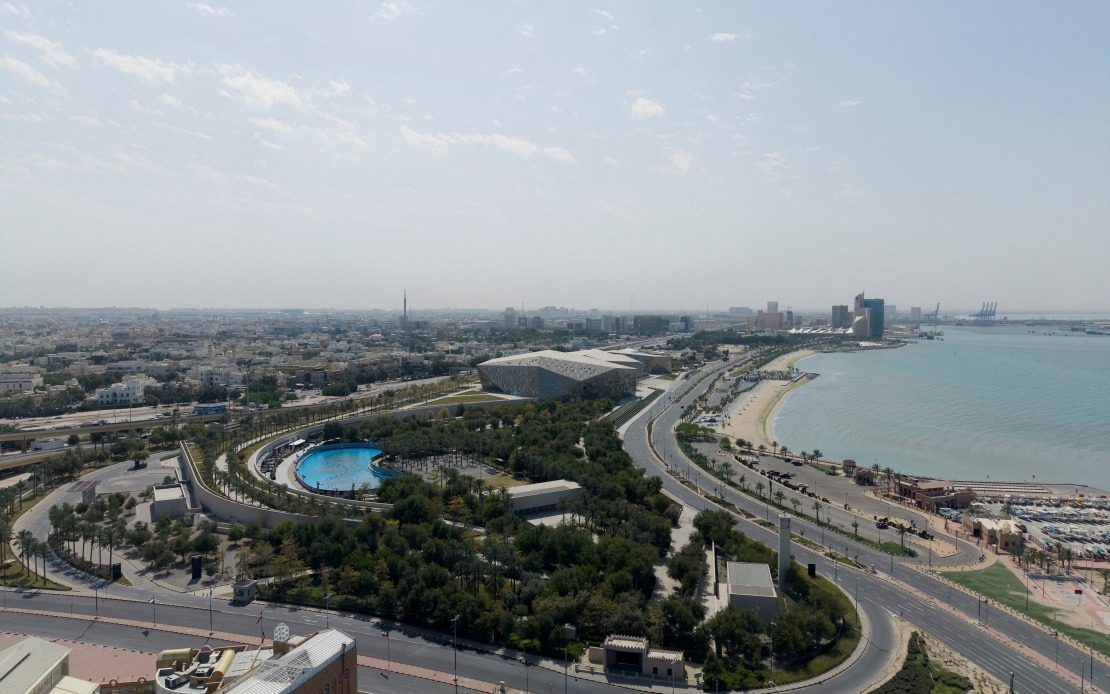
Kuwait's armed forces mobilised their air defence infrastructure in the early hours of Wednesday to counter what the military characterised as hostile drone operations, marking another significant security incident in the strategically vital Persian Gulf region. The Kuwaiti army statement confirmed that explosions audible across parts of the country stemmed from air defence systems engaging incoming unmanned aircraft, and officials advised residents to comply with safety directives distributed by competent authorities. A fire that broke out at one of the targeted locations was subsequently brought under control by firefighters, though no casualties were reported and the exact nature and location of the installation remained undisclosed by local authorities.
The incident formed part of a broader pattern of aerial activity affecting multiple Gulf states. Bahrain's Interior Ministry activated air raid warning systems and instructed both citizens and expatriate residents to exercise caution and proceed to nearby shelters. A day earlier, Bahrain's Defence Force had announced the successful interception and destruction of what officials termed Iranian aerial assault operations directed at the island nation, signalling an intensification of direct military exchanges in the waterway.
These developments represent the latest manifestation of escalating hostilities between Washington and Tehran that have reverberated across the entire Gulf corridor. The United States has conducted military strikes against Iranian targets, prompting retaliatory drone and missile attacks by Tehran directed at American military installations positioned throughout the region. The cycle of tit-for-tat operations has continued despite ongoing diplomatic efforts, including a Pakistani-brokered arrangement intended to de-escalate tensions and establish a durable ceasefire.
For Southeast Asian readers and policymakers, these incidents carry significant ramifications. The Strait of Hormuz, through which Kuwait and Bahrain maintain critical economic lifelines, remains one of the world's most strategically important chokepoints for energy shipments. Disruptions to security in the region inevitably affect global oil prices and supply chains, with direct consequences for Malaysia's energy-dependent economy and manufacturing sector. Any prolonged escalation could drive up fuel costs and increase shipping insurance premiums, ultimately raising prices for Malaysian consumers and businesses.
The apparent inability of diplomatic mechanisms to arrest the momentum of military escalation raises questions about the effectiveness of third-party mediation efforts. Pakistan's involvement as a mediator underscores the complex web of regional relationships and the limitations of dialogue when underlying strategic interests remain fundamentally misaligned. For Malaysia, which maintains relationships across the political spectrum and has aspirations to contribute constructively to regional peace efforts, the situation illustrates the challenges of conflict resolution in areas where multiple great powers maintain competing interests.
The disclosure that civilian facilities may have been targeted or collateral damage occurred, coupled with the apparent Iranian determination to continue operations despite previous interceptions, suggests that both sides view military action as serving essential strategic objectives rather than as merely tactical responses. This calculus indicates that de-escalation will require addressing core security concerns rather than simply managing individual incidents.
The operational effectiveness demonstrated by both Gulf state air defence systems and Iranian drone capabilities reflects significant investments in military modernisation by regional actors. The ability of systems to intercept incoming threats provides some reassurance regarding the prevention of catastrophic damage, yet the recurrent nature of these incidents demonstrates the precarious nature of stability in the Gulf. For regional observers including Malaysia, the message is clear: the equilibrium maintaining relative calm remains fragile and dependent on decisions made in Tehran and Washington rather than by Gulf states themselves.
These events also illustrate the broader phenomenon of an increasingly multipolar Middle East, where regional powers including Iran pursue independent foreign policies rather than simply responding to superpower dictates. Iran's demonstrated willingness to conduct direct military operations against adversaries reflects confidence in its strategic position and technological capabilities, even when facing the world's most powerful military establishment. This assertiveness will likely persist as a defining characteristic of Gulf geopolitics for the foreseeable future.
For Malaysia and other Southeast Asian nations dependent on Gulf stability for energy security and uninterrupted maritime commerce, the implications demand sustained diplomatic attention. The diversification of energy sources, including continued investment in renewable technologies and liquefied natural gas supplies from alternative producers, remains essential to buffering the region against Gulf-originating supply shocks. Simultaneously, ASEAN nations should explore expanded diplomatic engagement aimed at encouraging de-escalation and supporting international mechanisms designed to prevent further military confrontation.
The absence of casualty reports in these latest incidents, while offering temporary relief, cannot mask the underlying reality that the escalatory cycle between major powers shows no clear off-ramp. Without meaningful progress in negotiations addressing the core grievances of both the United States and Iran, observers should anticipate additional similar incidents occurring with depressing regularity, each carrying potential to spiral into wider conflict with truly catastrophic consequences for global stability and economic wellbeing.

