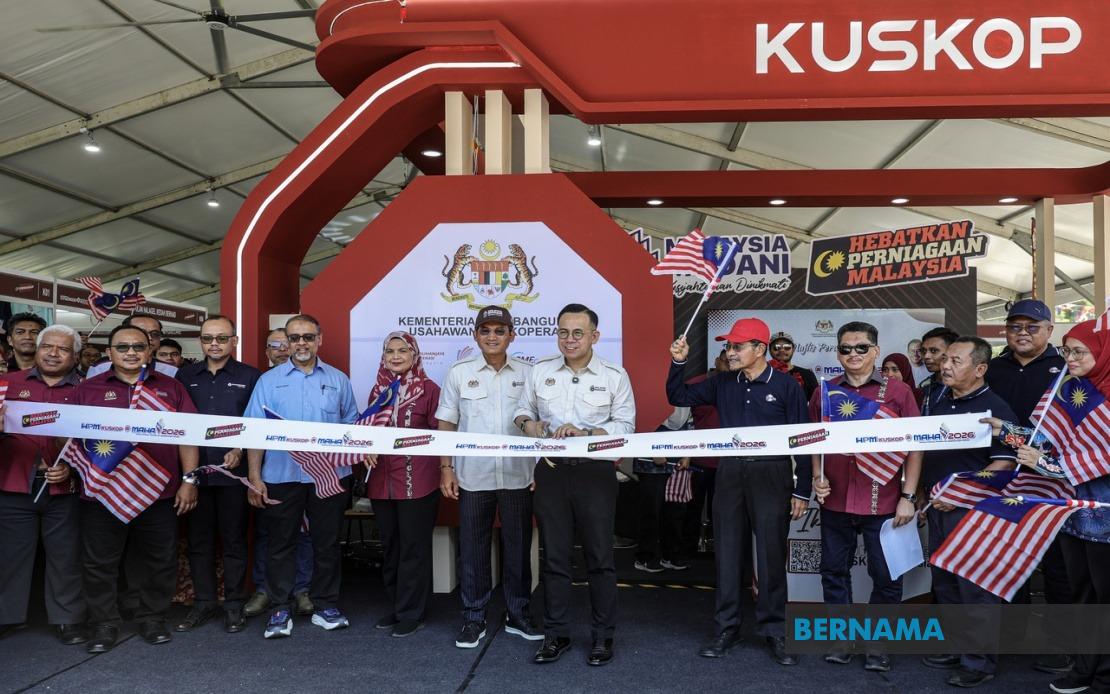
The Ministry of Entrepreneur and Cooperatives Development (KUSKOP) has established its first dedicated pavilion at the biennial MAHA 2026 event in Serdang, marking a significant milestone in the ministry's efforts to showcase Malaysia's entrepreneurial ecosystem at the country's premier agricultural and agribusiness showcase. With an ambitious target of RM500,000 in total sales, the initiative represents a strategic push to elevate the visibility and commercial opportunities for the nation's emerging business community at one of the largest annual gatherings of its kind.
Minister Steven Sim revealed that the pavilion, officially opened at the event, had already achieved sales exceeding RM110,000 within the opening days, suggesting strong momentum toward the overall sales objective. The early performance indicates robust interest from MAHA's diverse visitor base in the products and services offered by the participating entrepreneurs and cooperative enterprises. This initial traction underscores the event's value as a platform for direct consumer engagement and commercial transactions for businesses typically operating outside the mainstream retail and wholesale channels.
The HPMKUSKOP@MAHA 2026 site has drawn together approximately 66 participating companies, registered cooperatives, and micro, small and medium enterprises, reflecting the ministry's commitment to providing equitable access to market exposure for businesses across the entire entrepreneurial spectrum. This curated selection represents a cross-section of Malaysia's MSME landscape, encompassing various sectors and scales of operation. By concentrating these enterprises under a single branded pavilion rather than distributing them individually throughout the fairground, KUSKOP has created a concentrated hub that amplifies the collective presence and purchasing power of the entrepreneurial sector.
Attendance figures at the nascent pavilion have been encouraging, with organisers noting that more than 100,000 visitors had passed through in the initial period of the event. This footfall, drawn from MAHA's broader agricultural and rural development audience, represents a demographics shift that differs from typical urban retail environments where many MSMEs struggle for visibility. The rural and agricultural focus of MAHA's attendees creates a natural alignment with many cooperatives and agribusiness-oriented enterprises, potentially generating more qualified commercial leads than conventional urban trade shows might offer.
Simultaneously present at the pavilion's opening was Datuk Seri Khairul Dzaimee Daud, secretary-general of KUSKOP, signalling institutional commitment to the initiative at the highest administrative levels. This senior-level engagement reflects the ministry's recognition that MAHA provides a rare opportunity to bridge the gap between Malaysia's entrepreneurial ecosystem and its rural development objectives. The presence of both ministerial and departmental leadership serves to legitimise the participating businesses and emphasises the government's endorsement of the cooperative and MSME sector as critical components of the nation's economic strategy.
Minister Sim formally acknowledged the contributions of the Ministry of Agriculture and Food Security and its minister, Datuk Seri Mohamad Sabu, in organising and executing the MAHA 2026 event. This interdepartmental cooperation highlights the growing recognition within Malaysia's federal government that entrepreneurship, agriculture, and rural development are increasingly intertwined policy domains. MAHA's success depends on drawing diverse audiences and generating transactional activity, objectives that align seamlessly with KUSKOP's mission to expand market access for underserved business communities.
The inaugural nature of the HPMKUSKOP@MAHA dedicated pavilion represents a strategic evolution in how government-linked agencies approach stakeholder engagement at major public events. Rather than participating as isolated booths or sponsoring entities, KUSKOP has created an integrated brand experience that consolidates messaging around cooperative development and entrepreneurial support. This approach allows the ministry to communicate its policy priorities and institutional capabilities to both participating businesses and the general public in an accessible, experiential format.
For the 66 participating enterprises, the MAHA platform offers tangible commercial opportunities beyond networking or information gathering. Early sales figures indicate that consumers attending MAHA are willing to make immediate purchases at the pavilion, transforming foot traffic into revenue. For many MSMEs and cooperatives operating on constrained working capital, such direct sales opportunities can meaningfully impact quarterly performance and provide cashflow essential for ongoing operations and expansion plans.
The RM500,000 sales target, if achieved, would represent a notable demonstration of commercial viability for Malaysia's cooperative sector and entrepreneurial community. Beyond the financial metric, successful execution of the HPMKUSKOP@MAHA initiative would validate the model for future iterations, potentially encouraging KUSKOP to secure larger pavilion allocations or return annually to MAHA. Sustained presence at major public events builds brand recognition and establishes precedent for direct market access that may have been unavailable through conventional business-to-business and business-to-consumer channels.
The MAHA setting itself carries particular resonance for entrepreneurship-focused initiatives. The event draws agricultural professionals, rural development practitioners, government officials, and farming communities—constituencies with demonstrated purchasing power and interest in supporting locally-based enterprises. This audience composition creates a natural affinity between MAHA's traditional focus on agricultural advancement and KUSKOP's mission to foster entrepreneurial sustainability throughout Malaysia's rural and semi-rural regions.
Looking forward, the success metrics from MAHA 2026 will inform strategy for KUSKOP's participation in subsequent editions and similar large-scale events. Strong sales performance, visitor engagement, and participating business feedback will provide empirical evidence of whether dedicated, ministry-branded pavilions represent an effective mechanism for advancing entrepreneurial visibility and market access. This pilot initiative thus carries implications extending well beyond the immediate commercial outcomes, potentially shaping how Malaysian government agencies approach the promotion of MSMEs and cooperatives at major national events.

