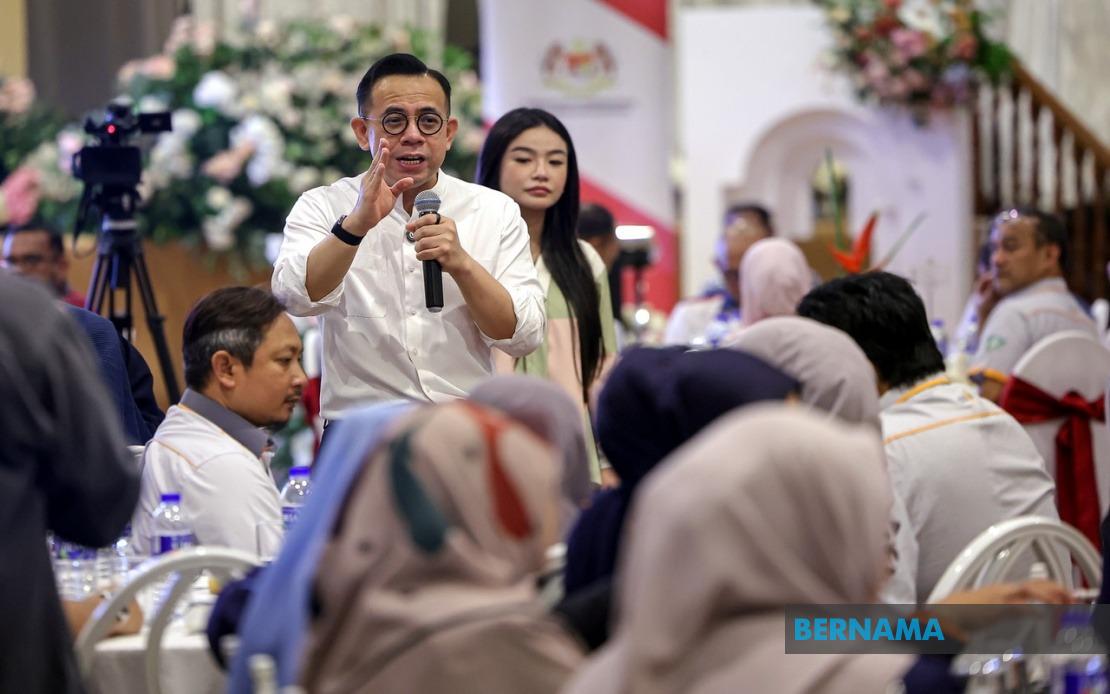
Malaysia's push to strengthen its entrepreneurial ecosystem has reached a significant milestone, with the Ministry of Entrepreneur Development and Cooperatives (KUSKOP) channelling nearly RM7 billion to over 213,000 micro, small and medium enterprises during the first six months of 2026. The substantial injection of capital reflects government determination to sustain the competitiveness and resilience of the MSME sector amid increasingly volatile global economic headwinds, according to Minister Steven Sim.
The funds have been distributed through multiple support and financing mechanisms integrated under the Power Up 10K initiative, a comprehensive programme designed to address the capital accessibility challenges that have long constrained enterprise growth in Malaysia. With the halfway mark showing RM7 billion deployed against an ambitious full-year target of RM15 billion, the trajectory suggests the ministry remains on course to double the H1 disbursement volume by year's end, subject to implementation efficiency and demand from eligible applicants.
At the state level, Negeri Sembilan has emerged as a notable beneficiary of this national initiative. The state-based allocation of RM345 million has supported the establishment and expansion of more than 6,600 local entrepreneurs, indicating that the funding mechanism is penetrating regional economies beyond major urban centres. This geographic distribution underscores a deliberate policy choice to ensure that entrepreneurial opportunity and government support extend into smaller economies where private capital access is typically more constrained.
Minister Sim emphasised that the performance to date demonstrates KUSKOP's institutional capacity to translate policy intent into tangible grassroots outcomes. The effective routing of government resources to entrepreneurs working at the coalface of Malaysia's economy represents a validation of the ministry's operational framework and coordination with implementing agencies. However, the scale of disbursement also reflects underlying demand from the MSME sector itself, suggesting that entrepreneurs recognise genuine utility in the available schemes and financing terms.
Beyond the headline figures, KUSKOP is recalibrating its strategic approach to entrepreneurial support. The ministry has signalled a shift toward treating all agencies within its purview as efficient frontline service providers tasked with proactive rather than reactive engagement with the business community. This represents a philosophical change from a model where entrepreneurs must navigate bureaucratic processes to access programmes toward one where government agencies actively seek to identify and support eligible applicants.
Central to this reorientation is acknowledgment that while global variables such as oil price volatility remain beyond government control, the compliance and regulatory burden imposed on entrepreneurs constitutes a material cost structure that can be reduced. Sim articulated a commitment to minimising the administrative friction that entrepreneurs face when attempting to access government support, arguing that if private sector competitiveness cannot be insulated from global shocks, at minimum government must prevent self-inflicted regulatory impediments from compounding external pressures.
The minister explicitly challenged state-level KUSKOP agencies to abandon passivity and embrace competitive dynamism in accelerating fund disbursements. Rather than maintaining a position where entrepreneurs must proactively identify and approach government schemes, the ministry is directing field agencies to intensify outreach through roadshows, social media engagement, and direct community contact. This demand-creation approach recognises that information asymmetries can limit uptake even when financing is genuinely available, and that prospective entrepreneurs may lack awareness of accessible support mechanisms.
For Malaysian entrepreneurs navigating a complex regulatory landscape and constrained access to conventional banking finance, the Power Up 10K initiative represents meaningful supplementary capital availability. The programme's first-half performance suggests that the ministry has successfully operationalised its delivery infrastructure and that eligible MSMEs are responding to available opportunities. However, sustained impact depends on maintaining disbursement velocity through the second half while ensuring that capital deployment translates into genuine enterprise growth rather than capital absorption without productive utilisation.
The timing of this government support is contextually significant given that Southeast Asian SMEs face intensifying competitive pressure from regional integration, supply chain realignment, and the digital transformation of commercial relationships. Malaysian entrepreneurs must simultaneously modernise operations, manage cost pressures, and compete for market share in an increasingly interconnected regional economy. Government financing that enables working capital, technology investment, or operational expansion addresses a genuine capital constraint that private markets often undersupply for smaller enterprises lacking significant asset collateral.
Looking ahead, the ministry's success in deploying the second half of its RM15 billion target and the subsequent effectiveness of deployed capital in strengthening enterprise performance will determine whether Power Up 10K generates enduring economic dynamism or represents temporary injection of public resources into the entrepreneurial ecosystem. The emphasis on reducing compliance costs and improving service delivery efficiency suggests KUSKOP recognises that capital alone proves insufficient; entrepreneurs require an enabling environment where regulatory burden and administrative friction do not themselves become barriers to investment deployment and business expansion.

