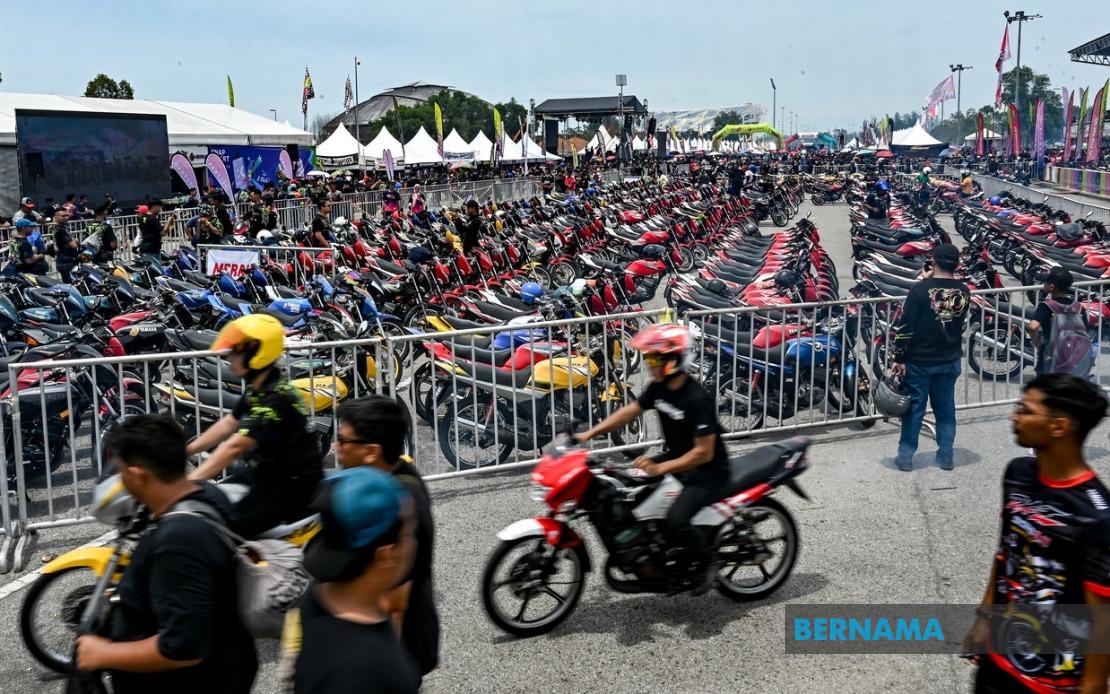
The Kuala Terengganu City Council (MBKT) has found itself bearing a substantial financial burden following the RXZ Members 8.0 event held at the Gong Badak Motor Racing Circuit near Kuala Nerus over the weekend, with cleanup and waste management operations consuming RM40,000 of municipal resources. The extensive post-event sanitation effort, which spanned from Friday through Saturday's programming, underscores the mounting challenges local authorities face when managing large-scale public gatherings in Malaysia's increasingly popular event tourism destinations.
The financial outlay encompasses multiple operational expenses incurred by the council's workforce and infrastructure. Workers required overtime compensation to manage the scale of debris scattered across the venue grounds, while the municipality deployed additional refuse collection vehicles to transport accumulated waste materials. The Sungai Ikan landfill also operated beyond its standard hours to accommodate the extraordinary volume of incoming refuse, creating cascading costs throughout the waste management supply chain. Mayor Lizan Che Mamat characterised these expenses as necessary measures to restore the venue to acceptable standards following the gathering.
Approximately 130 tonnes of solid waste accumulated across the event site, predominantly comprising food and beverage containers, disposable packaging, and general litter. This figure reveals the scale of the refuse problem and demonstrates that despite organisers positioning adequate rubbish receptacles throughout the venue, attendees disregarded waste management protocols and deposited refuse indiscriminately across the grounds. The discrepancy between infrastructure provided and actual disposal behaviour highlights a persistent challenge in public event management: the gap between expected and actual participant environmental responsibility.
Mayor Lizan acknowledged that the unexpected turnout contributed to the waste management difficulties. Attendance figures exceeded 100,000 people, substantially surpassing what organisers had likely anticipated when planning refuse collection arrangements. The sudden surge in visitor numbers meant that bin placement and capacity calculations became inadequate, potentially pushing some attendees toward improper disposal simply due to lack of accessible collection points. Nevertheless, Lizan emphasised that proper waste management culture requires participants to consolidate their refuse at designated collection zones rather than abandoning it throughout the venue perimeter.
This incident has prompted MBKT to reconsider its regulatory framework for future large-scale events. The council intends to mandate that event organisers submit comprehensive solid waste management plans as a prerequisite for municipal approval. Such requirements would compel promoters to conduct capacity planning based on expected attendance, identify appropriate disposal locations, and coordinate with sanitation authorities before events commence. This proactive approach represents a shift from reactive cleanup operations toward preventive event management standards.
Another administrative tool under consideration involves restructuring the cleaning deposits that MBKT currently collects from event organisers. The council plans to reassess whether existing deposit amounts adequately incentivise organisers to implement robust waste management practices. By potentially increasing deposit levels or establishing performance-based refund mechanisms tied to cleanliness standards, the municipality could transfer financial responsibility more directly to event promoters. This approach would distribute costs more equitably and create powerful motivation for organisers to instil environmental discipline among attendees.
The cleanup situation reflects broader tensions facing Malaysian local authorities managing the expanding event tourism industry. Cities and states compete to attract marquee events that generate economic activity, visitor spending, and media attention. However, hosting large gatherings creates environmental and infrastructural challenges that municipalities must absorb, often at considerable expense. For Terengganu specifically, which has invested substantially in positioning itself as an events destination, balancing tourism promotion with fiscal sustainability remains complex.
Mayor Lizan's public comments struck a careful diplomatic tone, simultaneously welcoming large-scale events while establishing boundaries around environmental expectations. He acknowledged that such programming stimulates tourism revenue and activates local economies, suggesting genuine enthusiasm for hosting visitor-intensive activities. Simultaneously, he articulated a municipal expectation that event participants demonstrate environmental citizenship and recognise cleanliness as a collective responsibility rather than something delegated entirely to sanitation workers. This framing attempts to cultivate cultural norms supporting sustainable event management.
The RXZ Members 8.0 incident carries implications beyond Kuala Terengganu's municipal boundaries. Other Malaysian local authorities hosting motorsports events, music festivals, sporting competitions, and cultural celebrations may recognise similar patterns of waste generation and attendee disposal behaviour. The regulatory and deposit framework that MBKT develops could establish precedents adopted by other councils facing comparable challenges. As Malaysia increasingly positions itself as a regional events hub, developing standardised approaches to event waste management may become necessary.
For event organisers operating in Malaysia, the cleanup incident and subsequent policy discussions signal tightening expectations regarding environmental stewardship. Promoters cannot assume that municipalities will absorb unconstrained cleanup costs without consequence. Those seeking municipal permits for future events should anticipate enhanced scrutiny of waste management planning, potentially higher deposits requiring performance benchmarks, and expanded council authority to audit compliance. This regulatory evolution reflects growing recognition that sustainable event management requires shared accountability across organisers, participants, and local authorities.
The situation also illuminates the challenge of instilling environmental responsibility among large audiences in Malaysia. Despite infrastructure investment and organisational efforts, casual littering persists at major public gatherings. Shifting this behaviour requires sustained cultural messaging, potential enforcement mechanisms, and possibly incentive structures encouraging proper disposal. The council's experience suggests that infrastructure availability alone insufficient to ensure compliance; parallel efforts addressing participant attitudes and norms become essential.
Moving forward, the effectiveness of MBKT's proposed regulatory reforms will determine whether subsequent large events generate comparable cleanup burdens and costs. If waste management plans prove robust and deposits motivate organiser diligence, future events may demonstrate improved sanitation outcomes. Conversely, if enforcement remains inconsistent or regulatory requirements prove insufficient, municipalities may face recurring RM40,000 expenditures. The path forward requires sustained coordination between local government, event promoters, and the participating public.

