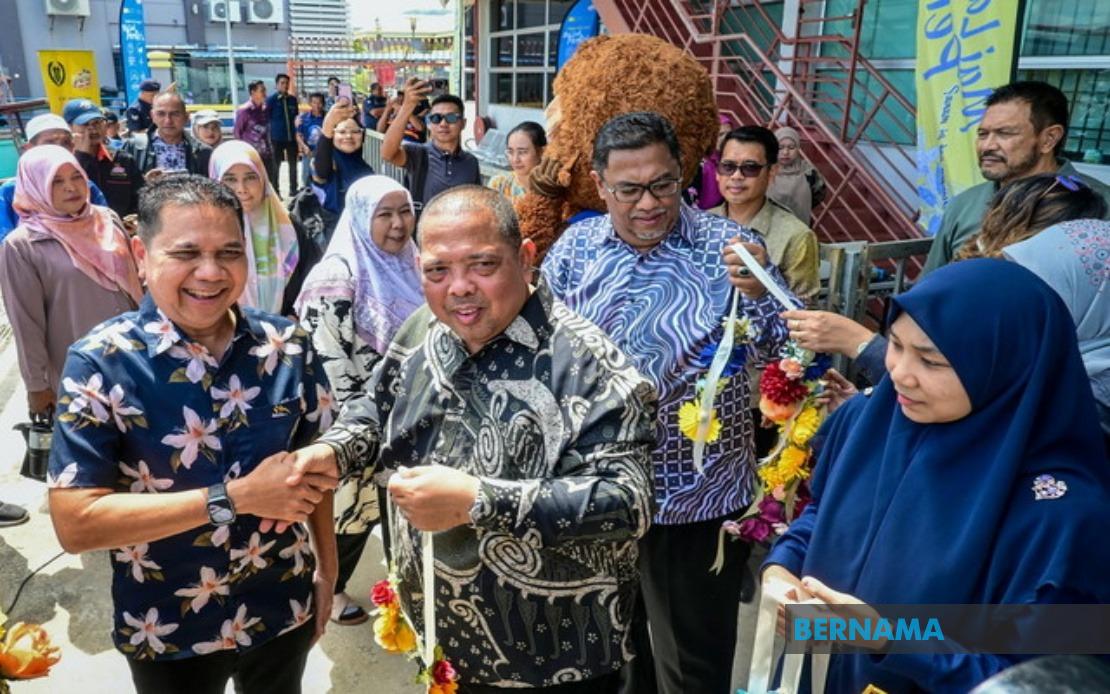
The state of Perlis is banking on renewed maritime connectivity to revitalise its tourism sector, with the resumption of the Kuala Perlis-Satun ferry service marking a significant milestone in regional travel and commerce. Menteri Besar Abu Bakar Hamzah announced that the reopening of this long-suspended sea route comes as the state sets ambitious targets to welcome between 5.5 million and six million tourists throughout the year, representing a crucial recovery strategy following pandemic-related disruptions that had halted the service.
The ferry crossing, which dormant since the onset of COVID-19, represents more than a simple restoration of transport infrastructure. For Perlis, which has historically struggled to compete with neighbouring states for tourist attention, the service offers a gateway to Thai visitors seeking cross-border shopping and cultural experiences. The 40-minute journey between Kuala Perlis and the Thai province of Satun provides travellers with an alternative to the typical inland border crossings, delivering scenic coastal vistas that enhance the travel experience while positioning Perlis as a destination rather than merely a transit point.
Abu Bakar emphasised the economic multiplier effects embedded in the ferry's return. By facilitating smoother movement between Satun and Kuala Perlis, local merchants and service providers expect increased foot traffic and consumer spending. Thai nationals, in particular, represent an untapped consumer base for Perlis retailers, who stand to benefit from cross-border shopping patterns that have historically flowed in the opposite direction. The state government recognises this as an opportunity to reverse tourism imbalances and generate additional revenue streams that extend beyond accommodation and dining into retail commerce and ancillary services.
Equally significant is the ferry's role in alleviating pressure on conventional border infrastructure. The Padang Besar crossing, which serves as the primary land crossing between Malaysia and Thailand in the northern region, frequently experiences congestion during peak travel periods and public holidays. By offering a maritime alternative, the ferry system distributes traveller flows across multiple checkpoints, reducing bottlenecks and enhancing efficiency for all users. This infrastructure diversification is particularly valuable during festive seasons when holiday-makers and returning expatriates create capacity challenges at land borders.
The diplomatic dimensions of the ferry's resumption should not be overlooked. As a bilateral initiative involving Malaysia and Thailand at the sub-national level, the service strengthens institutional connections between Perlis and Satun, reinforcing people-to-people exchanges and cross-border cooperation. Such grassroots economic and social integration often proves more resilient than formal government arrangements, creating sustained momentum for collaborative ventures. The welcoming of a Satun delegation to Kuala Perlis symbolises this partnership orientation and signals mutual commitment to leveraging geography for mutual prosperity.
However, infrastructure challenges threaten the ferry's operational viability without further investment. The Kuala Perlis Ferry Terminal faces persistent berthing difficulties stemming from fluctuating water levels and shallow waters that constrain vessel access, particularly during certain seasons. To address this vulnerability, the state government is pursuing installation of a floating pontoon system designed to accommodate tidal variations and maintain consistent berthing capacity. Such adaptations, while expensive, are essential for ensuring year-round reliability that tourist operators and commercial users demand.
Longer-term ambitions extend well beyond ferry services. State authorities are actively exploring the reactivation of the Kuala Perlis-Satun Roll-on/Roll-off service, which would permit vehicle transport across the strait, fundamentally expanding the utility of the sea crossing for travellers requiring motorised mobility. More ambitiously, preliminary discussions with potential investors centre on a proposed RM500 million bridge project spanning approximately two kilometres into the sea. Such a structure would overcome chronic shallow navigation channel obstacles that plague the strait while providing permanent, all-weather connectivity that ferries cannot guarantee.
The bridge proposal, while economically transformative, raises complex questions about financing, environmental impact, and bilateral coordination between Malaysian and Thai authorities. Capital requirements of this magnitude suggest that private-sector involvement is essential, necessitating robust feasibility studies demonstrating commercial viability. The project would also require environmental assessments addressing concerns about marine ecosystems and coastal dynamics, compounded by the necessity of achieving international agreement given the cross-border nature of the undertaking. Nevertheless, the vision reflects Perlis's determination to transcend its geographic peripherality and position itself as a major node in Southeast Asian tourism and trade networks.
For Malaysian regional planners, the Kuala Perlis initiative illustrates the potential for leveraging underutilised maritime assets to unlock economic value in smaller states. Northern Peninsular Malaysia, traditionally overshadowed by more developed southern regions, possesses considerable potential if connectivity and tourism infrastructure receive sustained investment. The success or failure of the ferry service and its potential evolution into larger transport projects will significantly influence perceptions of Perlis's investment attractiveness and tourism competitiveness.
The reopening also reflects broader regional trends toward intensifying intra-ASEAN connectivity and cross-border economic integration. As Southeast Asian nations advance free movement protocols and economic cooperation frameworks, transport corridors become increasingly strategic assets. The Kuala Perlis-Satun crossing positions Perlis at the frontline of this regionalisation process, potentially enabling the state to capture economic benefits flowing from deeper Malaysian-Thai integration while enhancing Malaysia's connectivity profile within the wider Southeast Asian context.

