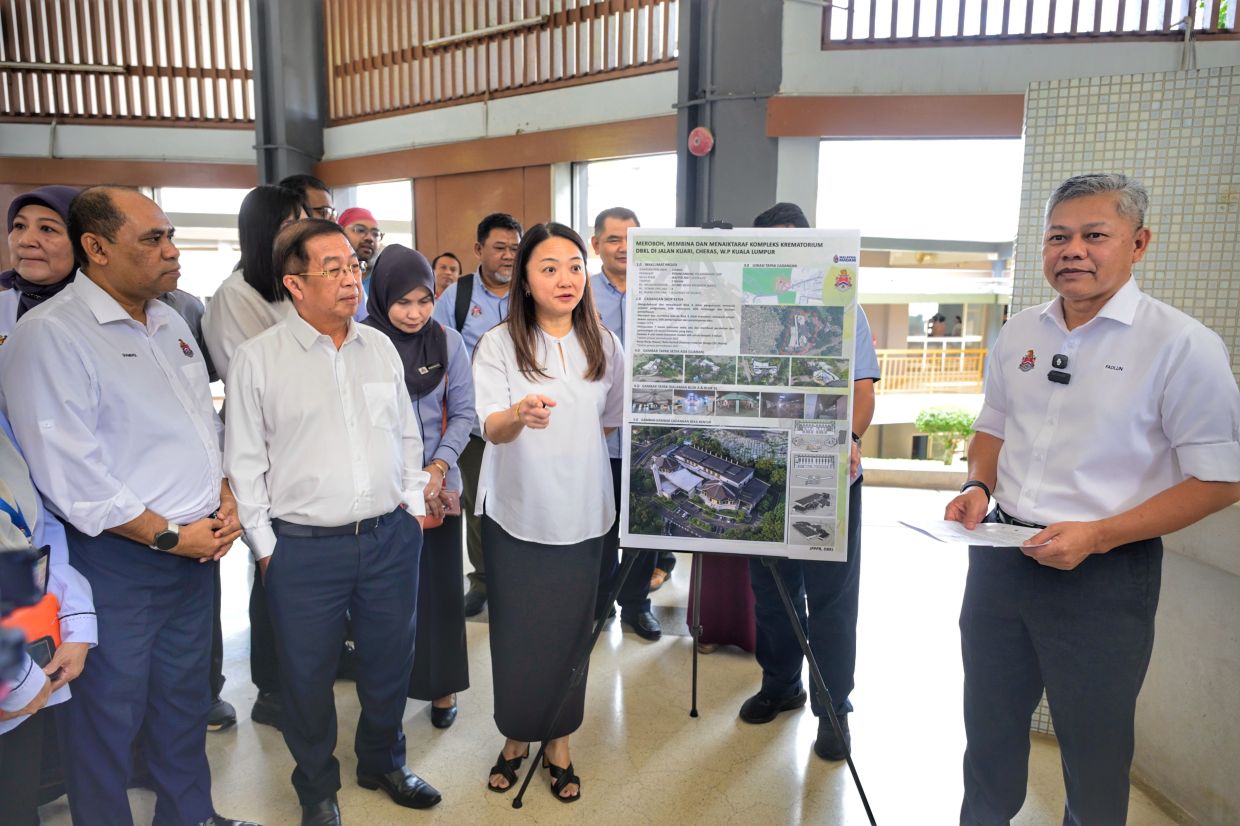
The Kuala Lumpur City Hall (DBKL) has committed RM45 million to a comprehensive overhaul of the Cheras crematorium, responding to mounting pressure on the capital's funeral infrastructure as its non-Muslim population continues to grow. Datuk Seri Fadlun Mak Ujud, the city's mayor, announced the expansion during an inspection of the facility on Jalan Kuari on Wednesday, July 8, emphasising that the initiative reflects City Hall's commitment to evolving public needs and represents a significant component of municipal service enhancement.
The crematorium complex, which has operated continuously since 1977, currently processes more than 5,800 cremations annually using its existing seven cremation units—a figure that underscores the mounting demand on the facility. The expansion project, approved under the 13th Malaysia Plan, will introduce three additional cremation units to the complex, substantially increasing its capacity. Construction is scheduled to commence in February next year, with the full upgrade cycle expected to conclude within a two-year timeframe.
A critical feature of the project design ensures operational continuity throughout the renovation period. Rather than shutting down the entire facility during construction—a move that would have created severe bottlenecks for grieving families—DBKL has planned to maintain four cremation units in active service while upgrading works proceed. This phased approach demonstrates recognition of the essential nature of crematory services and the logistical challenges that any extended closure would impose on the non-Muslim community across Malaysia's largest metropolitan area.
Cheras MP Tan Kok Wai, who attended the mayoral inspection, stressed the urgency of accelerating the project timeline, noting that the facility's ageing infrastructure—now nearly five decades old—must be modernised to accommodate Kuala Lumpur's expanding population. His intervention reflects growing political attention to funeral infrastructure as a public health and social amenity issue, particularly in densely populated urban centres where demographic pressures have outpaced municipal planning. The emphasis on expedition suggests that current capacity constraints are already creating service delays and inconvenience.
Minister in the Prime Minister's Department (Federal Territories) Hannah Yeoh, also present during the facility inspection, broadened the discussion to encompass the parallel challenge facing Muslim burial grounds. She revealed ongoing negotiations between the Federal Government and Selangor state administration to locate appropriate land in Semenyih for the development of Muslim cemeteries. This reveals a systemic issue affecting multiple faith communities: Kuala Lumpur's spatial limitations increasingly constrain the provision of essential funeral infrastructure across religious denominations.
The scarcity of burial and cremation space represents a mounting challenge for the capital's municipal authorities. As Kuala Lumpur's population density continues climbing and available land becomes more precious, the city faces difficult decisions about allocating scarce resources between commercial development, residential housing, and essential public services. The crematorium expansion addresses one dimension of this problem, though Yeoh's acknowledgment that the capital simply lacks sufficient burial ground acreage suggests that comprehensive solutions will require suburban cooperation and regional coordination.
For Malaysian families observing non-Muslim funeral rites, the current crematorium represents an essential service with no realistic alternatives within the federal territories. The facility's role is particularly critical given Malaysia's multicultural composition and Kuala Lumpur's status as the nation's primary economic and administrative hub. Any interruption to crematory services creates not only practical difficulties but also spiritual and cultural complications for grieving families during vulnerable periods, making the maintenance of operational capacity during renovation particularly important.
The RM45 million investment reflects broader municipal recognition that funeral infrastructure merits significant capital expenditure, even though it operates outside the public consciousness until personal necessity demands it. The allocation demonstrates that DBKL, under its current administration, prioritises maintaining and expanding services that serve marginalised or minority-focus functions. This contrasts with historical patterns where such services received minimal investment or were treated as peripheral municipal responsibilities.
The project timeline of two years represents an ambitious undertaking given the technical complexities involved in upgrading cremation facilities, which require specialised engineering, environmental compliance certification, and coordination with funeral directors and community organisations. The phased operational approach requires careful scheduling to prevent bottlenecks, suggesting that DBKL has engaged professional project management rather than adopting ad-hoc construction methodologies.
Beyond its immediate infrastructure benefits, the crematorium expansion carries wider implications for Malaysia's federal territories governance. It illustrates how local administration must respond dynamically to demographic and religious diversity, particularly in urban contexts where multiple faith communities intersect. The parallel discussions regarding Muslim burial grounds in Semenyih suggest that funeral infrastructure planning is becoming a more integrated component of metropolitan governance rather than an afterthought.
The initiative also highlights potential lessons for other Malaysian cities managing multicultural populations. As urbanisation accelerates and population densities increase across the nation, other municipal authorities may face similar pressures on funeral infrastructure. The Cheras project provides a template—albeit a costly one—for how cities might proactively address anticipated capacity constraints before crisis points emerge.
For the non-Muslim communities in Kuala Lumpur, the RM45 million investment represents tangible acknowledgment of their presence and needs within the capital. It signals that despite being a minority within the federal territory, their essential services receive appropriate municipal attention and investment. This inclusionary approach to public infrastructure planning reflects broader principles of plural governance that Malaysia's urban centres increasingly must negotiate.

