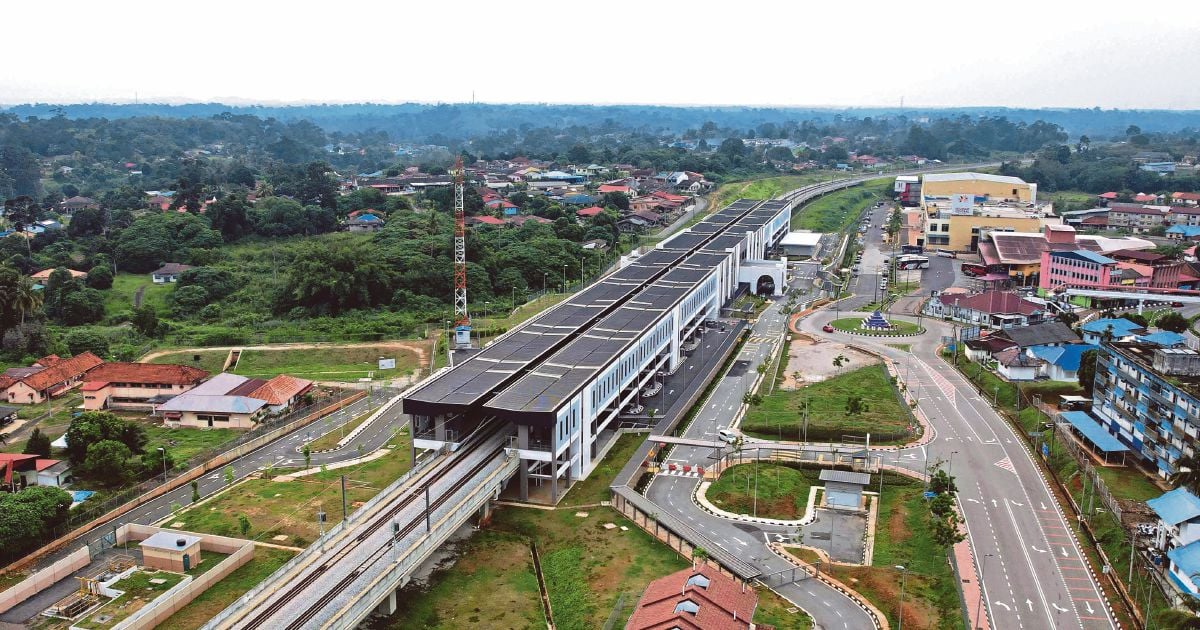
Keretapi Tanah Melayu Berhad (KTMB) is expanding its Electric Train Service (ETS) operations along the southern corridor to accommodate heightened passenger demand ahead of the Johor state election this weekend. The national railway operator will deploy an additional 7,464 seats across multiple services, representing a significant boost to transport infrastructure during the critical polling period.
The initiative reflects growing recognition among public transport operators that election cycles generate substantial population movement as voters travel to constituencies to cast their ballots. Unlike previous election cycles, KTMB's proactive approach to capacity management demonstrates coordination with electoral authorities to ensure smooth mobility across the peninsula. The southern sector of the ETS network, which connects major centres including Kuala Lumpur, Selangor, Negeri Sembilan, and Johor, typically experiences congestion during politically significant weekends when millions of citizens engage in the democratic process.
In tandem with the expanded service schedule, KTMB has announced a 20 percent fare reduction specifically targeting registered voters in Johor. This discount mechanism incentivizes rail travel over alternative modes of transport, potentially easing road congestion while generating goodwill among the travelling public. The discount structure, contingent on voter verification, represents a targeted incentive that acknowledges the economic considerations voters face when undertaking election-related journeys. For regular commuters on the southern corridor, this pricing intervention may provide temporary relief during a period of elevated demand.
The timing of this announcement carries particular significance for Malaysia's transport sector. Public rail infrastructure has faced persistent criticism over capacity constraints during peak periods, with the southern ETS corridor remaining one of the nation's busiest commuter arteries. By deploying additional rolling stock during an anticipated high-demand event, KTMB provides valuable operational data regarding system capabilities under stress conditions. Such information could inform future investment decisions and help policymakers assess whether permanent capacity enhancements are warranted on this strategic route.
For Johor voters, particularly those residing in federal territory centres like Kuala Lumpur and Selangor who maintain electoral registration in their home state, the rail option becomes considerably more attractive. The 20 percent fare reduction narrows the price gap between ETS travel and competing transport modes, potentially shifting modal choices toward rail. This behavioral change, should it materialise significantly, would benefit environmental sustainability objectives while reducing vehicle movements on congested highways during the election weekend.
The announcement also reflects broader industry trends wherein government-linked corporations coordinate services around major national events. Such coordination improves passenger experience while demonstrating institutional responsiveness to citizen needs during important civic moments. The ETS, since its rollout across multiple corridors, has evolved from a primarily business-focused service into a mass transport backbone for inter-city commuting. Capacity management during election seasons tests operational resilience while showcasing the network's flexibility.
From a business perspective, KTMB's expansion strategy during election weekends carries mixed implications. While additional service provision requires operational expenditure including fuel, maintenance, and personnel costs, the temporary fare discount reduces revenue per passenger despite higher absolute volumes. However, goodwill generated through accommodating voter mobility may enhance brand perception and passenger loyalty. Regular commuters who successfully navigate the election weekend without experiencing service degradation may develop increased confidence in KTMB's operational competence.
The southern corridor's strategic importance extends beyond electoral considerations. This segment connects three economically significant states whose combined GDP represents substantial national output. Efficient transport connectivity facilitates business activity, tourism flows, and daily worker movements. By demonstrating capacity to surge services during peak demand periods, KTMB validates the network's utility as comprehensive mobility infrastructure rather than merely a recreational transport option.
Regional observers may note that Malaysia's approach to election-period transport planning contrasts with practices in neighbouring economies. Some Southeast Asian nations employ more aggressive restrictions or incentive schemes to manage election weekend mobility. KTMB's incentive-based model represents a softer intervention emphasizing passenger convenience over coercion, reflecting Malaysia's established democratic practices and market-oriented transport policies.
Looking beyond this immediate election cycle, the additional capacity deployment raises questions about the permanence of these services. Should demand data indicate sustained requirement for higher baseline capacity on the southern corridor, KTMB and transport policymakers may face pressure to retain enhanced scheduling. Conversely, if additional services prove underutilised despite the fare discount, questions may arise regarding optimal deployment of railway resources and demand forecasting accuracy.
The integration of electoral considerations into transport planning also highlights evolving sophistication in infrastructure management. Rather than viewing elections as disruptive anomalies requiring reactive measures, KTMB's proactive approach positions rail transport as integral to democratic process facilitation. This institutional perspective acknowledges that functioning democracies require functional transport networks enabling citizen participation across geographical distances.
For commuters not eligible for the 20 percent discount, the service expansion nonetheless delivers benefits through reduced crowding and improved service reliability. Spreading demand across additional trains diminishes the probability of overcrowding on peak services, enhancing passenger comfort and safety. Such improvements, even temporary, may influence long-term travel decisions by demonstrating ETS viability as a dependable transport mode.

