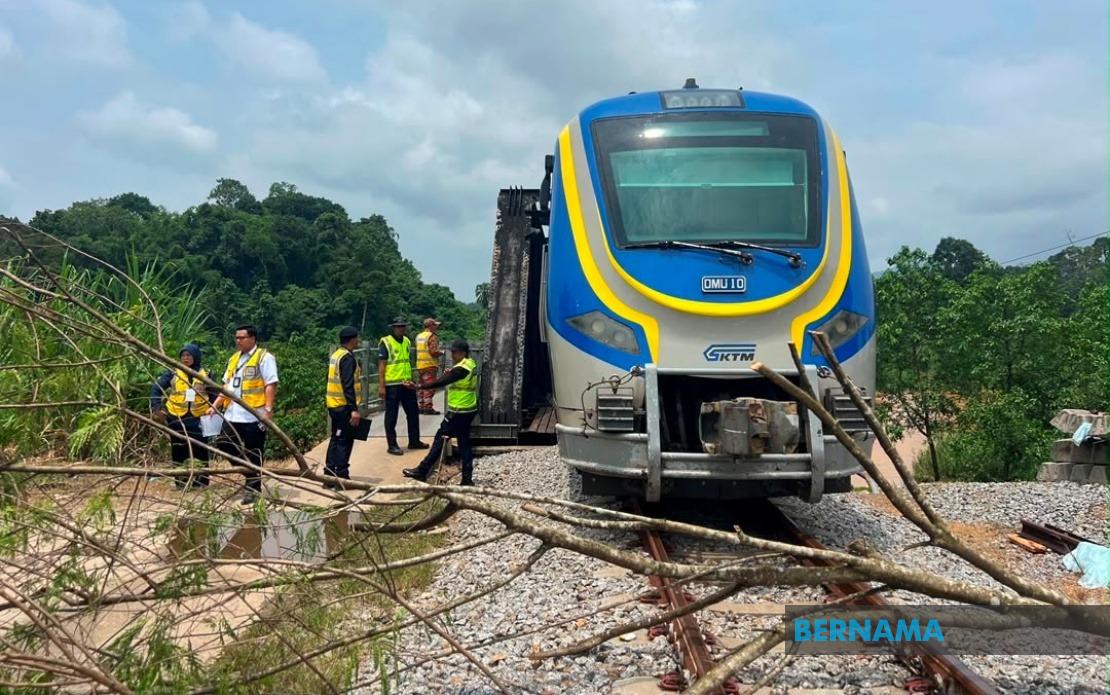
Keretapi Tanah Melayu Berhad held a comprehensive emergency response training programme on the EX-Kemubu route in Kuala Krai, seeking to evaluate critical aspects of disaster management in one of Malaysia's most geographically challenging railway corridors. The exercise, which brought together approximately 350 personnel from 11 agencies, represents a significant investment in railway safety preparedness and interagency coordination for a region where geographical isolation poses substantial obstacles to effective emergency intervention.
The EX-Kemubu route was deliberately selected for the training owing to its inherent operational risks and logistical challenges. The railway line traverses areas near waterways and operates through remote terrain that sits far from major urban centres and main transportation routes. These characteristics mirror real-world scenarios that emergency responders might encounter, making the location ideal for testing how rescue teams perform under conditions that amplify the difficulty of reaching accident sites quickly. For KTMB, understanding these vulnerabilities is essential for developing robust contingency plans that account for the realities of rural railway operations across Malaysia.
According to Khairul Naim Johdi, the general manager of KTMB's Occupational Safety, Health and Environment division, the training exercise concentrated on three interconnected dimensions of emergency management. The first involved assessing how swiftly rescue agencies could physically access the affected area after receiving notification from KTMB. The second examined the actual response time from when information reached emergency services to when personnel arrived on scene. The third evaluated how effectively information flowed between the railway operator and responding agencies, and whether communication protocols enabled coordinated action. Together, these elements form the backbone of any effective disaster response system, yet they become exponentially more difficult to execute in regions where infrastructure is sparse and distances are considerable.
Rural accessibility remains perhaps the most acute challenge facing emergency services in Malaysia's remote railway zones. Johdi emphasized that the time required for rescue teams to gain access to incident locations in these areas frequently exceeds acceptable limits, fundamentally altering the nature of emergency response. Unlike scenarios involving well-connected urban rail networks, responders to the EX-Kemubu route must navigate poor road conditions, limited entry points, and geographical barriers that can add critical hours to rescue operations. The training allowed participating agencies to identify bottlenecks in their current procedures and brainstorm concrete solutions for reducing delays.
The exercise involved an unusually broad coalition of emergency services, demonstrating KTMB's recognition that railway accidents demand coordinated responses spanning multiple specializations. The Royal Malaysia Police provided law enforcement and scene security expertise, the Malaysian Fire and Rescue Department contributed technical rescue capabilities, the Ministry of Health ensured medical response readiness, the Malaysian Civil Defense Force contributed disaster management frameworks, and the Department of Social Welfare prepared to manage victim welfare and psychosocial support. This diversity of agencies, while necessary, also introduces complexity in coordination that the training aimed to stress-test and refine.
Following the training exercise, KTMB planned to conduct detailed post-incident reviews with all participating agencies. These evaluations would scrutinize specific performance metrics including response delays at various stages, the effectiveness of initial responders' actions, the accessibility of entry points to the incident zone, and the clarity and timeliness of information dissemination. Rather than viewing this as a punitive assessment, KTMB framed it as a continuous improvement process, allowing the organization to identify systemic weaknesses and implement corrective measures before an actual incident occurs.
The EX-Kemubu training fits within a broader annual calendar of emergency preparedness activities at KTMB. The railway operator conducts large-scale emergency drills annually, rotating the location among its four operational regions to ensure comprehensive geographical coverage across its network. Between these major exercises, KTMB conducts smaller-scale drills throughout the year to maintain personnel proficiency and test specific procedural elements. This layered approach to training recognizes that emergency readiness requires continuous reinforcement rather than sporadic large-scale events.
Internal coordination and notification procedures emerged as areas requiring enhancement, according to Johdi's assessment of current preparedness levels. He stressed the importance of ensuring that KTMB staff understand their responsibilities during emergencies and possess the technical skills necessary to execute evacuation procedures, communicate with the operation controller at the KTMB control centre, and relay information to external agencies with sufficient detail and accuracy. The chain of notification, beginning with on-train staff, flowing through the operation controller, and reaching police, fire and rescue, and medical responders, must function smoothly under stress conditions when normal communication infrastructure might be compromised.
The training also addressed the operational protocols that activate when emergencies occur on the Dabong and Kemubu route specifically. Upon detection of an incident, the first mandatory action involves contacting the KTMB operation controller at the central control facility, which serves as the nerve centre of the railway operator's emergency response. The controller then immediately transmits information to all relevant external agencies, triggering their response mechanisms. This centralization of notification ensures that no agency remains unaware of the situation and prevents the fragmentation of effort that sometimes occurs when multiple organizations receive information through different channels.
For KTMB, the ultimate objective of these training programmes extends beyond institutional compliance with safety standards. The organization aims to ensure that if a genuine emergency were to occur on these routes, all participating organizations fully understand their respective roles and responsibilities, can coordinate their actions without confusion or duplication, and maintain focus on the paramount goal of protecting passenger and staff safety. The remote location of the EX-Kemubu route makes such preparation especially vital, as actual rescue operations in these areas will likely unfold far from immediate medical facilities, without reliable cellular communication, and in conditions that test the physical endurance and ingenuity of responders.
The implications of KTMB's emergency preparedness efforts extend beyond the railway operator itself. Passengers using these routes benefit from the knowledge that systematic planning and regular training underpin the safety systems protecting them. For emergency services across Kelantan and surrounding states, participation in these exercises strengthens interagency relationships and builds muscle memory for coordination that becomes invaluable during genuine crises. For Malaysia more broadly, KTMB's approach to emergency management on remote rural routes provides a model that other transport operators might emulate in developing their own preparedness frameworks for geographically challenging operational environments.

