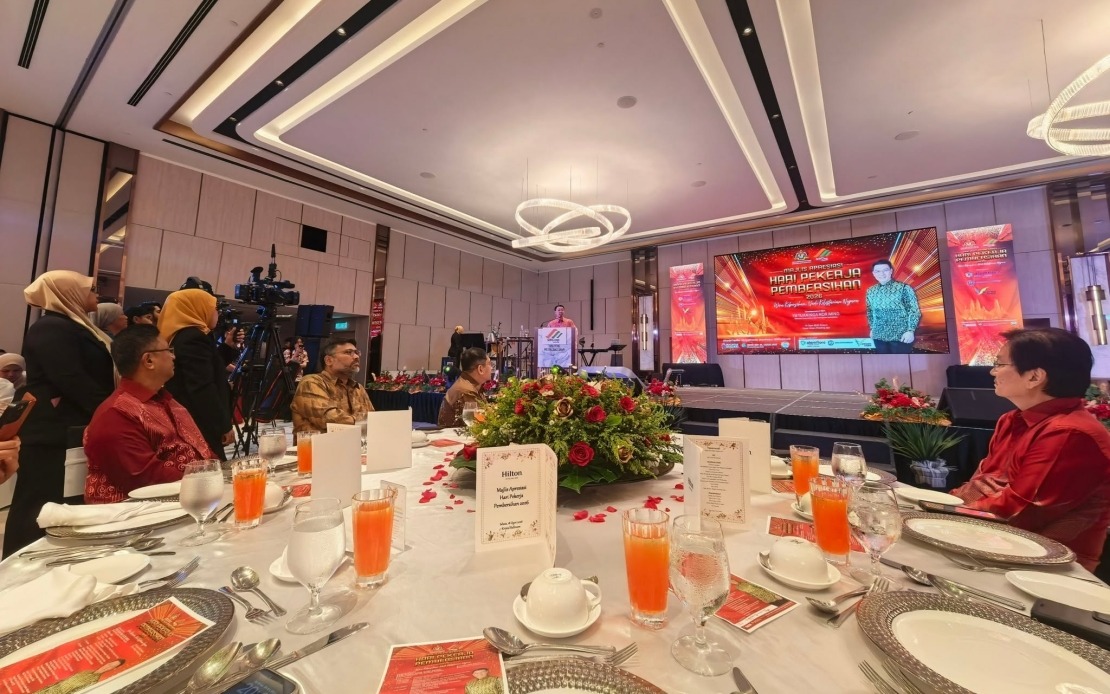
The Housing and Local Government Ministry (KPKT) has announced plans to nominate recipients of this year's Cleaning Workers Award for official state honours, marking a significant expansion of recognition for those working in Malaysia's solid waste and public cleansing sectors. Minister Nga Kor Ming unveiled the initiative during the 2026 Cleaning Workers Appreciation Day ceremony, stressing that the country's cleaning workforce deserves formal acknowledgement for their often-invisible but essential contributions to maintaining public health and environmental standards across the nation.
The decision comes after KPKT's leadership determined that cleaning workers merited greater visibility and honour within Malaysia's formal recognition systems. Nga disclosed that conversations with the ministry's secretary-general, Datuk Dr Wira M Noor Azman Taib, had crystallised this commitment, resulting in a structured approach to identify and nominate award recipients to their respective state palaces. Through this channel, state rulers will confer honours on selected workers, providing them with the ceremonial recognition their decades of service warrant. Deputy Minister Datuk Aiman Athirah Sabu attended the event to signal the ministry's unified stance on the matter.
While Penang has pioneered this honouring practice for nearly a decade, Nga emphasised that other states have lagged in formally recognising their cleaning workforce. He articulated a compelling rationale for nationwide expansion, noting that Malaysia's cleaning heroes in less progressive states have been overlooked for too long. The announcement represents a philosophical shift within the ministry, acknowledging that environmental stewardship and public sanitation require systematic appreciation of the workforce sustaining these services. By extending state honours beyond Penang's model, KPKT seeks to normalise and formalise such recognition across Malaysia's federal structure.
The scope of this initiative becomes apparent when examining Malaysia's cleaning sector workforce. Currently, the solid waste management and public cleaning industry employs 26,889 workers contracted through various concessionaires nationwide. This workforce encompasses individuals with remarkable tenure—many have devoted more than ten years to the sector, while some have invested nearly three decades of labour to Malaysia's cleanliness infrastructure. These tenure patterns underscore the professional stability and commitment within an industry that frequently lacks public appreciation. The scale and longevity of this workforce highlight why ministerial recognition through state honours carries genuine significance.
Nga positioned cleaning workers as frontline environmental guardians whose labour directly impacts citizens' daily quality of life. He stressed that maintaining clean, safe, and comfortable public spaces constitutes a fundamental service that cleaning workers provide despite operating largely invisible to public consciousness. This framing challenges the perception of cleaning work as menial, recharacterising it as essential infrastructure maintenance requiring skill, consistency, and dedication. By securing state honours for award recipients, the ministry articulates that such work deserves societal respect equivalent to other formally recognised professions.
However, Nga tempered ministerial celebration with a sobering observation about collective responsibility. He cautioned that environmental cleanliness cannot remain solely the burden of cleaning workers, emphasising instead that all Malaysians must internalise personal accountability for public spaces. This philosophical stance connects to the government's broader 'Malaysia Bersih, Rakyat Sejahtera' aspiration, which frames cleanliness as foundational to prosperity. Nga argued that cultivating anti-littering habits across all societal levels would fundamentally reduce cleaning workers' burden while deepening public commitment to environmental standards.
To operationalise this cultural shift, Nga directed the Solid Waste Management and Public Cleansing Corporation (SWCorp) to intensify enforcement of the Community Service Order (PKM) mechanism. This approach transforms environmental violations from punitive exercises into educational interventions. As of mid-August, enforcement authorities had issued 14,807 offence notices throughout the year, while 548 individuals had undertaken community service orders within Act 672-compliant states. Of these participants, 419 had completed their orders while 129 remained actively engaged in service, collectively accumulating thousands of hours performing environmental maintenance.
Nga reframed the Community Service Order as a pedagogical tool rather than mere punishment, designed to cultivate discipline, responsibility, and environmental consciousness among offenders. This conceptualisation aligns with progressive justice approaches that prioritise rehabilitation and habit formation over retribution. By requiring littering offenders to personally participate in cleansing activities, PKM creates experiential understanding of cleaning workers' daily labour. This mechanism potentially transforms offenders into advocates for public cleanliness, as they encounter firsthand the physical exertion and attention to detail required for environmental maintenance.
The 2026 Cleaning Workers Award ceremony itself honoured seven individuals representing Malaysia's cleaning sector diversity. The recipients comprised two workers from Alam Flora Sdn Bhd and five from SWM Environment Sdn Bhd, reflecting the industry's reliance on major contracted service providers. Beyond formal recognition, the ministry extended financial contributions to three recipients, demonstrating concern for workers' material welfare beyond ceremonial honour. This dual approach—combining public recognition through state honours with direct financial support—addresses both the psychological and economic dimensions of worker appreciation.
For Malaysian and regional observers, this initiative signals shifting governmental attitudes toward service sector workers frequently experiencing social marginalisation. The elevation of cleaning workers to state honour status represents recognition that environmental sustainability depends upon formal appreciation of those executing frontline labour. As Southeast Asia grapples with urbanisation and waste management challenges, Malaysia's expansion of cleaning worker recognition could establish a regional precedent. The initiative demonstrates how governmental structures can formalise respect for essential workers through existing honour systems, potentially inspiring similar practices across the region while reinforcing that environmental stewardship constitutes genuinely honourable work worthy of ceremonial state recognition.

