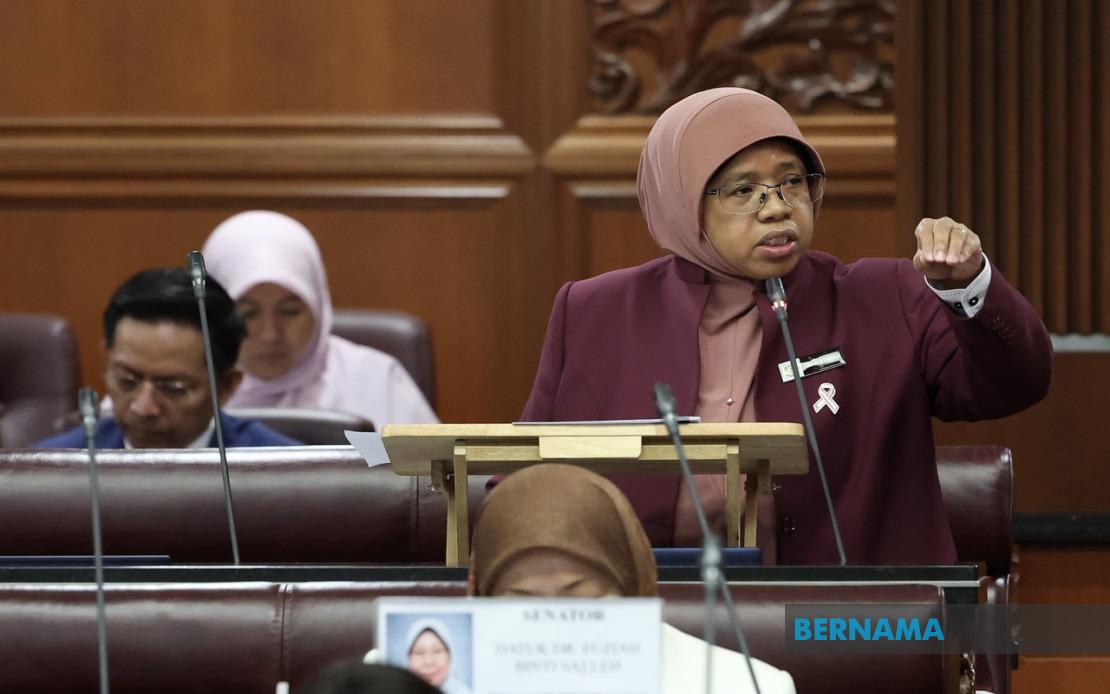
The Ministry of Housing and Local Government has adopted a strategic triage approach to address deteriorating conditions in Malaysia's ageing public housing stock, concentrating scarce maintenance resources on the most vulnerable People's Housing Programme developments. Deputy Housing and Local Government Minister Datuk Aiman Athirah Sabu outlined the ministry's prioritisation framework during a parliamentary question-and-answer session, revealing a pragmatic response to the challenge of maintaining thousands of residential units with chronically insufficient funding.
Under the current maintenance strategy, projects exceeding a decade in age receive preferential treatment, with the ministry targeting defects that pose direct threats to occupant safety and habitability. The focus zeroes in on essential building systems—lift installations, roof structures, elevated water storage tanks, distribution piping networks, electrical infrastructure, and shared facilities—rather than cosmetic improvements or minor repairs. This concentrated approach reflects acknowledgement that with budgetary limits, the ministry cannot address every deterioration simultaneously and must therefore protect residents from hazards that compromise basic living standards.
The financial reality underlying KPKT's maintenance programme underscores the scale of the challenge facing Malaysia's public housing sector. Throughout the 12th Malaysia Plan implementation period, the ministry disbursed RM159.1 million across five rolling maintenance cycles for high-rise strata PPR developments nationwide. However, this accumulated expenditure masks a more troubling pattern: in 2026 alone, qualified maintenance applications requesting RM79.9 million across 226 separate projects received approval for only RM44.6 million, representing a funding shortfall of 44 percent. This gap means that nearly half of identified critical repairs remain unfunded, creating a growing backlog of maintenance needs that defers problems rather than resolves them.
The application and approval process itself presents additional obstacles to timely maintenance completion. Requests from Joint Management Bodies or Management Corporations must navigate multiple bureaucratic layers, beginning with review by the Commissioner of Buildings or relevant municipal authorities before submission to the ministry. The timeline for approvals extends across an extended calendar cycle: applications are received during a three-month window from August through October, followed by technical committee screening in November and steering committee evaluation in December. Final approval determinations by the Controlling Officer occur in January, with local authorities notified thereafter and Letters of Acceptance issued no later than April. This nine-month processing window, while standardised, means maintenance requests submitted early in the cycle face inevitable delays before work can physically commence.
The implications of this constrained funding environment are particularly acute for low-income residents inhabiting PPR developments, who typically lack resources to fund repairs independently or relocate to better-maintained housing. As these public residential complexes age beyond initial design life, deteriorating lift systems pose safety risks, failing roof membranes permit water infiltration damaging interior spaces, and compromised electrical systems create fire hazards. When maintenance applications exceed available funding, residents in declining buildings bear the consequences through reduced service quality and accumulating property defects that compromise their living environments.
Malaysia's experience with PPR maintenance challenges reflects broader issues facing public housing systems across Southeast Asia, where rapid urbanisation created demand for affordable housing stock that governments constructed with limited provision for long-term maintenance funding. Unlike private residential developments where maintenance costs are typically embedded in resident fees, publicly-built housing often operates on minimal recurring budgets that prove inadequate when buildings reach the age where major systems require replacement rather than repair. The pattern visible in Malaysia's 44 percent funding shortfall likely mirrors constraints affecting public housing authorities from Thailand to the Philippines.
The ministry's decision to concentrate limited resources on projects exceeding ten years in age reflects practical realism about the PPR portfolio composition. While newer developments remain within manufacturer warranties and construction defect liability periods, older complexes have exhausted these protections and depend entirely on maintenance allocations. Homes constructed in the early 2010s have now entered their second decade, meaning their original systems approach end-of-life replacement cycles precisely when budget pressure forces triage decisions. This generational wave of ageing infrastructure will intensify demands on maintenance funding throughout the 2020s unless allocations expand substantially.
The targeting of specific defect categories—lifts, roofs, water systems, and electrical wiring—reflects evidence-based prioritisation based on frequency and consequence of failures. Lift breakdowns directly affect accessibility and emergency egress, particularly impacting elderly or disabled residents unable to navigate stairs. Roof leaks initiate cascading water damage affecting multiple units and common areas, compounding maintenance costs over time. Water distribution failures create public health risks and service disruptions. Electrical defects precipitate fire incidents with potentially catastrophic consequences. By focusing on these critical systems, the ministry concentrates maintenance impact on defects with the highest safety and habitability implications per dollar spent.
The political economy of PPR maintenance reveals structural tensions within Malaysia's public housing policy. These developments serve essential social functions, housing hundreds of thousands of residents who might otherwise lack access to urban accommodation. Yet annual budgetary processes treat maintenance as discretionary spending vulnerable to reallocation toward other priorities, rather than as essential recurrent expenditure comparable to utility costs or essential services. As PPR stock matures, this treatment becomes increasingly unsustainable, as deferred maintenance compounds into larger, costlier problems requiring eventual emergency intervention rather than planned repair.
Looking forward, the ministry's maintenance challenges will intensify as PPR developments continue ageing. The concentration of approval authority within the Controlling Officer creates potential bottlenecks, as does the requirement that applications navigate multiple review layers before reaching ministerial consideration. Streamlining approval processes and establishing dedicated PPR maintenance funding streams—separated from annual budgetary competition—could accelerate repair cycles and reduce resident exposure to hazardous conditions. Regional comparison with public housing authorities managing similar challenges might yield operational improvements applicable within Malaysia's context.

