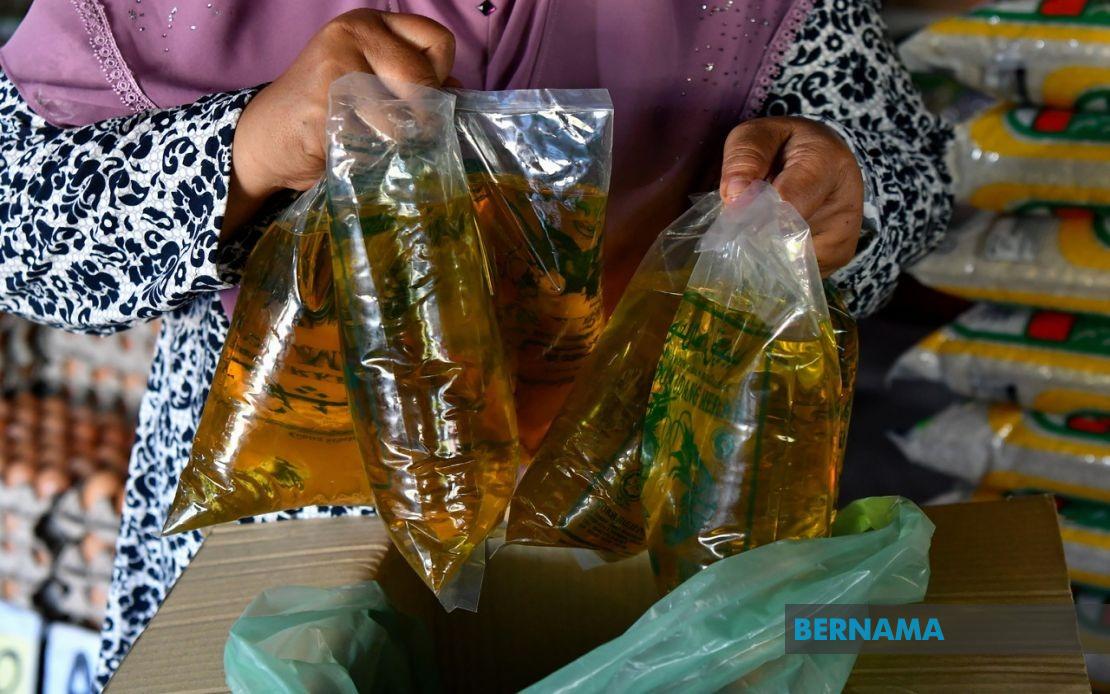
The Domestic Trade and Cost of Living Ministry has committed to reviewing recommendations from Parliament's Public Accounts Committee regarding the management of cooking oil price controls and subsidies, signalling fresh momentum in the government's years-long effort to plug persistent leakages in one of Southeast Asia's most fiscally burdensome food support programmes. Minister Datuk Armizan Mohd Ali indicated that KPDN would give serious consideration to PAC suggestions presented to Parliament on July 16, particularly those addressing the mechanics of distribution and the composition of Malaysia's refining industry.
Central to the ministry's response is the acceleration of the Cooking Oil Stabilisation Scheme System, or eCOSS, a digital platform designed to replace manual record-keeping and create an auditable trail of transactions across the supply chain. The system, which commenced development in 2023, is now being rolled out in two distinct phases. The first involves the incremental introduction of eCOSS protocols to wholesalers, repackers, and retailers nationwide. The second phase, launched as a mobile application pilot in May 2025, aims to bring the system to individual consumers and reduce opportunities for diversion of subsidised oil to unintended recipients.
Armizan emphasised that comprehensive deployment of this digital infrastructure represents a fundamental shift in how the government will monitor cooking oil distribution and identify manipulation of supply chains. The system's ability to create permanent electronic records effectively eliminates the vulnerability inherent in paper-based documentation, where quantities can be altered or transactions concealed. This technological safeguard is particularly crucial given that cooking oil subsidies have long been a target for smugglers seeking to export cheap domestic supplies to neighbouring countries where prices command substantial premiums.
A forthcoming enhancement will integrate the eCOSS platform with Malaysia's identity verification systems. The National Registration Department is preparing a new version of the national identity card incorporating QR code functionality, allowing consumers to authenticate their eligibility for subsidised purchases through quick smartphone scans. This integration would simultaneously restrict access to subsidised oil to Malaysian citizens only, directly addressing the PAC's concern that foreign nationals have been able to purchase controlled cooking oil at artificially low prices, creating an additional drain on government resources.
The PAC's report also drew attention to the concentration of cooking oil refining capacity in the hands of foreign-owned enterprises, a structural feature that the committee viewed as limiting Malaysia's ability to shape supply dynamics and maintain strategic control over a critical commodity. In response, KPDN is considering the introduction of refining quotas as a tool to encourage repackers and distributors to source more heavily from locally owned refineries. The ministry acknowledged that since the Cooking Oil Stabilisation Scheme was first introduced, no formal quotas had been assigned to refinery operators; instead, commercial decisions about supply sourcing were left entirely to repackers, who selected their suppliers based on logistics costs, credit arrangements, pricing, supply reliability, and geographic proximity of facilities.
To shift this balance, KPDN is implementing what it describes as "phased intervention measures" designed to incentivise repackers to diversify their sourcing toward domestic refinery operators. These measures include requirements that repackers gradually replace a portion of their foreign-sourced supplies with locally refined cooking oil, and the establishment of formal business-matching mechanisms that directly connect local refiners with repacking companies seeking to expand their sourcing networks. Such interventions represent a middle path between heavy-handed market control and complete reliance on commercial forces, reflecting the ministry's attempt to gradually reshape industry structures without triggering supply disruptions or sudden price movements.
Beyond digital infrastructure and industry composition, KPDN is implementing several complementary measures intended to tighten control over the subsidy scheme. A particularly targeted intervention involves prohibiting the sale of one-kilogramme packets of cooking oil to foreign nationals, a restriction designed to prevent the use of small-pack purchasing as a vehicle for accumulating subsidised supplies for export or cross-border sale. The ministry is also integrating eCOSS data with the Sumbangan Asas Rahmah system, which tracks other forms of government assistance, potentially enabling authorities to identify patterns of subsidy concentration or abuse across multiple programmes simultaneously.
The immediate trigger for this policy review was the PAC report DR. 27 of 2026, which Parliament received on July 16, following a parliamentary audit of cooking oil subsidy management. This investigation appears to have been prompted in part by findings from the National Audit Department released in July 2025, which highlighted vulnerabilities in how the existing scheme was operating. By incorporating conclusions from both the internal government audit and the parliamentary inquiry, KPDN is attempting to present a unified response that addresses structural weaknesses identified through multiple accountability mechanisms.
Armizan has signalled that enforcement will be substantially strengthened alongside these system improvements. The ministry intends to pursue stricter penalties and compliance measures against refinery operators, repackers, wholesalers, and retailers found to be circumventing scheme requirements or breaching regulations. This enforcement emphasis reflects a recognition that even well-designed systems can be undermined if the penalties for non-compliance remain insufficient to deter violations.
The cooking oil subsidy challenge carries particular significance for Malaysian policymakers because the programme represents an enormous ongoing fiscal commitment in a context where government budgets face competing pressures. The persistence of leakages—whether through smuggling, falsified records, sales to ineligible purchasers, or manipulation by commercial operators—compounds the cost to taxpayers. For consumers, meanwhile, the subsidy's effectiveness in moderating food costs depends entirely on oil actually reaching intended recipients at controlled prices rather than being diverted elsewhere in the supply chain.
From a broader Southeast Asian perspective, Malaysia's struggles with cooking oil subsidy management mirror challenges confronting other major oil-producing nations in the region. The tension between maintaining affordable domestic food prices and preventing profitable diversion of supplies to higher-priced markets represents a persistent policy dilemma, particularly as global commodity prices fluctuate. Malaysia's investment in digital tracking and supply chain transparency could eventually serve as a model for neighbouring countries grappling with analogous problems.
Meanwhile, the ministry's willingness to consider structural interventions in the refining industry—encouraging a gradual shift toward local suppliers—suggests that policymakers view cooking oil security as having strategic dimensions beyond pure economics. By building domestic refining capacity and fostering resilience in locally owned segments of the supply chain, the government may be seeking to reduce long-term dependency on foreign suppliers and strengthen its ability to respond to future supply disruptions or price shocks. The PAC's recommendations and KPDN's response thus reflect an evolving understanding of food security policy as encompassing not only immediate subsidy management but also the underlying industrial foundations supporting reliable domestic supply.

