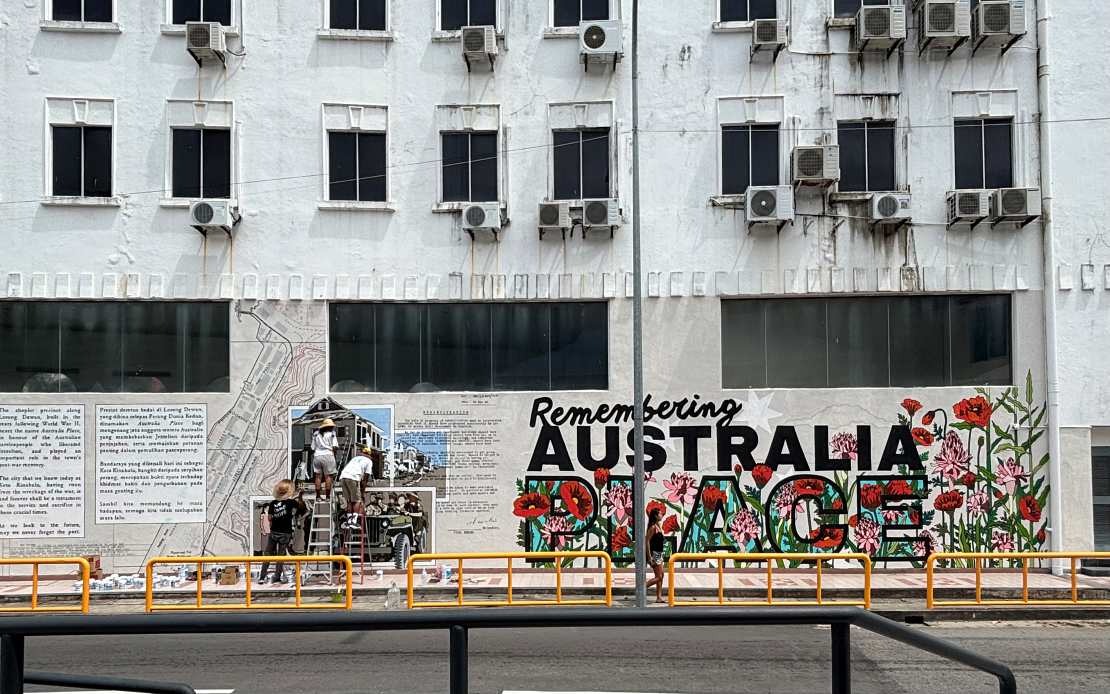
Kota Kinabalu's historic 'Australia Place' district has been given a vibrant new landmark with the unveiling of a public mural that captures the multifaceted relationship binding Sabah and Australia together. Officially titled 'Remembering Australia Place', the artwork adorns the Wisma Intiutama building at the heart of this informally named neighbourhood, which has served as a focal point for bilateral engagement for many decades. The mural's debut comes strategically on the eve of Sandakan Day, an occasion that holds profound significance for both nations as they jointly commemorate their shared wartime experiences and the profound human connections forged during that turbulent period.
The unveiling ceremony, held on Friday, brought together senior government officials, community representatives, and academic alumni in recognition of the occasion's importance. Australian High Commissioner to Malaysia Danielle Heinecke presided over the event alongside Kota Kinabalu Mayor Datuk Seri Sabin Samitah, signalling the official weight accorded to this cultural initiative. The gathering reflected not merely a ceremonial acknowledgment but rather a deliberate assertion of the continuing relevance of Australia-Malaysia relations at the grassroots level, particularly within Sabah's community fabric.
According to Heinecke, the artwork transcends mere aesthetic value by crystallising decades of institutional and personal bonds between the two nations. She characterised the mural as a testament to repeated cycles of cooperation, cultural synthesis, and genuine partnership that have unfolded over generations. The High Commissioner's remarks emphasised that the mural serves as both historical documentation and contemporary reminder—a physical manifestation of diplomatic ties that remain vibrant and purposeful in the present day. Her statement underscored how artistic expression can effectively communicate complex international relationships in accessible, emotionally resonant ways that resonate with ordinary citizens.
The creative execution bears the hallmark of Pillars of Sabah, a locally rooted community arts organisation that invested considerable effort in translating historical narratives and contemporary values into visual storytelling. The artistic approach deliberately foregrounds themes of shared resilience, mutual cooperation, and the interpersonal connections that have historically driven bilateral engagement. Rather than presenting a sanitised diplomatic narrative, the mural's design methodology emphasises the lived experiences of individuals whose life trajectories have intertwined both nations, thereby humanising what might otherwise remain abstract international relations.
Particularly noteworthy is the personal dimension brought by Jared Abdul Rahman, co-founder of Pillars of Sabah, whose own biography encapsulates the Malaysia-Australia nexus. Rahman's background—his Sabahan father and Tasmanian mother having met in Australia during the father's studies under the Colombo Plan scholarship scheme—exemplifies the educational and cultural pathways through which individual Malaysians and Australians have historically forged lasting connections. This biographical detail carries broader significance, as the Colombo Plan represented a landmark postcolonial initiative facilitating knowledge transfer and human exchange across the Commonwealth, contributing substantially to the professional and intellectual integration of Southeast Asian nations into global networks during the Cold War era.
Rahman's involvement in the project transcended mere professional commission; he articulated a genuine sense of honouring dual heritage and creating intergenerational dialogue within Kota Kinabalu's community. Notably, the mural's creation involved participation from local secondary school students and teachers from Sekolah Menengah Kebangsaan Sanzac, demonstrating deliberate efforts to embed this bilateral narrative within educational institutions. Such pedagogical integration ensures that younger generations encountering the mural do so within a structured learning environment, potentially fostering deeper understanding of historical context and contemporary relevance.
The symbolic timing of the mural's unveiling carries particular resonance given its proximity to Sandakan Day, an observance grounded in one of the Pacific War's most harrowing episodes. Sandakan Day commemorates the deaths of 2,434 prisoners of war who perished during the brutal Sandakan Death Marches of 1945, as well as honouring the extraordinary courage of Sabahan civilians who risked execution to assist Allied prisoners and facilitate escape attempts. This historical background transforms the mural from mere celebratory artwork into something more solemn—a commemoration of sacrifice and humanitarian action that transcends national boundaries and speaks to universal human values.
The significance of maintaining Australia Place as a named locality within Kota Kinabalu's urban geography reflects historical patterns of bilateral engagement that have weathered nearly eight decades since the Pacific War's conclusion. In many Southeast Asian cities, such place-names often fade as urban landscapes transform, yet Australia Place's persistence suggests sustained institutional recognition of its historical importance. The new mural therefore functions as a contemporary assertion of this district's continued relevance, preventing historical amnesia while simultaneously updating the Australia-Malaysia narrative for contemporary audiences.
For Malaysia's northeast region, this artistic initiative carries implications beyond Sabah's provincial boundaries. Kota Kinabalu serves as a major commercial and tourism hub within Southeast Asia, and the mural's visibility to thousands of annual visitors—both Malaysian and international—provides an accessible introduction to Australia-Malaysia relations framed through a distinctly Sabahan perspective. This locational advantage transforms the artwork into a soft power instrument, allowing Australian diplomatic interests to be articulated through community cultural expression rather than formal governmental channels.
The broader context of bilateral engagement between Australia and Malaysia encompasses multifaceted cooperation spanning defence, education, trade, and environmental conservation. Australian universities continue attracting substantial numbers of Malaysian postgraduate students, perpetuating the Colombo Plan legacy through contemporary scholarship frameworks. Defence cooperation, meanwhile, has intensified notably in recent years, particularly regarding maritime security in contested regions such as the South China Sea. Educational and defence dimensions of the relationship, though not explicitly foregrounded in the mural's imagery, nonetheless constitute the institutional scaffolding upon which people-to-people connections ultimately depend.
The mural's emphasis on storytelling methodology reflects contemporary international relations thinking that privileges narrative and cultural diplomacy over purely transactional engagement models. By situating the Australia-Malaysia relationship within frameworks of friendship, resilience, and mutual aid rather than strategic calculation, the artwork appeals to emotional and historical consciousness. This approach proves particularly effective in diverse, multicultural societies like Sabah, where multiple communities possess their own historical relationships with Australia, whether through education, wartime experience, or family connections.
Moving forward, the 'Remembering Australia Place' mural establishes a precedent for continued investment in cultural infrastructure celebrating bilateral relationships. Such initiatives, while modest in budgetary terms, yield disproportionate returns in terms of public awareness and goodwill. The deliberate involvement of local artists and community members ensures that the artwork remains rooted in local perspectives rather than appearing as externally imposed diplomatic messaging. For Malaysian policymakers considering Australia's contemporary role in regional architecture, such grassroots celebration of historical ties provides useful foundation for deepening cooperation on substantive issues.

