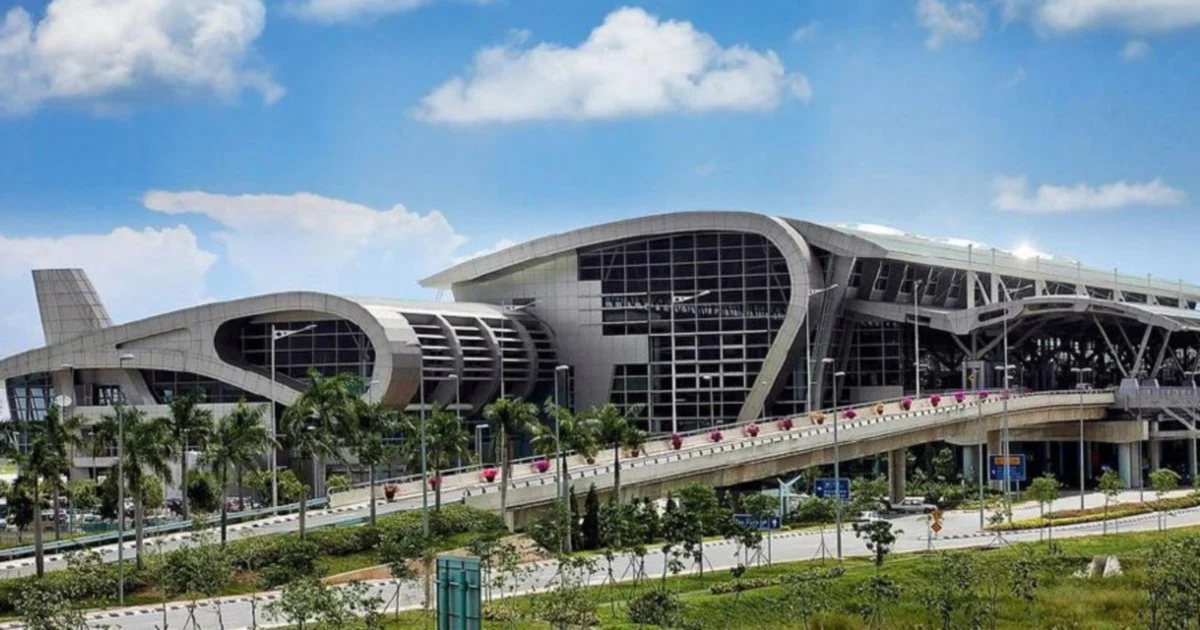
The much-anticipated expansion of Kota Kinabalu International Airport, valued at nearly RM500 million, remains in a holding pattern as federal authorities await resolution of outstanding land and site-specific complications with the Sabah government. Deputy Transport Minister Datuk Hasbi Habibollah confirmed that once these administrative hurdles are cleared between federal and state stakeholders, construction can proceed on the project aimed at enhancing the airport's capacity and infrastructure.
The delay reflects a common challenge in Malaysia's major infrastructure projects, where coordination between federal agencies and state administrations must align before ground-breaking work commences. Land acquisition and site preparation represent foundational requirements for any airport upgrade initiative, and unresolved questions in these areas can significantly postpone timelines. KKIA's current bottleneck underscores the complexity of managing aviation infrastructure developments across Malaysia's federal structure.
Sabah, as one of Malaysia's key gateways to East Malaysia and the wider Southeast Asian region, has seen Kota Kinabalu emerge as a critical aviation hub in recent years. The state's tourism sector, natural resource industries, and growing commercial activity have all placed mounting pressure on KKIA's existing terminal and runway facilities. An expansion project of this magnitude reflects recognition that current infrastructure cannot adequately support future demand trajectories.
The RM500 million investment signals government commitment to modernising regional airports beyond the Klang Valley corridor. However, the project's stalled status raises questions about resource allocation priorities and inter-governmental coordination mechanisms. Federal transport authorities and Sabah state administrators must align not only on land boundaries but also on usage rights, compensation arrangements for affected parties, and environmental clearances before construction blueprints translate into tangible progress.
For Malaysian aviation stakeholders, delays of this nature carry real economic implications. Airlines operating from KKIA face capacity constraints that limit route expansion and frequency increases, potentially disadvantaging Sabah-based carriers in regional competition. Passengers experience congestion during peak periods, while airport operators struggle to improve service standards within existing physical constraints. Tourism operators relying on efficient airport connectivity to funnel visitors into the interior likewise remain hampered by infrastructure limitations.
The deputy minister's statement indicates that responsibility for delay lies not with federal transport planners but with outstanding state-level matters requiring administrative resolution. This distinction matters politically and practically, as it suggests that technical planning has progressed sufficiently that stakeholders can move forward once governmental bureaucracies synchronise their positions. The characterisation implies that land issues are solvable through proper channels rather than fundamentally contentious or unresolvable.
Sabah's position in Malaysia's infrastructure development pipeline has historically been inconsistent, with major projects sometimes experiencing protracted timeframes compared to Peninsular equivalents. The KKIA expansion thus carries symbolic weight beyond its immediate transport function, representing whether the federal government can execute significant regional development outside the economic corridor. Successful completion would demonstrate commitment to balanced growth; continued delays might feed perceptions of Peninsular-centric resource allocation.
The project's eventual commencement will likely generate employment during construction phases and create permanent positions in expanded airport operations. Enhanced capacity at KKIA could attract additional international carriers and facilitate route development that currently proves unviable, with positive spillover effects for Sabah's tourism and business communities. Regional competitiveness with other Southeast Asian airports similarly serving growing markets makes timely completion strategically significant.
Looking forward, resolution of outstanding land and site matters should take priority within both federal and Sabah state administrative structures. The RM500 million investment, while substantial, represents an appropriate response to demonstrated need rather than an extraordinary expenditure by contemporary infrastructure standards. Clear communication of resolving timeline from responsible authorities would help airlines, ground handlers, and tourism operators make long-term capacity and resource planning decisions.
Deputy Transport Minister Datuk Hasbi Habibollah's public confirmation that land issues remain the primary obstacle should catalyse action among relevant state and federal agencies to document agreements and execute necessary transactions. The expansion project demonstrates genuine recognition that Kota Kinabalu's aviation infrastructure requires modernisation to maintain competitiveness and support Sabah's broader economic development objectives. Once administrative complications yield to governmental problem-solving, this airport upgrade can proceed toward tangible benefits for passengers, operators, and the wider state economy.

