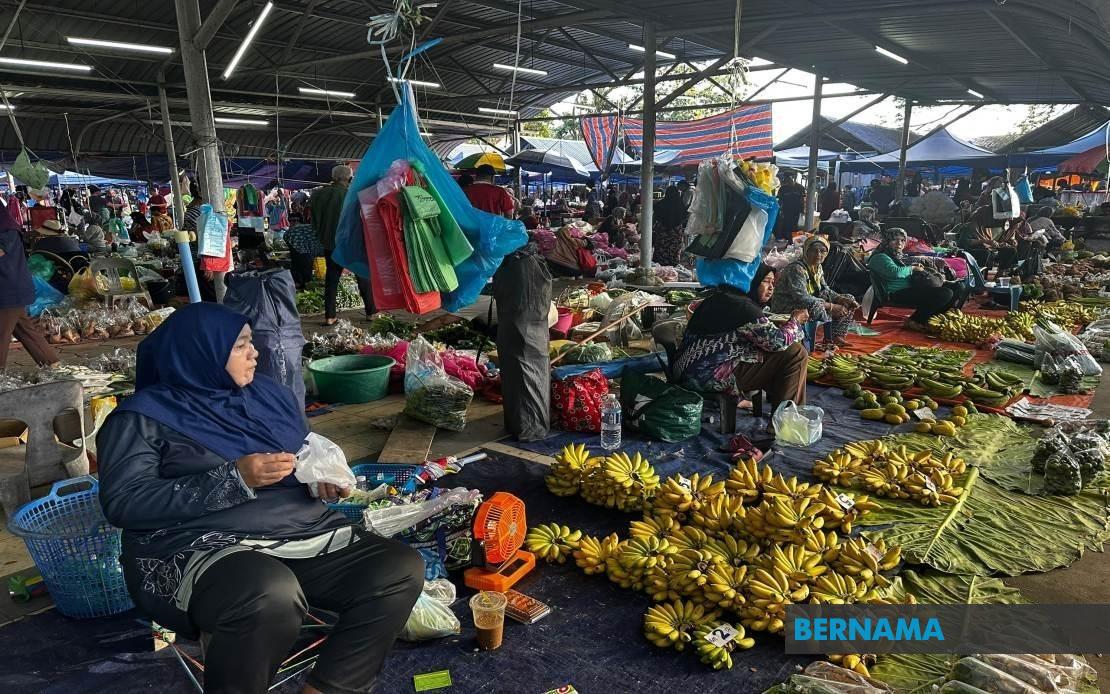
The path to securing UNESCO World Heritage Site recognition for Kota Belud's iconic traditional market is far longer and more complex than a simple nomination, Sabah's state assembly heard this week. Speaking during parliamentary proceedings in Kota Kinabalu, Assistant Minister of Tourism, Culture and Environment Dr Andi Md. Shamsureezal acknowledged the aspiration whilst simultaneously laying out the formidable hurdles that must first be overcome. The minister's candid assessment reflects the reality that international heritage recognition, whilst prestigious and economically valuable, demands exhaustive preparation that most jurisdictions underestimate.
The nomination framework itself is extraordinarily demanding. UNESCO's evaluation process subjects candidate sites to penetrating scrutiny across multiple dimensions, requiring applicants to demonstrate not merely historical or cultural significance but what the organisation terms "Outstanding Universal Value" — a threshold that transcends local or regional importance to claim genuine global relevance. For Kota Belud Tamu to meet this standard, Sabah must produce evidence that the traditional market possesses characteristics of such exceptional significance that protection becomes a matter of international concern. This elevation of criteria explains why the minister stressed that assessment and preparation could consume considerable time rather than months.
Tangible heritage documentation represents merely one component of the required research framework. The tamu, as a living cultural institution, embodies both physical structures and immaterial cultural practices that have evolved across generations. Investigators must meticulously record architectural elements, archaeological deposits, and material culture whilst simultaneously documenting the intangible dimensions — the social practices, knowledge systems, oral traditions, and community relationships that animate the market. This dual-track documentation approach demands expertise spanning disciplines from archaeology and conservation to ethnography and cultural anthropology, requiring coordination among specialists who may need external recruitment if local expertise proves insufficient.
Historical and scientific substantiation forms the evidentiary backbone of any credible nomination. UNESCO assessors will demand primary sources — colonial records, historical accounts, archaeological surveys, and scholarly analyses — demonstrating the tamu's significance across defined periods and its continuity through social transformations. For Kota Belud, this investigation must establish how the market emerged, its roles within indigenous Kadazandusun trade networks, its evolution under colonial administration, and its contemporary cultural functions. Generic cultural assertions without documented support invite rejection; the nomination cannot succeed on sentiment alone but requires rigorous historical argumentation supported by verifiable evidence.
The minister's emphasis on comprehensive studies acknowledges an uncomfortable reality: Sabah currently lacks much of the foundational research necessary for a credible nomination. Systematic documentation of the tamu's heritage dimensions, whilst commencing informally through various cultural initiatives, has not yet achieved the institutional depth and scholarly rigor that UNESCO evaluators expect. This knowledge gap cannot be bridged quickly; properly conducted heritage surveys require sustained funding, expert personnel, and methodological consistency over extended periods. Rushing the process to accelerate nomination timelines typically produces weak applications that invite rejection or — worse — approval of nominations subsequently found inadequate, damaging institutional credibility.
Sabah has already achieved partial success in the international heritage recognition landscape through the Kinabalu UNESCO Global Geopark designation secured in May 2023, an achievement that positions Kota Belud within a broader geospatial heritage framework. The geopark status creates an existing institutional architecture and international profile upon which the tamu nomination can build, rather than beginning from absolute obscurity. The state's development of the "Tamu Geopark" programme demonstrates strategic thinking about how traditional markets can be integrated within contemporary heritage conservation frameworks whilst simultaneously serving economic development objectives through tourism promotion and product commercialisation.
The interconnection between heritage recognition and economic opportunity warrants careful consideration for Malaysian stakeholders. Successful UNESCO designation attracts international tourist flows, research attention, and heritage investment, typically generating employment and revenue within designated communities. However, heritage tourism simultaneously poses preservation risks; excessive visitor concentrations can damage physical structures, commercialisation may distort cultural practices, and external expectations can displace authentic local functions. Kota Belud's experience through the geopark programme offers preliminary insights into managing these tensions, with initiatives promoting local gastronomy, traditional craftsmanship, and community-based products channelling tourism benefits whilst potentially buffering cultural practices from commodification pressures.
The nomination timeline remains deliberately unspecified, reflecting genuine uncertainty about preparation requirements. Comparable Southeast Asian heritage sites have required five to ten years of preparation between initial feasibility assessment and successful UNESCO inscription. For Kota Belud, this trajectory would position realistic nomination submission in the late 2020s at earliest. Establishing intermediate milestones — completion of comprehensive heritage surveys by specified dates, publication of scholarly documentation, establishment of formal heritage management frameworks — would provide measurable progress indicators whilst managing public expectations about timelines and resource requirements.
Sabah's pragmatic approach, emphasising preparation rigour rather than premature nomination, ultimately serves the region's longer-term heritage conservation interests. UNESCO designations carry sustained obligations regarding site management, conservation standards, and periodic reassessment, creating enduring institutional commitments rather than one-time achievements. Investing in foundational documentation and heritage management capacity before nomination submission positions Kota Belud for sustainable recognition and effective stewardship, avoiding the disappointing scenario where hastily-prepared nominations fail scrutiny or where inadequate preparatory work creates management challenges post-designation. For Malaysian heritage aspirants observing Sabah's deliberate process, the implicit message emphasises that authentic international recognition rewards thorough preparation over expedient shortcuts.

