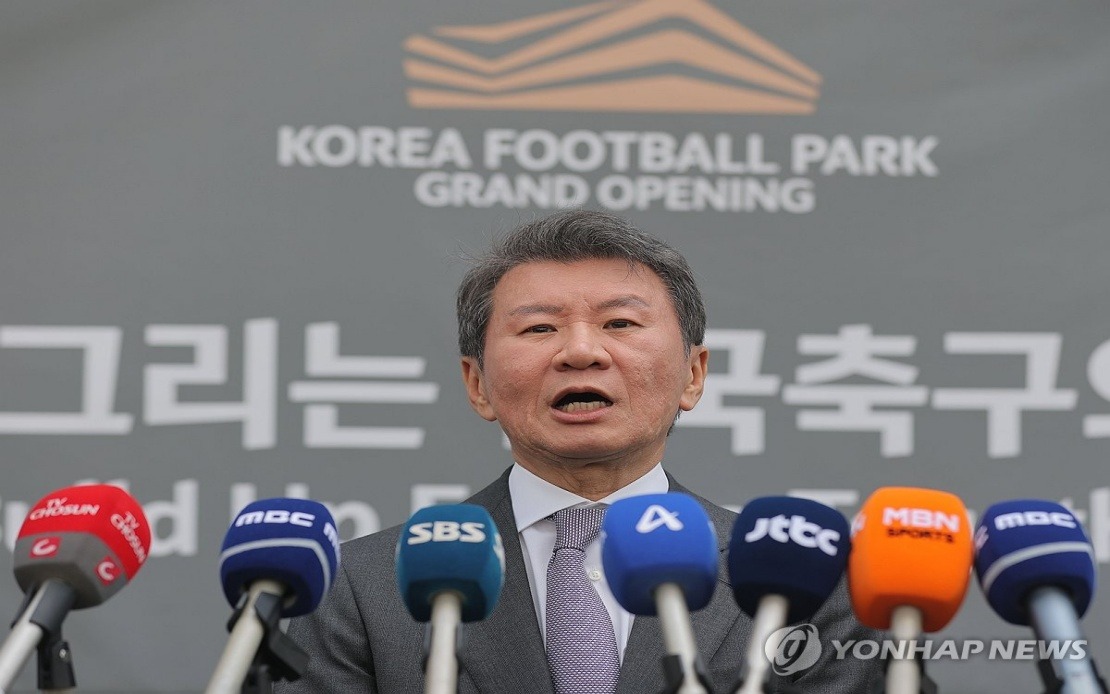
Korea Football Association president Chung Mong-Gyu resigned from his position on Monday, bringing an abrupt end to his leadership of the national football body in the wake of South Korea's disappointing World Cup campaign and escalating political pressure surrounding his management of the federation.
Chung formally submitted his resignation letter during a final executive meeting held at Korea Football Park in Cheonan, approximately 90 kilometres south of Seoul. The departure marks an acceleration of his earlier pledge to step down following the conclusion of the FIFA World Cup, which is scheduled to end on July 20 South Korean time. Instead of waiting for the tournament to finish, Chung opted to leave his post immediately, departing roughly two weeks before the competition concludes.
The timing of his resignation is inextricably linked to South Korea's premature elimination from the tournament. The national squad, managed by Hong Myung-bo, secured only three points from a solitary victory and two defeats, finishing third in Group A and failing to advance as one of the eight best third-place finishers in the competition. Hong himself stepped down immediately after the team's elimination was mathematically confirmed, accepting responsibility for the team's below-expectations performance and the tactical decisions that preceded it.
Chung's tenure as KFA president has been marred by persistent criticism regarding transparency and administrative processes. His appointment of Hong as national team coach in July 2024 drew particular scrutiny from observers who questioned whether proper procedures had been followed. The Ministry of Culture, Sports and Tourism initiated a comprehensive examination of KFA operations, ultimately concluding that Chung and other senior officials warranted disciplinary action in relation to various procedural violations uncovered during the investigation.
The relationship between the KFA and the government ministry has deteriorated significantly. The two organisations are currently embroiled in legal disputes, with the ministry signalling its intention to conduct additional audits into the KFA's governance and financial management practices, particularly in light of the World Cup failure and the organisational chaos that preceded it. This adversarial dynamic reflects broader concerns about institutional accountability within South Korean sports administration.
Under existing KFA protocols, one of the association's four vice presidents will assume the role of interim leader until a permanent successor is elected through the standard electoral process. Chung's departure leaves nearly three years remaining in his fourth term, triggering provisions that mandate a new election within 60 days under normal circumstances. The electoral college responsible for selecting the KFA president comprises representatives from regional football associations, K League club executives, active players, coaching staff, and match officials, with 183 out of 192 eligible voters participating in the previous year's election.
However, the government ministry has signalled its dissatisfaction with the existing election framework. Chae Hwi-young, the minister of culture, sports and tourism, has publicly questioned whether the KFA can maintain its current electoral process in light of public disappointment over the World Cup performance. His remarks suggest a willingness by the government to intervene in internal federation affairs, potentially forcing reforms to how the organisation selects its leadership going forward.
The Korean Sport and Olympic Committee, South Korea's apex sports authority, is preparing to examine reforms to its member associations' electoral procedures. At a scheduled general meeting on July 16, the KSOC will consider potentially extending the 60-day window for successor elections and introducing a direct election system that would allow broader participation than the current collegiate model. Such changes would represent a fundamental shift in how South Korean sports organisations select their leadership and would directly reshape the KFA's future governance structure.
For Malaysian and Southeast Asian sports administrators watching these developments, the Korean situation illustrates the mounting pressure that international sporting bodies face when national teams underperform at major tournaments. The interplay between government intervention and federation autonomy reveals tensions that resonate across the region, where multiple nations have grappled with balancing independence in sports administration against public expectations and governmental oversight. The potential reforms to Korea's election process may set precedents that other sports federations in Asia will consider adopting.
In a formal statement, Chung acknowledged the weight of his position while expressing contrition for moments when his leadership disappointed supporters. He emphasised his commitment to advancing Korean football's development and standing, framing both successes and failures within his personal responsibility. He characterised himself as a passionate football enthusiast who remains confident that South Korean football will recover from present difficulties and restore its competitive status through renewed resilience and determination.
Chung's resignation arrives amid a broader reckoning within South Korean sports about institutional accountability and performance outcomes. The absence of a clear transition plan and the government's apparent readiness to reshape electoral processes create considerable uncertainty about the KFA's immediate future. The successor will inherit not only the challenge of rebuilding the national team but also the responsibility of navigating a more interventionist regulatory environment and addressing the governance deficiencies that prompted ministerial investigations.

