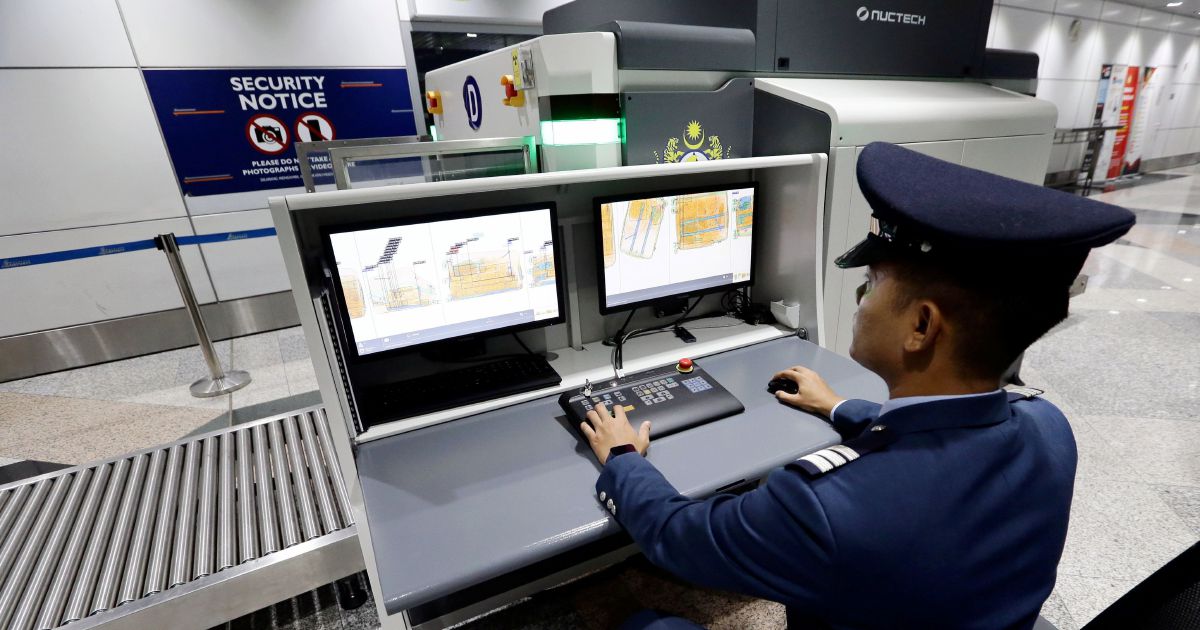
Malaysia's leading international gateway is not hampered by faulty detection technology but by operational frameworks that have inadvertently left security screening vulnerable to drug trafficking, according to Home Minister Datuk Seri Saifuddin Nasution Ismail. The minister's statement addresses mounting concerns about contraband reaching Malaysia through Kuala Lumpur International Airport, redirecting focus from equipment limitations to the procedural architecture that governs how screeners prioritise different threat categories.
The scanning apparatus deployed throughout KLIA possesses the technical capability to identify narcotics and prohibited substances with considerable accuracy. This distinction matters significantly for policymakers and international observers evaluating airport security effectiveness. The hardware itself—whether X-ray imaging systems, explosive trace detection units, or advanced millimetre-wave scanners—has proven sufficient for its intended purpose across comparable facilities worldwide. Rather than authorising expensive equipment overhauls, the minister's assessment suggests remedying the problem requires refinement of how personnel are trained, directed, and incentivised to apply existing technology.
Current standard operating procedures at KLIA have traditionally emphasised the detection and interdiction of weapons, explosives, and materials that could be used in attacks or to cause immediate physical harm. This threat-prioritisation framework reflects historical security doctrine established after the September 11, 2001 attacks globally reshaped airport screening regimes. Weapons-focused protocols remain essential; however, this concentration has created an inadvertent blind spot regarding controlled substances and narcotics trafficking. Personnel operating scanners may inadvertently reduce vigilance when processing passengers and cargo not flagged for weapons-related risk, potentially allowing drug shipments to proceed unchallenged.
For Malaysia, which sits along major narcotics trafficking corridors linking production regions in the Golden Triangle with consumption markets across Asia, this procedural gap carries particular significance. The country has long struggled with managing drug seizures at its borders, and KLIA represents a critical chokepoint where tighter controls could substantially disrupt smuggling networks. The minister's identification of protocol-level vulnerabilities suggests that relatively straightforward administrative adjustments—such as retraining screeners to maintain consistent contraband vigilance regardless of initial threat category assessments, or implementing mandatory secondary scanning for certain commodities—could improve outcomes without capital expenditure.
The distinction between equipment capability and operational procedure is not merely technical but reflects broader lessons in security management. Many facility vulnerabilities stem not from hardware failures but from inconsistent application of available tools, gaps in training, fatigue-related performance degradation, or procedural bottlenecks that incentivise rushing through routine scans. At a high-throughput facility like KLIA, which processes hundreds of thousands of passengers monthly, even small percentages of inadequately screened individuals can represent significant absolute numbers of potential contraband carriers.
Saifuddin's clarification also carries implications for Malaysia's credibility within regional and international aviation security frameworks. Authorities in neighbouring countries and trading partners assess whether Malaysian airports maintain reliable screening standards, affecting flight connections and cargo routing decisions. Public acknowledgment that equipment functions properly, combined with commitment to procedural enhancement, can reassure stakeholders that security improvements are achievable through operational discipline rather than requiring years of infrastructure overhaul.
The focus on standard operating procedures aligns with recommendations from international aviation security specialists, who consistently emphasise that well-designed screening protocols implemented rigorously often outperform marginal equipment upgrades. This principle has guided security improvements at major hubs including Singapore's Changi Airport and Bangkok's Suvarnabhumi Airport, where procedural discipline and staff training investments have yielded measurable improvements in detection rates.
Moving forward, the government will likely need to convene security officials, airport management, and customs personnel to conduct detailed audits of current SOPs. This review should identify specific points where drug detection vigilance can be elevated without compromising weapons screening or creating unmanageable delays. Personnel incentive structures may require adjustment to ensure screeners maintain equal attention across threat categories. Technology integration—such as flagging patterns that intelligence suggests are associated with narcotics trafficking—could also enhance scanner operator effectiveness.
The minister's statement represents a pragmatic acknowledgment that Malaysia's security challenge at KLIA is organisational and procedural rather than technological. This assessment opens the possibility for relatively rapid improvements, as operational changes can be implemented far more quickly than equipment procurement and installation cycles. Given Malaysia's strategic location in Southeast Asia's aviation network and its significance as a regional financial and commercial hub, ensuring robust and consistent contraband screening at KLIA remains essential to national security and international reputation.

