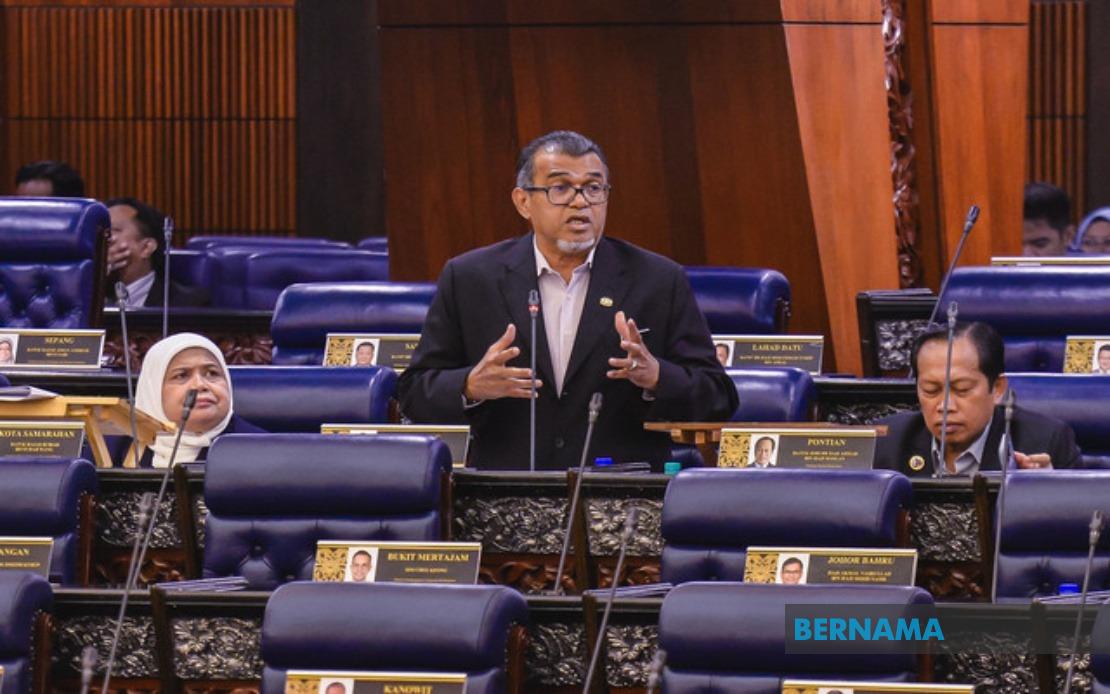
The expansion of Kota Kinabalu International Airport (KKIA), valued at approximately RM500 million, cannot commence until outstanding land and site-related matters are finalised with the Sabah state government, according to Deputy Transport Minister Datuk Hasbi Habibollah. While financial backing for the infrastructure project has already secured approval, several critical technical and administrative hurdles remain unresolved, including precise land requirements, the designation of the expansion site itself, and coordination regarding areas bordering the existing runway. The minister's statement, delivered during parliamentary Question Time, underscores the complex interplay between federal funding mechanisms and state-level administrative processes that often characterises major infrastructure initiatives in Malaysian federalism.
In contrast to the stalled KKIA project, construction activities at Tawau Airport are already progressing. This divergence highlights how different regional airports are advancing through the federal government's broader aviation infrastructure programme at markedly different paces. The distinction reflects not merely differences in project complexity but also variations in the readiness of state governments to facilitate land acquisition and administrative approvals. For Kota Kinabalu, the delay signals that despite budgetary allocation at the federal level, successful project implementation ultimately depends on seamless coordination between Putrajaya and Kota Kinabalu, a reality that frequently complicates infrastructure delivery across Malaysia's states.
Prime Minister Datuk Seri Anwar Ibrahim announced during the 2026 Budget presentation last October a comprehensive RM2.3 billion allocation targeting airport modernisation across four key regional hubs: Penang, Kota Kinabalu, Tawau, and Miri. This ambitious infrastructure package was designed to enhance Malaysia's regional connectivity and tourism appeal, with completion timelines initially set for 2028. The KKIA expansion formed a centrepiece of this strategy, reflecting the federal government's recognition of Sabah's strategic importance as a gateway to East Malaysia and its potential for tourism development. However, the slippage experienced at KKIA raises questions about whether the 2028 completion target remains achievable across all four airports, particularly if land issues remain unresolved.
The specific nature of the land complications at KKIA remains undisclosed, though such obstacles typically involve demarcation disputes, compensation negotiations with existing land-holders, or coordination challenges between federal airport authorities and state land administration bodies. Runway-adjacent areas present particular sensitivities, as aviation safety regulations impose strict requirements on land use and development near operational aircraft facilities. The fact that these matters remain unsettled despite months of planning suggests either more complex negotiations than initially anticipated or potential misalignment between federal and state priorities regarding the expansion's scope and location. Such delays are not uncommon in Malaysian infrastructure projects, where the separation of powers between federal and state governments can create procedural bottlenecks.
For Malaysian aviation stakeholders and Sabah's tourism and business communities, the postponement carries tangible implications. KKIA currently serves as the primary air gateway for Sabah, handling both domestic and international traffic, and airport capacity constraints have periodically surfaced as a limiting factor in the state's tourism growth trajectory. An expanded facility would theoretically accommodate increased flight frequencies, larger aircraft, and improved passenger processing capabilities. However, each month of delay represents foregone tourism revenue and constrained business connectivity. The postponement also raises uncertainty for airlines considering expanded operations into Kota Kinabalu, as they typically commit to new routes only when confident that airport infrastructure can reliably handle projected traffic volumes.
Parliamentary questioning also brought attention to the status of Pangkor Airport, where civil aviation services have been dormant since May 2022. Deputy Transport Minister Hasbi clarified that despite the suspension of commercial operations, the facility has not been abandoned. Instead, it continues to serve military, medical evacuation, emergency landing, and private aviation functions, with Malaysia Airports Holdings Bhd (MAHB) maintaining a permanent presence to preserve assets and operational readiness. This clarification addresses a persistent concern among some stakeholders about whether secondary airports risk deteriorating into unused infrastructure at taxpayer expense.
Regarding the possibility of restoring commercial air services to Pangkor, the minister indicated that the government welcomes airline participation but that any decision ultimately rests on carriers' commercial assessments and business viability calculations. Previously, charter services operated by Berjaya Air and SKS Airways briefly provided connectivity to the island, but these services proved unsustainable. The government's position reflects a pragmatic understanding that while aviation connectivity drives tourism, subsidising unviable routes creates long-term fiscal inefficiencies. However, it also reflects a potential tension: if government prioritises only commercially viable routes, smaller or less-developed tourism destinations may remain perpetually under-served, potentially entrenching regional development disparities.
The minister emphasised that sea transport continues to represent the preferred travel mode to Pangkor for most tourists and residents, suggesting that air services may not constitute the primary development lever for the island. This acknowledgment reflects broader strategic thinking within Malaysia's transport ministry: investing finite aviation infrastructure resources in high-demand corridors rather than attempting to create demand artificially. The statement also implies that Pangkor's tourism future may depend more on maritime connectivity improvements than on aviation expansion. Similar considerations likely apply to Redang and Tioman islands, which also maintain airport infrastructure in inactive commercial status.
The broader context for these airport policy discussions involves Malaysia's post-pandemic recovery and regional competitiveness. Southeast Asian nations have invested aggressively in aviation infrastructure, with competing hubs in Thailand, Indonesia, and the Philippines expanding capacity to capture regional traffic flows. Malaysia's airport upgrade programme, including the KKIA expansion, represents an attempt to maintain competitive positioning in regional aviation markets. However, implementation delays at KKIA risk ceding market share to competing regional airports. For Malaysian carriers and tourism operators, prolonged uncertainty about airport expansion timelines creates planning challenges and may incentivise some operators to develop service models around competing hubs.
Looking forward, successful completion of the KKIA expansion depends on expedited resolution of outstanding land and site coordination matters between federal and state authorities. The six-month interval between the 2026 Budget announcement and the current parliamentary disclosure suggests that progress has been limited, raising concerns about whether 2028 completion remains realistic. For Sabah's economic development and Malaysia's regional aviation competitiveness, accelerating these approval processes should constitute a priority. The state government and federal transport ministry would be well-served by establishing clear timelines and decision-making mechanisms to unblock remaining administrative obstacles. Until such matters are resolved, KKIA's capacity constraints will continue to constrain Sabah's broader economic and tourism development potential.
The experience of KKIA's delayed expansion also offers lessons for Malaysia's infrastructure governance more broadly. Securing federal funding represents merely one element of successful project implementation; equally critical are streamlined state-level approval processes, clear delineation of federal and state responsibilities, and contingency mechanisms for resolving inter-governmental bottlenecks. As Malaysia pursues its National Digitalisation Master Plan and infrastructure development ambitions, applying these lessons could accelerate delivery of critical projects across the nation. The KKIA case demonstrates that without robust coordination mechanisms between federal and state authorities, even well-funded and strategically important projects can experience protracted delays that ultimately diminish their economic impact and the government's capacity to deliver tangible benefits to regional communities.

