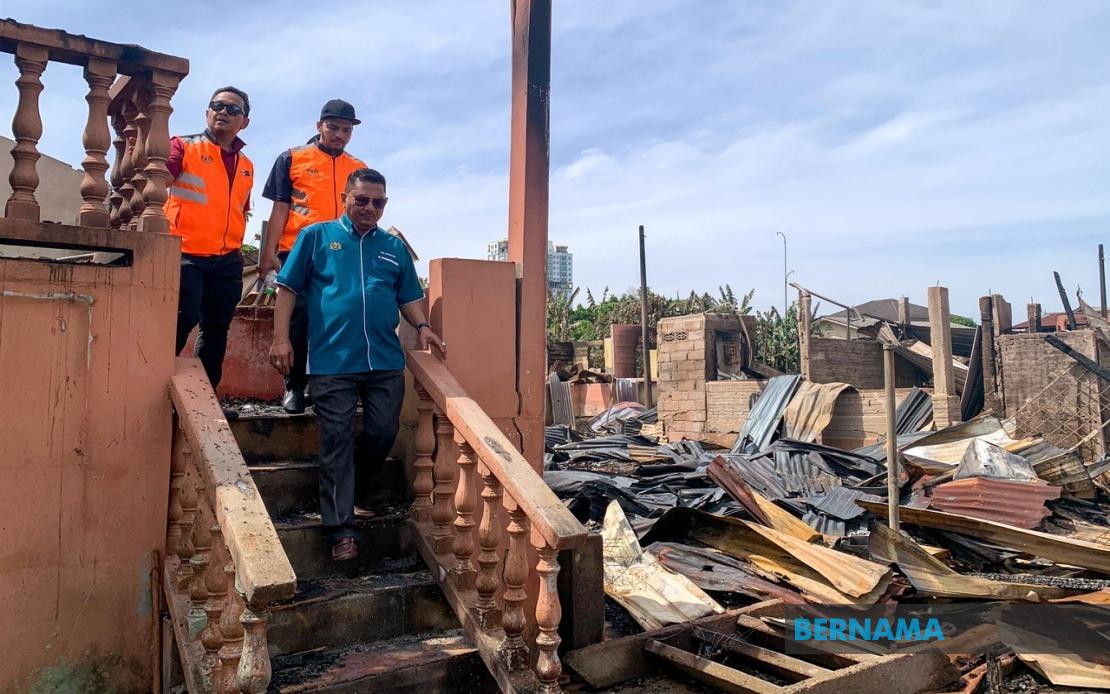
A major residential fire that devastated Kampung Gok Kapur in Kota Bharu last month has been conclusively traced to an act of carelessness in a kitchen. The June 8 blaze that consumed 27 houses and displaced over a hundred residents was sparked when someone used a gas lighter to ignite a pile of papers directly in the kitchen of one of the affected properties, according to official findings released by the Kelantan Fire and Rescue Department (JBPM).
Kelantan's JBPM director Farhan Sufyan Borhan outlined the investigation outcomes after his department's Fire Investigation Forensic Unit completed its analysis of the incident. The forensic examination, combining physical evidence gathered from the scene with recorded witness statements, definitively established that an open flame from a gas lighter applied to the paper pile initiated the catastrophe. The investigation underscores how rapidly domestic fires can escalate when proper precautions are absent, particularly in densely populated residential settings where homes are situated in close proximity to one another.
Once ignited, the paper fire quickly engulfed surrounding combustible materials within the kitchen area, creating conditions that allowed the flames to spread horizontally and vertically throughout the structure. From there, the advancing fire jumped to neighbouring properties with considerable speed, overwhelming the initial containment efforts and transforming what began as a single-household incident into a neighbourhood-wide emergency. The rapidity of the spread highlights the vulnerability of traditional Malaysian village housing, where wooden construction and tight spatial arrangements provide minimal natural fire breaks between adjacent dwellings.
Crucially, official investigators determined that negligence lay at the heart of the disaster. The individual conducting the paper-burning activity failed to exercise reasonable care or follow basic fire safety protocols. This finding carries significant implications for criminal and civil liability, as the determination of negligence suggests potential accountability beyond mere accident. Farhan confirmed that the complete investigation file would be handed to police and other relevant authorities for consideration of further action, indicating that prosecutorial review may follow the fire department's conclusion.
The broader community impact of this incident extended far beyond the physical destruction of homes. In total, 110 residents from Kampung Gok Kapur lost their accommodation and possessions in the flames, forcing them to seek emergency shelter at a temporary evacuation centre established at the nearby Mukim Banggol Mosque. The displacement of such a large number of villagers created immediate humanitarian challenges, straining local resources and requiring coordinated response from government and community organisations. Fortunately, despite the scale of destruction, no fatalities were recorded during the evacuation and emergency response phase.
The incident serves as a sobering reminder of fire risks associated with open-flame burning activities conducted in or near residential areas. Traditional practices involving burning waste materials, though still common in Malaysian villages where formal waste collection may be inconsistent or infrequent, carry significant dangers when executed carelessly or in inappropriate locations. Kitchen spaces present particularly hazardous environments for such activities due to the proximity of cooking equipment, stored foodstuffs, and curtains or other textiles that ignite readily.
Farhan's public advisory following the investigation findings specifically cautioned residents against using open flame sources indiscriminately and urged them to abandon burning practices altogether in zones where homes and families congregate. This guidance reflects standard fire safety doctrine emphasised by emergency services across Malaysia and the broader region. The message carries particular weight coming from an official investigation into a disaster that illustrated the catastrophic consequences of ignoring such precautions.
From a regional perspective, the Gok Kapur fire exemplifies recurring patterns in Southeast Asian residential disasters where rapid urbanisation and informal settlement expansion create conditions where fire spreads with devastating speed. Many Malaysian villages and informal housing clusters share similar construction characteristics and spatial density to those found throughout Thailand, Indonesia, and the Philippines, suggesting that lessons learned from this incident remain applicable across international borders.
The investigation's conclusion that negligence rather than mechanical failure or natural causes triggered the disaster also underscores the importance of individual responsibility in fire prevention. While structural improvements, better building codes, and enhanced emergency response capabilities all contribute to reducing fire risk, the fundamental requirement remains that occupants exercise reasonable care in their daily activities. The consequences of failure to do so, as demonstrated in Kampung Gok Kapur, extend far beyond the individual household to affect entire communities.
Looking forward, this incident may prompt authorities in Kelantan and neighbouring states to intensify public awareness campaigns about fire safety practices, particularly targeting rural areas where informal burning remains prevalent. Educational initiatives could emphasise alternative waste disposal methods and reinforce messaging about the specific hazards of kitchen-based burning. Insurance and housing authorities might also review whether existing regulations adequately restrict dangerous practices in residential settings.
The transition of the investigation file to law enforcement agencies signals that the official response to the Gok Kapur fire extends beyond technical determination of cause. Police will evaluate whether the findings support laying charges of negligence causing loss or damage, potentially leading to court proceedings that would establish legal accountability for the displaced residents and destroyed homes. Such prosecutions, while cold comfort to those who lost their possessions, serve the broader function of reinforcing that negligent conduct that endangers community safety carries consequences.