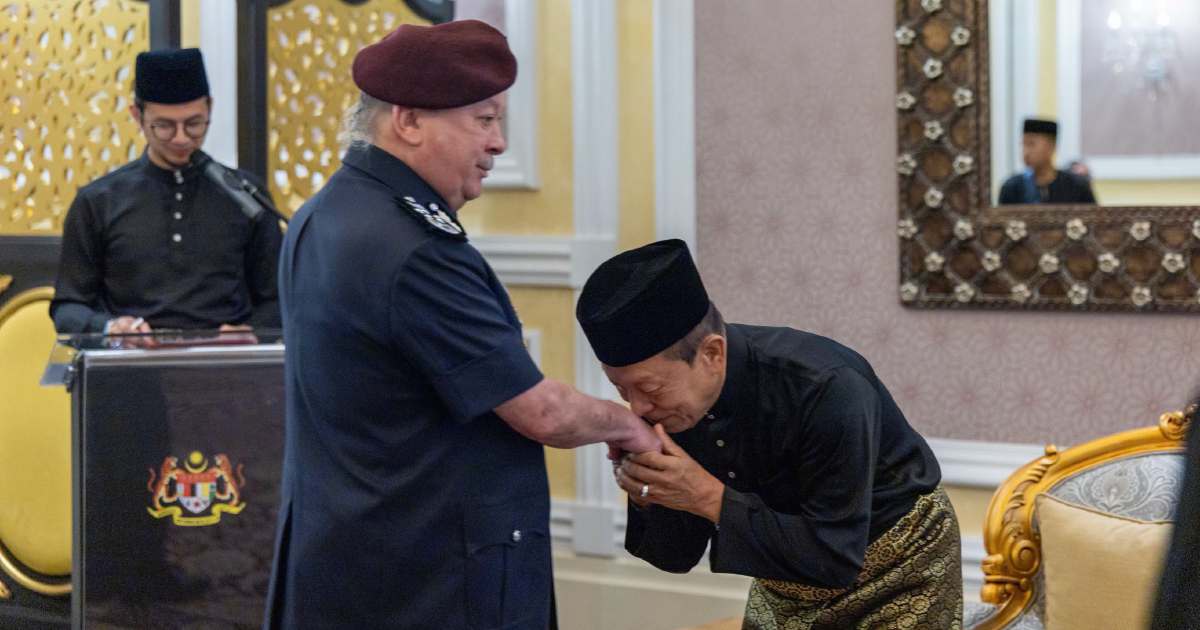
His Majesty Sultan Ibrahim, King of Malaysia, received Malaysian Anti-Corruption Commission (MACC) chief commissioner Datuk Seri Abdul Halim Aman in an official audience held at Istana Negara in Kuala Lumpur. Such formal engagements between the head of state and senior law enforcement officials underscore the constitutional role of the monarchy in Malaysia's governance structure, particularly its oversight of institutional integrity and the public service.
The meeting between Malaysia's reigning sovereign and the MACC's top leadership carries significance within the broader context of the nation's anti-corruption efforts. As the chief commissioner of an agency tasked with investigating and prosecuting corruption offences, Datuk Seri Abdul Halim Aman holds one of the most consequential positions in Malaysia's institutional architecture. Regular audiences with the Yang di-Pertuan Agong reflect the important relationship between the monarchy and independent statutory bodies charged with safeguarding public accountability.
The MACC, formally established in 2009 following the merger of earlier anti-corruption agencies, operates under statutory authority to investigate allegations of corruption involving public officials, civil servants, and other individuals engaged in corrupt practices. As chief commissioner, Datuk Seri Abdul Halim Aman oversees the commission's enforcement operations, investigative units, and organisational direction. His role requires coordination with other law enforcement bodies, the judiciary, and government ministries to ensure Malaysia's anti-corruption framework functions effectively.
Audiencing between constitutional heads of state and heads of major institutions serve multiple purposes within Malaysia's political system. These formal meetings provide opportunities for senior officials to brief the King on institutional matters, discuss policy priorities, and reaffirm the independence and integrity of agencies tasked with upholding rule of law. Such engagements also symbolise the monarchy's continuing engagement with the machinery of government and its constitutional custodial role over institutional independence.
Malaysia's anti-corruption landscape has evolved considerably since the MACC's establishment. The commission has pursued high-profile investigations touching on business figures, government officials, and public entities. These proceedings often attract substantial public attention and have implications for Malaysia's international standing regarding governance and transparency metrics. The work undertaken by the MACC contributes to Malaysia's efforts to strengthen institutional credibility and address concerns raised by international observers regarding corruption vulnerabilities.
The timing and conduct of such audiences typically follow established protocols governing royal engagements. Officials seeking audience with the Yang di-Pertuan Agong generally submit requests through the Istana Negara's administrative channels, with scheduling coordinated through the royal household's office. The formality surrounding such meetings reflects the constitutional significance attached to interactions between the monarchy and major state institutions.
Regional observers frequently assess Malaysia's institutional performance through indicators including the independence and effectiveness of anti-corruption agencies. The MACC's capacity to pursue investigations without political interference and to secure successful prosecutions contributes to assessments of governance quality. International ratings organisations and transparency advocates monitor such institutional performance closely when evaluating Malaysia's progress in institutional development and rule of law advancement.
The relationship between the monarchy and law enforcement institutions in Malaysia rests on constitutional foundations that establish the Yang di-Pertuan Agong as a guardian of constitutional integrity. While the King operates within strict constitutional parameters and does not involve himself in day-to-day operational matters, the institution's symbolic and ceremonial engagement with senior officials reinforces principles of institutional accountability and independence. Such audiences represent tangible recognition of the roles these agencies play in Malaysia's constitutional order.
Looking ahead, the continued effectiveness of Malaysia's anti-corruption framework depends on sustained institutional autonomy, adequate resourcing, and coordination among relevant agencies. The MACC faces ongoing demands as it manages complex investigations, pursues prosecutions through Malaysia's court system, and adapts to evolving corruption methodologies. Engagements such as today's audience signal continuing institutional recognition of the commission's importance to Malaysia's governance architecture and its role in maintaining public confidence in state institutions.

